



Asia’s green-steel transition has a highly visible side: new electric arc furnaces (EAFs), new capacity and ambitious plans to produce steel with lower emissions.
But building the furnace may be the easier part.
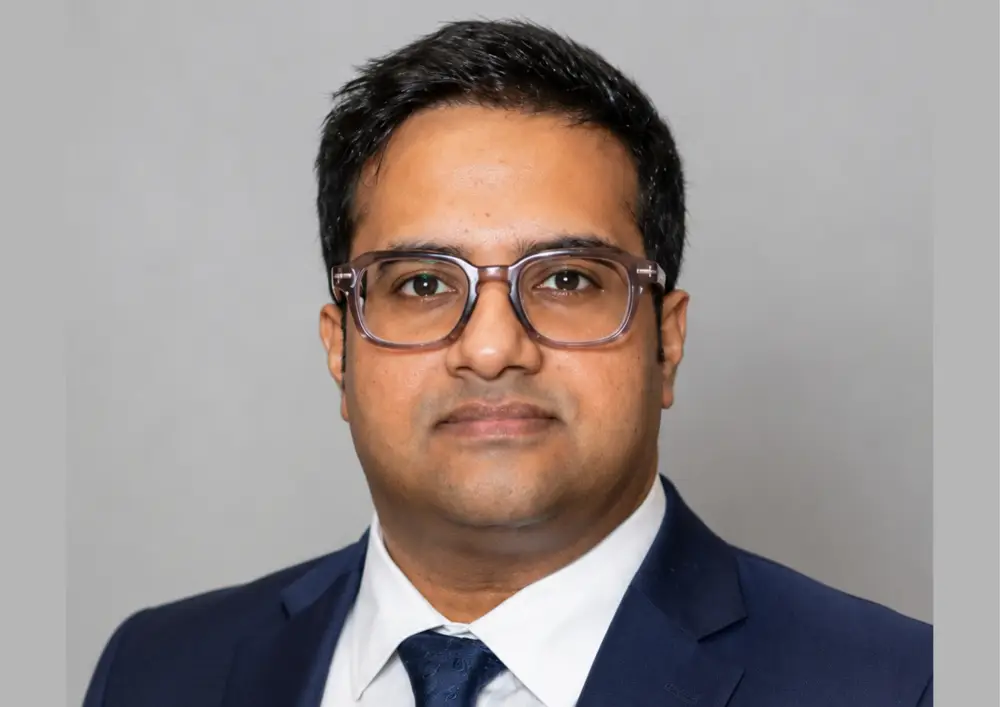
“Installing an EAF does not create a scrap supply chain,” says Vicky A. Mathur, Vice President – Global Supply Chain and Commercial at SteelAsia Manufacturing Corporation.
For Vicky, the overlooked challenge is what happens before scrap ever reaches the furnace: securing the right material, at the right quality and delivered cost, through a supply chain resilient enough to keep production competitive.
As EAF capacity expands across Asia, the ability to build that upstream ecosystem could become just as important as the technology itself.
Highlights
- Asia doesn’t need just more scrap. It needs the right scrap.
- The cheapest scrap can produce the more expensive steel
- Scrap resilience is really about optionality
- The Philippines shows why collecting more scrap is only the beginning
- A green furnace cannot compensate for a weak industrial system
- Final thoughts: Asia can commission a furnace. It cannot commission an ecosystem.
Asia doesn’t need just more scrap. It needs the right scrap.
It would be easy to describe the emerging challenge as a scrap shortage.
Vicky thinks that misses the point.
Asia is not necessarily about to “run out” of scrap. The more relevant question is whether EAF operators can consistently secure suitable scrap.
One tonne of scrap is not necessarily equivalent to another. Differences in yield, density, chemistry and contamination can affect how efficiently material is converted into liquid steel, influencing energy consumption, slag generation and productivity.
“For an EAF, scrap is both a raw material and an operating input,” Vicky says.
This changes the strategic question. As EAF capacity expands, steelmakers will not simply compete for tonnes of available ferrous material. They will compete for scrap that works for their furnaces and products – and for the processing, logistics and supplier networks capable of delivering it consistently.
A modern furnace can therefore still be constrained by a weak upstream system.
That is the less visible race behind EAF expansion.
The cheapest scrap can produce the more expensive steel
The economics become even more complicated when scrap is judged primarily by its purchase price.
Vicky has encountered situations where material that looked attractive on a price-per-tonne basis became considerably less competitive once it was put through the furnace.
A lower-priced material may require more preparation, deliver lower metallic yield or consume more energy. Freight and handling can further change the calculation. A cleaner and more consistent grade carrying a higher purchase price may ultimately deliver better economics.
That is why Vicky increasingly looks at scrap through a value-in-use lens.
“The real economic test is what that tonne of scrap contributes to the cost of producing the final tonne of steel,” he says.
This has a broader implication for steelmakers: scrap procurement cannot be treated purely as a purchasing exercise.
If the material being bought influences conversion cost and furnace productivity, procurement decisions become manufacturing decisions.
For senior decision-makers, that changes the economics of the EAF transition. The question is not simply whether scrap is available or affordable at the supplier’s gate. It is whether the entire upstream system can deliver metallic inputs that remain competitive all the way through to finished steel.
Scrap resilience is really about optionality
If suitable scrap becomes more strategically important, the instinctive response might be to maximize domestic supply.
Vicky takes a different view.
“I don’t think a resilient scrap strategy necessarily means being self-sufficient domestically. Nor does it mean relying heavily on imports.”
Domestic scrap can shorten supply chains and reduce freight exposure. International sourcing can provide access to additional volumes, particular grades and alternative supply when domestic markets tighten.
For Vicky, resilience comes from having options.
That means looking beyond price and tonnage to questions such as whether suppliers can maintain quality and deliveries when markets become volatile, how exposed supply is to freight or logistical disruption, whether processors can consistently meet specifications, and whether alternative sources are available when conditions change.
“I look at whether a supplier can perform not only when the market is favourable, but also when prices move sharply, or supply becomes tight,” he says.
This matters because scrap markets do not operate neatly within national borders. Asian steelmakers participate in interconnected regional and global flows, meaning changes in demand, pricing or trade conditions in one market can affect buyers elsewhere.
Vicky’s definition of resilience is therefore straightforward but demanding:
“The ability to secure the right quality and quantity, at the right delivered cost, consistently through different market conditions.”
The strategic question is no longer simply How much scrap can we secure?
It is: How many credible options remain when the market stops behaving as expected?
The Philippines shows why collecting more scrap is only the beginning
The Philippines offers one example of how this broader challenge can play out.
The country already has an established scrap collection and trading ecosystem, while new domestic steel investment is creating greater potential to turn locally generated scrap back into steel.
There is an attractive circular proposition:
scrap collection → processing → steelmaking → Philippine infrastructure → future scrap generation.
In simple terms, Philippine scrap can increasingly become Philippine green steel for Philippine infrastructure.
But collecting more scrap does not automatically create competitive EAF feedstock.
Material still needs to be sorted, processed, classified and prepared to the quality a furnace requires. Steelmakers also need logistics and sourcing alternatives capable of filling gaps when domestic supply cannot provide the right material at the right time or cost.
This is where the Philippine example reinforces the broader argument.
The opportunity is not merely to increase domestic scrap collection. It is to develop the capabilities that turn collected scrap into a reliable industrial input – while retaining access to international supply when needed.
As other Asian markets expand EAF capacity, the balance between domestic circularity and international sourcing may differ from country to country. But the underlying question remains relevant: can the upstream ecosystem develop quickly enough to support the steelmaking capacity being built around it?
A green furnace cannot compensate for a weak industrial system
Scrap is only one part of that ecosystem.
EAF competitiveness also depends on electricity, logistics, processing infrastructure and market access. A source that appears attractive before freight, port handling and inland transportation are considered may look very different once those costs and risks enter the equation.
This is why Vicky sees green-steel development as an integrated industrial system rather than a standalone technology investment.
The furnace may be the most visible asset, but its competitiveness depends on what surrounds it.
That has implications beyond individual steelmakers.
Processors determine whether collected scrap becomes usable furnace feedstock. Logistics networks determine how reliably it moves. Energy systems influence conversion economics. Trade provides sourcing alternatives. And closer coordination between these parts of the chain can determine how resilient the entire system becomes.
The strategic objective, then, is not simply to maximize scrap collection or EAF capacity.
It is to build an upstream ecosystem capable of supporting both.
Final thoughts: Asia can commission a furnace. It cannot commission an ecosystem.
This may be the harder reality behind Asia’s EAF ambitions.
A furnace is an asset. A resilient scrap ecosystem is a network.
The first can be commissioned as a project. The second depends on suppliers, processors, infrastructure, logistics, trade relationships and operating capabilities that develop across companies and borders.
Different Asian markets will face that challenge differently. But as EAF capacity expands, the competitiveness of those investments will increasingly depend on whether the systems feeding them can keep pace.
The furnace is the visible investment.
The ecosystem behind it may determine whether that investment remains competitive.
Editor’s Note:
This Industry Insights contribution was developed with Vicky A. Mathur, Vice President – Global Supply Chain and Commercial at SteelAsia Manufacturing Corporation.
Vicky brings more than 14 years of experience across global steel procurement, international trading, commercial operations and cross-border supply chains spanning Asia, the Middle East, Africa and Europe.
In his current role, he oversees global supply chain, international procurement, commercial strategy and export operations, including raw-material procurement across five operating steel plants.
Highlights
- Asia doesn’t need just more scrap. It needs the right scrap.
- The cheapest scrap can produce the more expensive steel
- Scrap resilience is really about optionality
- The Philippines shows why collecting more scrap is only the beginning
- A green furnace cannot compensate for a weak industrial system
- Final thoughts: Asia can commission a furnace. It cannot commission an ecosystem.
Read the Chinese article here.
Related posts:
 ASEAN’s Next Critical Infrastructure Is Being Built on Farms, Not Highways
 ESG Is Losing Credibility. What Happens When No One Trusts It Anymore?
 Beyond The Box Office: How Film Co-Productions Are De-Risking Market Entry In Asia
 Bali’s Biggest Challenge Isn’t Attracting Investment Anymore — It’s Surviving Its Own Success

