In a world of dashboards, jargon, and spreadsheet overload, one finance educator is flipping the script. James C Foo Leong, founder of the Financial Storyverse®, has spent more than two decades teaching finance to leaders and decision-makers who felt they never truly “got it.”
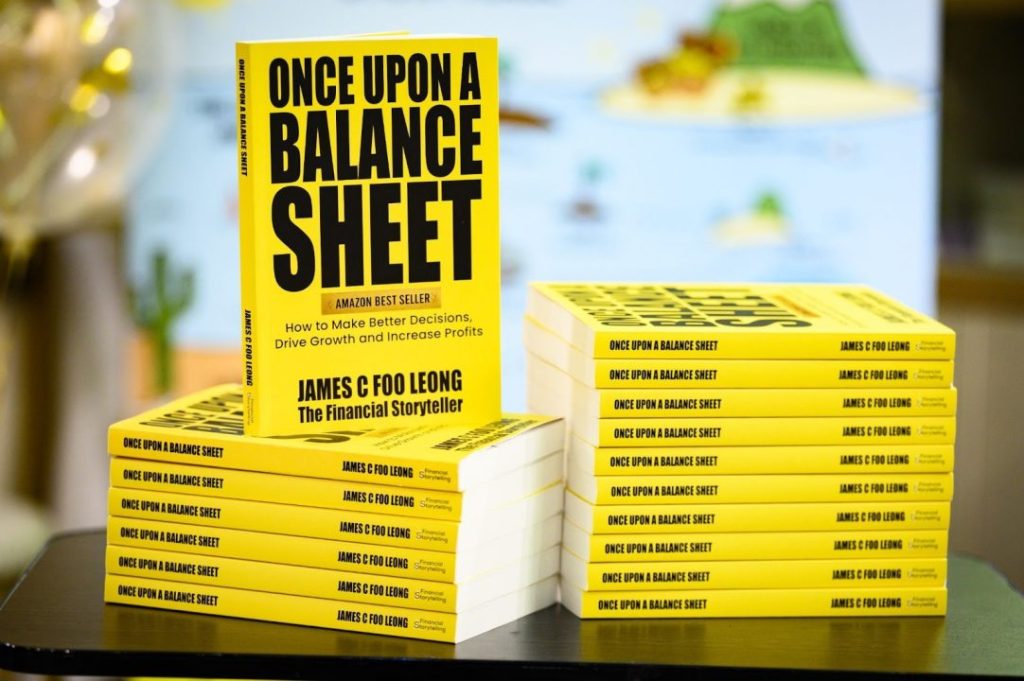
His new book, Once Upon a Balance Sheet: How to Make Better Decisions, Drive Growth, and Increase Profits, turns financial learning into an adventure — complete with characters like Count Jargon®, Miss Numbers®, and Master C Foo®.
We spoke with James about making finance human again, the long road to publishing, and why clarity may be the most underrated leadership advantage of all.
Highlights
- Turning Finance Into a World You Can Enter
- Why Finance Needs Characters, Not More Charts
- From Reporting Numbers to Leading With Insight
- Writing for the 99%, Not the 1%
- The Long Road to Publishing — And Why Clarity Was Worth the Fight
- When Financial Knowledge Becomes Leadership Capability
- Final Thoughts: Making Numbers Work for Humans
Turning Finance Into a World You Can Enter
Q: For those who haven’t read it yet, what is Once Upon a Balance Sheet about — and what makes it different from every other finance book on the shelf?
A: Once Upon a Balance Sheet makes finance feel like something you can finally “get.”
Most people don’t struggle with finance because it’s difficult — they struggle because it’s been explained in difficulty.
So instead of writing another technical book, I built a world.
You begin in the World of Confusion, where numbers don’t quite make sense. You journey across the Sea of Jargon, picking up financial skills through story. Eventually, you reach the World of Illumination, where the numbers finally click — and you can make decisions with clarity, confidence, and conviction.
What makes the book different is simple: it turns financial statements from spreadsheets into stories people can understand. It’s simple without being simplistic.
This isn’t about turning people into accountants. It’s about helping leaders and decision-makers finally see the story behind the numbers — so they can lead with insight instead of guesswork.
Why Finance Needs Characters, Not More Charts
Q: You coined the term Financial Storyverse® and introduced characters like Count Jargon®. What inspired you to make finance feel more Pixar than P&L?
A: I created the Financial Storyverse® as a place where finance meets storytelling.
It’s a world where characters like Count Jargon®, Miss Numbers®, STEPH® Model, Master C Foo®, and Huat® guide learners through financial concepts in ways that are visual, engaging, and surprisingly relatable.
I didn’t set out to gamify accounting. I set out to make finance come alive.
After more than 20 years of teaching, training, and executive education work, I kept hearing the same refrains from capable professionals across organisations: “Finance isn’t my thing.” “Accounting was my worst subject.” “I passed the exam, but I never really understood it.”
These were people making real business decisions, yet excluded from financial conversations that didn’t feel accessible to them.
So I asked myself: what if learning finance felt like going on a quest instead of sitting for a test?
Each character plays a role. They’re not gimmicks — they’re guides. Just as Pixar uses characters to explain emotions, I use characters to help people see the story behind financial statements.
That belief even led to the creation of the world’s first finance plush character, Count Jargon®, which we launched at Balance Sheet Night, our book celebration. It wasn’t meant as a novelty, but as a physical reminder that finance doesn’t have to be scary to be taken seriously.

From Reporting Numbers to Leading With Insight
Q: In a world saturated with dashboards and KPIs, you argue that story brings finance back to life. How does narrative-based learning shift leadership mindsets?
A: Dashboards give data. Stories give meaning.
Leaders today are flooded with charts, KPIs, and AI-generated summaries, but information alone doesn’t create insight.
Storytelling brings finance back to life by showing how choices shape behaviour, influence outcomes, and create ripple effects.
When numbers are placed inside a narrative, they stop feeling abstract and start feeling directional. Leaders stop reacting to numbers and start interpreting them.
I’ve seen leaders move from asking, “Is this good or bad?” to “What’s driving this — and what should we do next?” That’s when finance stops being a reporting function and starts becoming a leadership tool.
Writing for the 99%, Not the 1%
Q: You’ve trained Fortune 500 executives and leadership teams across organisations. Who was Once Upon a Balance Sheet written for?
A: I wrote it for the 99% — people who work with numbers every day but were never given a way to truly understand them.
I’ve trained senior executives alongside lawyers, engineers, IT specialists, marketers, HR professionals, founders, entrepreneurs, and public-sector teams. Many have told me, “I wish someone explained this to me years ago,” or “I can present numbers, but I don’t always know what to make of them.”
This book is for non-finance team leads, rising managers, and decision-makers who want clarity without complexity.
It’s for anyone who ever thought, “Finance isn’t my thing.” I wrote it to show them that it can be — if it’s taught with stories, structure, and simple metaphors.
The Long Road to Publishing — And Why Clarity Was Worth the Fight
Q: Once Upon a Balance Sheet has continued to perform strongly on Amazon months after launch — including reaching #1 as a Hot New Release and ranking as a top-five bestseller in Management Accounting — despite your publisher going bankrupt mid-production. What kept you going?
A: This book took five years, and there was a moment when it almost didn’t happen.
When my publisher went bankrupt, all I had left was a PDF. No editor. No designer. No team. Just me — and the story I believed in.
I had to rebuild everything from scratch. At times, it felt like carrying the book on my back.
What kept me going was the mission. I’ve seen how financial clarity transforms leaders, and I knew this book could help more people than I could ever reach in a classroom.
People kept asking, “James, when is the book coming out?” They believed in the message before the book existed.
So when the book reached #1 as a Hot New Release and continued to rank as a Management Accounting bestseller months later — without paid marketing — it wasn’t just a ranking. It was confirmation that the message landed.

When Financial Knowledge Becomes Leadership Capability
Q: You say most finance books transfer knowledge, but yours builds capability. What real shifts have you seen in leaders who embrace financial storytelling?
A: The biggest shift is confidence.
Leaders ask sharper questions. They spot what truly drives impact. They stop fearing the numbers and start using them.
I’ve watched non-finance leaders move from avoidance to engagement — from “I don’t get this” to “I finally know what to pay attention to.”
That shift doesn’t just improve financial capability. It transforms leadership. When leaders understand the story behind their numbers, they make better decisions and steer their organisations with clarity.
Final Thoughts: Making Numbers Work for Humans
At its core, Once Upon a Balance Sheet challenges one of business’s most persistent assumptions — that finance must be complex to be credible.
By turning numbers into narratives, James C Foo Leong reframes finance as a leadership language rather than a technical barrier. Through his work at Financial Storytelling, he helps leaders move beyond formulas and frameworks to uncover meaning, context, and confidence in decision-making.
In a business world obsessed with dashboards, metrics, and speed, storytelling offers something quietly transformative: understanding. And when leaders understand the story behind their numbers, they don’t just report better — they decide better.
James also continues this conversation publicly, sharing practical insights on financial clarity and leadership on LinkedIn. For organisations interested in speaking engagements or workshops, you can reach out to James at cfoojames@financialstorytelling.com, where he works closely with leadership teams to develop a shared financial language.
In that sense, Once Upon a Balance Sheet isn’t just a book about finance. It’s a reminder that clarity is not a “nice to have” in leadership — it’s the foundation of confident, accountable decision-making.
Curious to see this approach in action? Grab your copy of Once Upon a Balance Sheet here.
Highlights
- Turning Finance Into a World You Can Enter
- Why Finance Needs Characters, Not More Charts
- From Reporting Numbers to Leading With Insight
- Writing for the 99%, Not the 1%
- The Long Road to Publishing — And Why Clarity Was Worth the Fight
- When Financial Knowledge Becomes Leadership Capability
- Final Thoughts: Making Numbers Work for Humans
Read the Chinese article here.