




Entrepreneurs today have access to more financial information than ever before. Market data, financial dashboards, AI tools, reports, and expert commentary are all increasingly available at the click of a button.
Yet more information does not necessarily make financial decisions easier.
For business owners, questions such as whether to hire, expand into a new market, increase spending, or raise capital require more than access to numbers. They require the ability to understand what those numbers mean — and what to do next.
Anya Tan has spent more than a decade across stockbroking, insurance, investment education, and financial strategy. Today, she is CEO of BizPal by Simplyfi™, where she is focused on making financial guidance more transparent, practical, and accessible.
NewInAsia spoke with Anya about why traditional financial planning needs to evolve, what founders misunderstand about financial resilience, how technology can improve financial decision-making without replacing human judgement, and what the next generation of financial planning could look like across Asia.
Highlights
- The Problem Isn’t a Lack of Financial Information — It’s a Lack of Clarity
- A Financial Plan That Sits in a Folder Can’t Keep Up With a Changing Business
- Founders Chase Growth — But Financial Resilience Requires Structure
- Fintech Can Automate the Process — But It Can’t Automate Trust
- The Future of Financial Planning Won’t Be “Set It and Forget It”
- Final Thoughts: More Data Isn’t the Same as Better Financial Decisions
The Problem Isn’t a Lack of Financial Information — It’s a Lack of Clarity
Q: BizPal’s mission is to make quality financial advice more transparent and accessible. What do you believe are the biggest barriers preventing individuals and businesses from making confident financial decisions today?
A: I don’t believe the biggest problem is a lack of information. In fact, we live in an era where information is everywhere.
The real challenge is turning information into clarity.
Entrepreneurs today are surrounded by financial reports, market news, AI tools, and endless advice, yet many still struggle to answer simple questions: Can I afford to hire? Should I expand? Is my business truly investment-ready?
Confidence doesn’t come from having more data. It comes from understanding what the data means and knowing what action to take.
At BizPal, we believe financial planning should empower decision-making, not intimidate people. That’s why our mission isn’t simply to digitise finance — it’s to make financial thinking more transparent, practical, and accessible, so every entrepreneur can make decisions with greater confidence rather than relying on intuition alone.
A Financial Plan That Sits in a Folder Can’t Keep Up With a Changing Business
Q: What limitations in conventional corporate finance and planning led you to build CapitalOS?
A: Over 10 years of building businesses, I realised conventional corporate finance has two big gaps.
First, it focuses heavily on numbers while often failing to account for real-world changes. Markets, careers, and family needs shift fast — plans on paper can become outdated within months.
Second, it is often product-focused rather than solution-focused. It tells you what to buy rather than how to build a flexible strategy that protects your assets while supporting growth. For SMEs in Asia, this rigidity can waste money and leave little room to adapt to local risks and opportunities.
Conventional corporate finance is also often treated as an annual exercise. Once the budget is completed, it sits in a folder while the business continues to change around it.
But businesses don’t operate once a year. Decisions happen every day.

Hiring a salesperson, entering a new market, increasing marketing spend, or raising capital all have financial consequences. Yet many business owners still make these decisions without seeing their long-term impact.
CapitalOS aims to close these gaps and go beyond static financial planning by helping businesses think about finance as an ongoing part of decision-making.
Founders Chase Growth — But Financial Resilience Requires Structure
Q: Having worked in both financial services and entrepreneurship, how has your perspective on financial literacy evolved, and what do you think founders often overlook when it comes to building financially resilient businesses?
A: Working across financial services and running businesses has taught me that financial literacy is not just about reading numbers — it’s about understanding how money flows, adapts, and sustains growth.
What I have seen founders often overlook is structure over speed.
Many focus only on revenue growth, neglecting proper forecasting, budgeting, and cash flow discipline. They treat finance as an administrative task rather than a strategic tool.
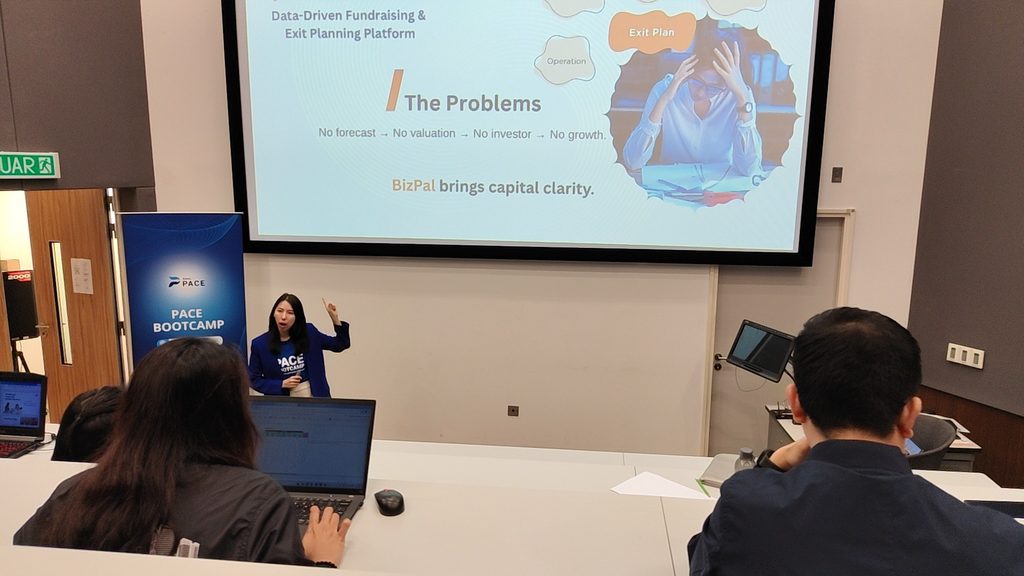
Without clear visibility into future costs, margins, and reserves, even profitable businesses can hit hard times. True resilience comes from knowing exactly where you stand today and being able to adjust quickly before challenges arise.
Successful founders don’t necessarily need to become accountants. What they need is the ability to interpret numbers, understand the story behind them, and make informed choices before problems arise.
Fintech Can Automate the Process — But It Can’t Automate Trust
Q: Technology is rapidly changing financial services, but trust remains at the heart of financial decision-making. How can fintech companies strike the right balance between digital innovation and human confidence?
A: Technology brings speed, efficiency, and access, but trust is still built on clarity and reliability.
Fintech firms can strike the right balance by using innovation to empower, not replace, human judgement. Human expertise provides context, empathy, and accountability.
Digital tools should simplify complex data, deliver real-time insights, and automate routine tasks so users can focus on the decisions that matter. However, business processes should also be easy to follow, and everyone involved must be kept updated.
Meetings alone are not enough. We also need to set aside time for workshops or short sessions led by leaders so employees and partners fully understand the changes.

When complex questions arise, having accessible experts who can explain, guide, and validate results builds confidence. Innovation creates the platform, but consistency, honesty, and the human touch turn users into long-term partners.
At BizPal, we see technology as an enabler rather than the destination. The goal isn’t to automate decision-making — it’s to help people make better decisions with greater confidence.
The Future of Financial Planning Won’t Be “Set It and Forget It”
Q: Looking ahead, what do you believe the future of financial planning in Asia will look like, and how should entrepreneurs and professionals prepare for a world where financial advice is increasingly digital, personalised, and data-driven?
A: The future of financial planning in Asia will be dynamic, digital, and deeply localised.
It will move beyond static reports towards real-time insights, powered by data and technology that adapt to fast-changing markets and personal circumstances.
For entrepreneurs and professionals, preparation means shifting mindset: treat finance as a strategic tool, not just boring paperwork. Embrace digital tools for forecasting and tracking, but build a strong foundation of financial literacy to interpret the results correctly.
Personalisation does not mean “set it and forget it.” It means combining data clarity with sound judgement.
Those who stay curious, remain flexible, and balance automation with human insight will navigate this new landscape confidently.
That is the future we are building at BizPal.
Final Thoughts: More Data Isn’t the Same as Better Financial Decisions
The digitisation of financial services is making information, analysis, and financial tools increasingly accessible. But Anya’s perspective highlights the distinction between having access to financial information and having the confidence to act on it.
For entrepreneurs in particular, financial planning increasingly needs to keep pace with decisions rather than simply document them after the fact. Hiring, expansion, marketing investments, and fundraising can change a company’s financial position long before the next annual planning exercise arrives.
Technology can make that information easier to access and interpret. But the goal, as Anya sees it, is not to remove human judgement from financial planning. It is to give people better information, greater clarity, and stronger financial literacy so that judgement can be exercised more effectively.
As financial advice across Asia becomes increasingly digital and personalised, the opportunity may therefore lie not in providing people with more numbers — but in helping them understand what those numbers are telling them.
Highlights
- The Problem Isn’t a Lack of Financial Information — It’s a Lack of Clarity
- A Financial Plan That Sits in a Folder Can’t Keep Up With a Changing Business
- Founders Chase Growth — But Financial Resilience Requires Structure
- Fintech Can Automate the Process — But It Can’t Automate Trust
- The Future of Financial Planning Won’t Be “Set It and Forget It”
- Final Thoughts: More Data Isn’t the Same as Better Financial Decisions
Read the Chinese article here.
Related posts:
 How This Founder’s Portfolio Beat Vietnam’s Market by Nearly 100%
 Cayden Chang: Building Wealth with Purpose and Resilience
 Stripped of Education and Work, Afghan Women are Reclaiming Agency Through Technology
 She Thinks Service Businesses Have an Unexpected AI Advantage. One Client’s Results Offer a Clue.