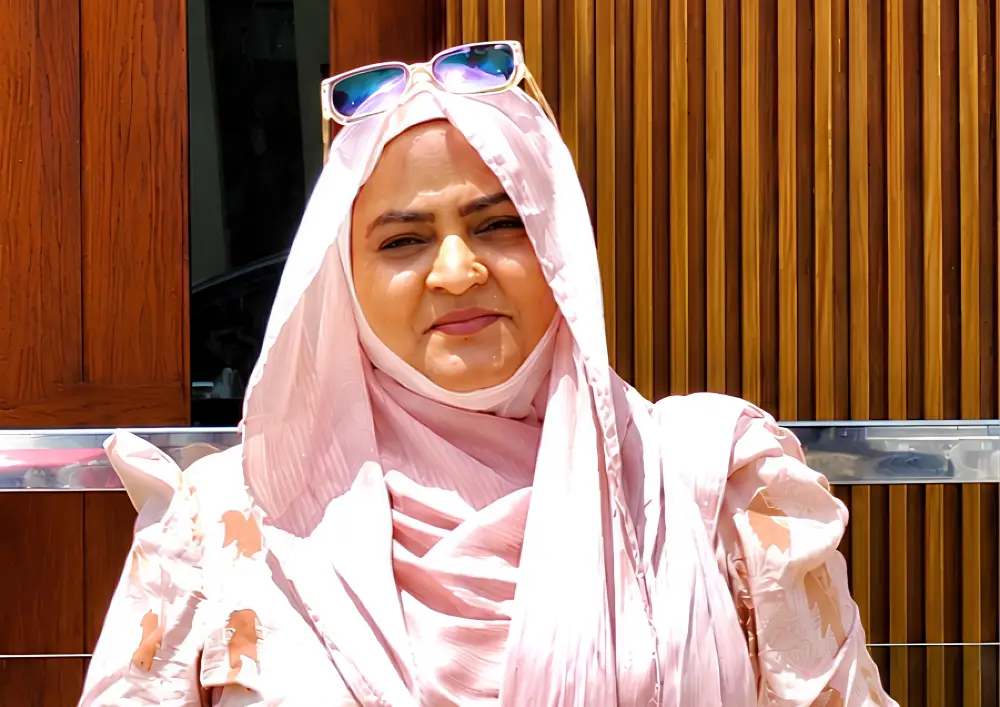
A university degree can demonstrate what a young person has learned. But does it prepare them to explain their value in an interview, navigate workplace disagreements, communicate professionally, or find their footing when their career does not follow a conventional path?
For Arshia Hussain, that gap is personal.
Arshia Hussain is an HR professional with more than 10 years of experience and the founder of Mustaqbil Bridge, an initiative created to help bridge the divide between education and employment in Pakistan. But her own route into HR was anything but linear. She entered the profession in her thirties after an early marriage, raising a family, completing an M.A. in Islamic Studies, working as a makeup artist for more than five years, teaching, and eventually pursuing a Master of Human Resource Management.
Today, that experience shapes how she looks at young people entering Pakistan’s workforce — particularly those whose capabilities may not fit neatly onto a conventional CV.
NewInAsia spoke with Arshia Hussain about what Pakistan’s education-to-employment gap looks like from inside HR, why confidence and workplace fluency remain major barriers, and what universities, employers, and young professionals can do differently.
Highlights
- “I Was Told This Wasn’t Meant for Me” — Starting a Corporate Career in Her Thirties
- A Strong Transcript Doesn’t Mean Someone Is Ready for the Workplace
- “I Don’t Know How to Talk About Myself”
- What Career Readiness Looks Like Before There’s Even a CV
- Three Changes That Could Make the Journey From Classroom to Career Less Broken
- Final Thoughts: A Degree Can Open the Door. Readiness Determines What Happens Next.
“I Was Told This Wasn’t Meant for Me” — Starting a Corporate Career in Her Thirties
Q: Your path into HR was far from conventional. What were the hardest barriers you faced entering the corporate world, and which moments most shaped how you think about career opportunity today?
A: My journey into HR didn’t follow a straight line, and I don’t think it was supposed to. I balanced an early marriage and raising a family while completing an M.A. in Islamic Studies, worked as a makeup artist for over five years, spent time teaching, and only later pursued my Master of Human Resource Management to build a corporate career.
By the time I was applying for my first roles in HR, I wasn’t a fresh graduate in the conventional sense. I was a woman in her thirties trying to enter a field everyone assumed she’d missed her window for.
The hardest part wasn’t learning the work. People constantly evaluated me on my age and my unconventional background rather than my capability. I heard some version of “this isn’t meant for you, focus on your home and family” more times than I can count—and it came from individuals who genuinely believed they were helping.
There was no mentor, no forum, no one who had walked a similar path that I could turn to for guidance. I started from internships, often reporting to managers younger than me, and I proved my value the only way that was available to me: through sheer persistence, showing up, and doing the work better than the doubt around me suggested I could.
The moment that shaped me most wasn’t a single event — it was the accumulation of all those small dismissals. Somewhere in the middle of that, I made a quiet promise to myself: if I ever gained the platform and the exposure, I would make this road easier for the next person who didn’t fit the mold.
That promise is the reason Mustaqbil Bridge exists today.
A Strong Transcript Doesn’t Mean Someone Is Ready for the Workplace
Q: After more than 10 years in HR, where do you see the biggest disconnect between what young people in Pakistan learn through education and what employers actually expect? Can you share specific examples?
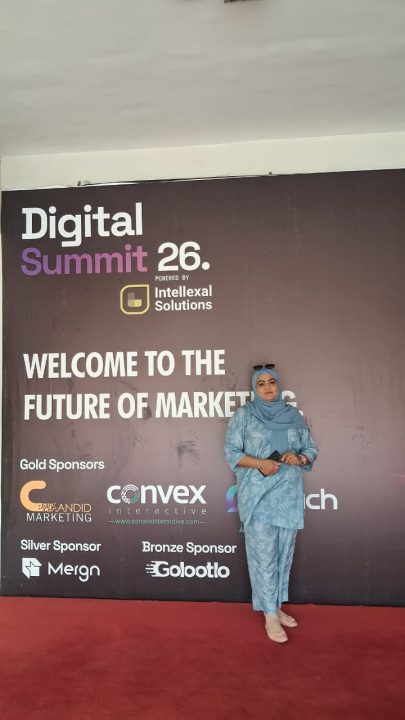
A: The disconnect I see most consistently is between academic achievement and workplace readiness.
Our education system, for the most part, rewards memorization, exam performance, and theoretical knowledge. It does very little to prepare young people for the ambiguity, communication demands, and self-direction that a real workplace requires from day one.
I’ve sat across from candidates with strong transcripts who freeze when asked to describe how they’d handle a disagreement with a colleague, or who have never had to write a professional email, sit through a structured interview, or advocate for their own ideas in a room.
It isn’t a lack of intelligence or effort — it’s simply that no one taught them these things because our institutions were never designed to. On the flip side, employers often assume a level of workplace fluency that no one has actually equipped these candidates with, and then judge them harshly for not having it.
This gap shows up most sharply for candidates like I once was—those coming from non-traditional academic backgrounds or career changes, whom employers often filter out early simply because their CV doesn’t match a familiar template, long before anyone evaluates what they can actually do.
“I Don’t Know How to Talk About Myself”
Q: Through Mustaqbil Bridge, what challenges are young people actually bringing to you? Are there recurring patterns that surprised you?
A: What I hear most often isn’t, “I don’t know what career to choose.” It’s, “I don’t know how to talk about myself.”
Career direction is part of it, but the deeper, more recurring pattern is confidence: young people who are genuinely capable but have never heard anyone validate their background, their pace, or their path. That mirrors so much of my own experience that it’s part of why this work feels less like a program I run and more like a promise I’m keeping.
Interview readiness comes up constantly too—not because candidates lack substance, but because no one has ever walked them through how to structure an answer or given them a safe space to practice receiving evaluation without it feeling like a verdict on their worth.
And access is its own barrier entirely. Many of the young people I meet are bright and driven but have simply never been in a room, physical or virtual, where opportunity was explained to them in plain language.
What surprised me most is how much of this mirrors what I went through myself, just with a different set of circumstances. The details change, but the core experience—feeling unseen by a system leadership designed to prepare you—repeats itself generation after generation until someone actively interrupts it.
What Career Readiness Looks Like Before There’s Even a CV
Q: Since launching Mustaqbil Bridge, what has the initiative actually done so far? Please share figures and, if possible, one participant story.
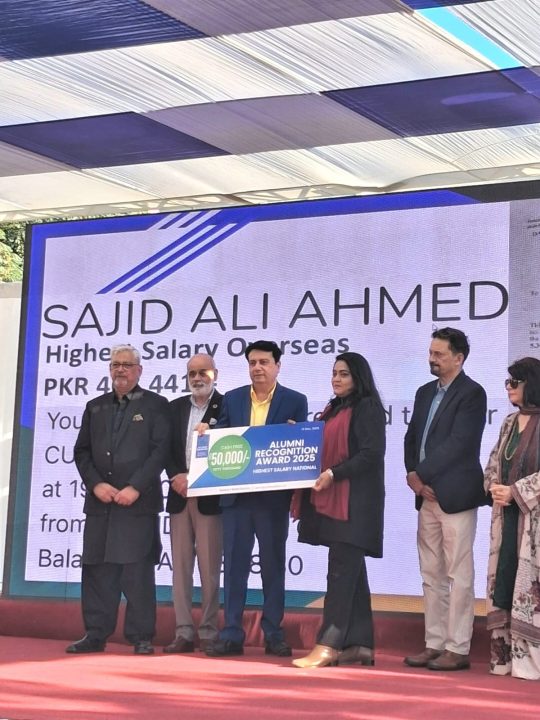
A: Mustaqbil Bridge is still very young — we haven’t even completed our first year yet — but the response so far has shown us how much this kind of support was missing.
In this short time, we’ve conducted workshops and webinars for students from several universities across different cities in Pakistan, and we continue to run these sessions regularly, reaching young people wherever we can find an opening to reach them.
But university students were never meant to be our only focus. From the outset, I wanted Mustaqbil Bridge to go further than degree holders — to reach young people who may never see the inside of a university classroom at all.
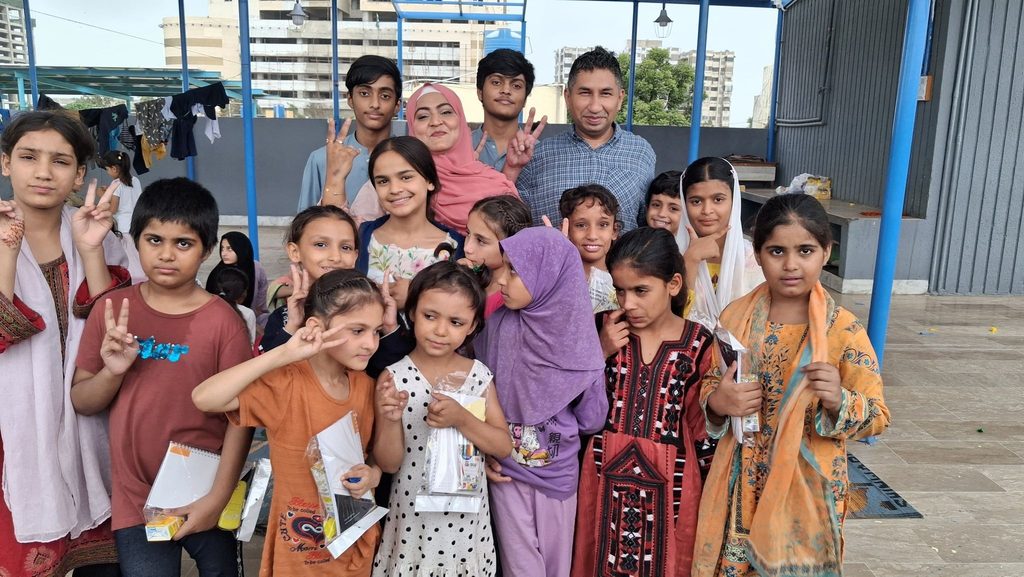
That’s why we’ve also begun working with children in orphanages. Just recently, we conducted a workshop with children at an orphanage where, through interactive activities rather than lectures, we introduced them to the importance of commitment and responsibility — simple but foundational ideas that most children absorb from family structures we can’t assume everyone has access to.
That session, more than any single statistic, captures what Mustaqbil Bridge is really about. It isn’t only about connecting graduates to job interviews — it’s about planting the earliest seeds of self-belief and accountability in young people who might otherwise never encounter them.
We are still less than a year in, but we are building this day by day, city by city, and we intend to keep expanding who this bridge reaches.
Three Changes That Could Make the Journey From Classroom to Career Less Broken
Q: If you could change three things about how young people transition from education into employment in Pakistan — one for universities, one for employers and HR leaders, and one for young professionals — what would you change, and why?
A: For universities, I would embed real workplace exposure into the curriculum itself — structured internships, mock interviews, and communication training treated as core credit, not optional extracurriculars. A degree should certify readiness, not just knowledge.
For employers and HR leaders, I would ask that we look past the CV template and evaluate potential and capability, not just the conventional markers of a “correct” career path. Some of the most resilient, resourceful people I’ve worked with came from the least linear backgrounds, mine included. If we keep filtering for familiarity, we keep losing exactly the talent we claim to be looking for.
For young professionals themselves, I would encourage them to stop waiting for permission. No one is going to hand you a perfectly paved path — you have to be willing to start from wherever you are, even if that means an internship at an age or stage you didn’t expect, or a role that doesn’t match your degree on paper.
Every hurdle I faced taught me something I now use to make someone else’s path shorter. That, to me, is the entire point of closing this gap — not erasing the struggle, but making sure the next person doesn’t have to face it alone.
Final Thoughts: A Degree Can Open the Door. Readiness Determines What Happens Next.
Arshia Hussain’s experience highlights a problem that cannot be placed entirely on universities, employers, or young professionals themselves.
Students need greater exposure to how workplaces actually function. Employers need to reconsider whether familiar CVs and conventional career paths are always the best proxies for capability. And young professionals need opportunities to practise the communication, confidence, and self-advocacy expected of them before their first interview becomes the test.
For Arshia Hussain, Mustaqbil Bridge is an attempt to intervene earlier — whether that means helping a university student articulate their value or introducing younger people to foundational ideas around responsibility and self-belief.
Her own career is also evidence of the argument at the heart of her work: a non-linear path does not necessarily signal a lack of potential. Sometimes, the opportunity to demonstrate that potential simply arrives later.
Highlights
- “I Was Told This Wasn’t Meant for Me” — Starting a Corporate Career in Her Thirties
- A Strong Transcript Doesn’t Mean Someone Is Ready for the Workplace
- “I Don’t Know How to Talk About Myself”
- What Career Readiness Looks Like Before There’s Even a CV
- Three Changes That Could Make the Journey From Classroom to Career Less Broken
- Final Thoughts: A Degree Can Open the Door. Readiness Determines What Happens Next.
Read the Chinese article here.