



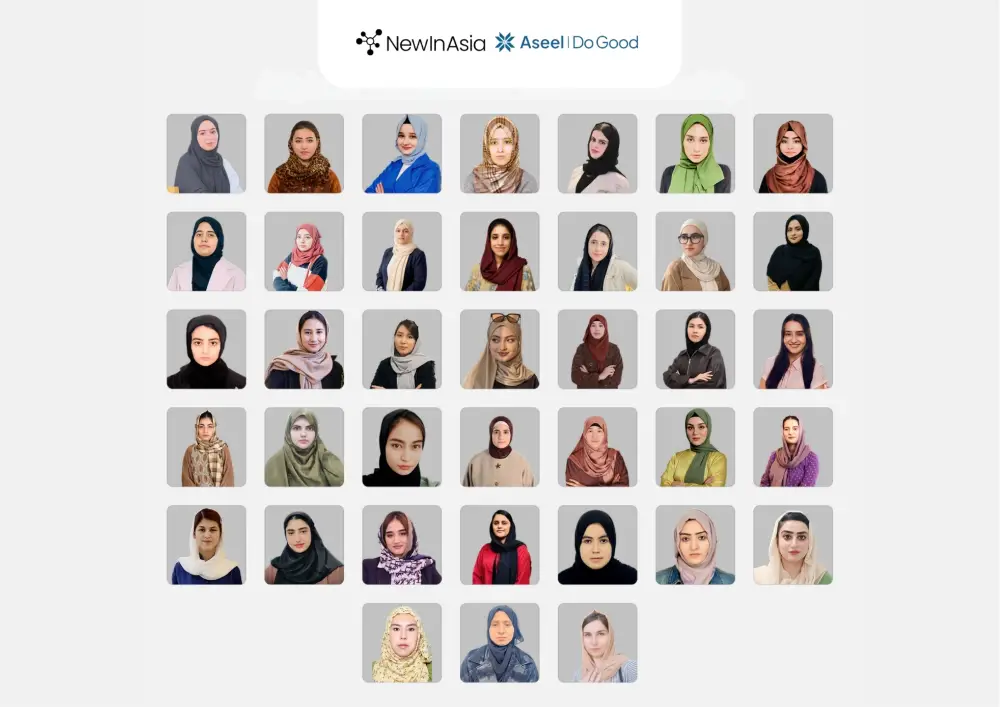
Afghan Women in Tech Leadership (AWTL) was built around a different assumption: training is only the beginning.
When NewInAsia previously covered AWTL, we looked at how Afghan women were using technology to reclaim professional agency after access to education and work had been severely restricted. The second cohort raises a different question.
Some graduates are now managing products, developing partnerships, leading teams, taking responsibility for revenue targets, and running core functions inside Aseel, the technology organization behind the program.
That progression is becoming consequential for Aseel itself.
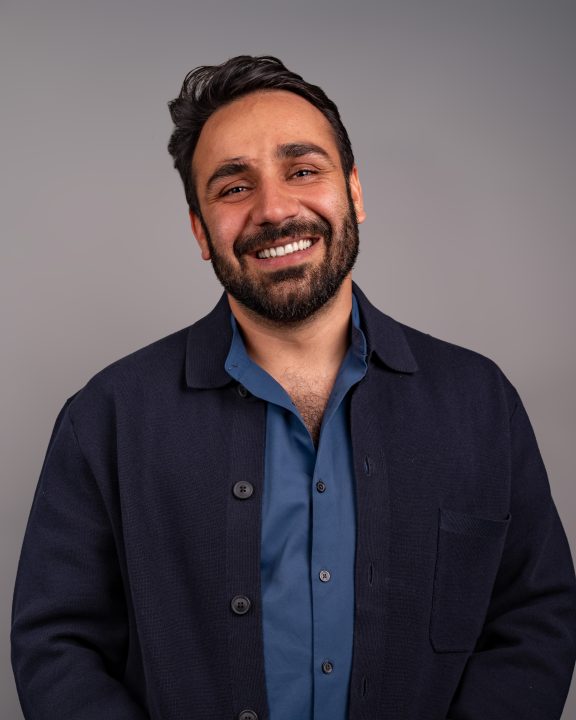
When a product suddenly needs an owner or a team loses its lead, founder and CEO Nasrat Khalid says his response has increasingly been simple: assign a fellow.
“I trust their hunger for growth a lot more than anyone else and, in some cases, even themselves,” Khalid says.
The experiment, then, is changing.
Aseel no longer has to answer only whether the fellowship can develop talent. It has to determine whether it can reproduce that talent at a greater scale without weakening the environment that allowed it to emerge.
Highlights
- AWTL’s Unusual Bet: Treat Fellows Like Employees
- What Changes When Fellows Carry Business KPIs?
- Can Fellows Become Revenue Contributors?
- From UI Designer to Product Manager: Testing the Leadership Pipeline
- AWTL No Longer Has to Prove the Same Thing
- Why Placement Alone Is a Weak Measure of Success
- Scaling AWTL Will Require More Than Funding
- Why 100 Fellows May Be the Wrong Measure of Scale
- The Real Test: Can Leadership Scale With the Program?
AWTL’s Unusual Bet: Treat Fellows Like Employees
AWTL’s structure helps explain the progression.
According to Khalid, fellows begin with approximately two months of intensive training. They then spend around six months working directly inside departments, where they are expected to operate much like employees in a mid-level technology startup role.
Toward the final months, leadership responsibilities enter the equation.
“A lot of what we are seeing was by design,” Khalid says.
That design compresses stages that workforce programs often separate. Technical learning, employment experience, and leadership development happen within the same pipeline rather than as distant career milestones.
During an internal sprint call, Program Manager Rowaida Naikkhwah recalls Khalid making those expectations explicit.
“You are real workers,” she recalls him telling the fellows. “Don’t act like you’re just here to learn — you should implement what you have learned, and we expect outcomes from your end.”
The message mattered because Aseel backed it with consequences.
What Changes When Fellows Carry Business KPIs?
For the second cohort, AWTL introduced additional leadership and confidence training with support from its partners. But Naikkhwah points to another change that may be more revealing: fellows received more tangible individual KPIs.
Business development fellows were given revenue targets. Marketing responsibilities could extend to company-level targets.
The program was no longer measuring participation alone.
“We made a deliberate decision to give them real work and hold them accountable for it,” Naikkhwah says.
That combination of support and accountability became central to the second cohort’s design. Team leads were also instructed to treat participants less like students and more like colleagues responsible for outcomes.
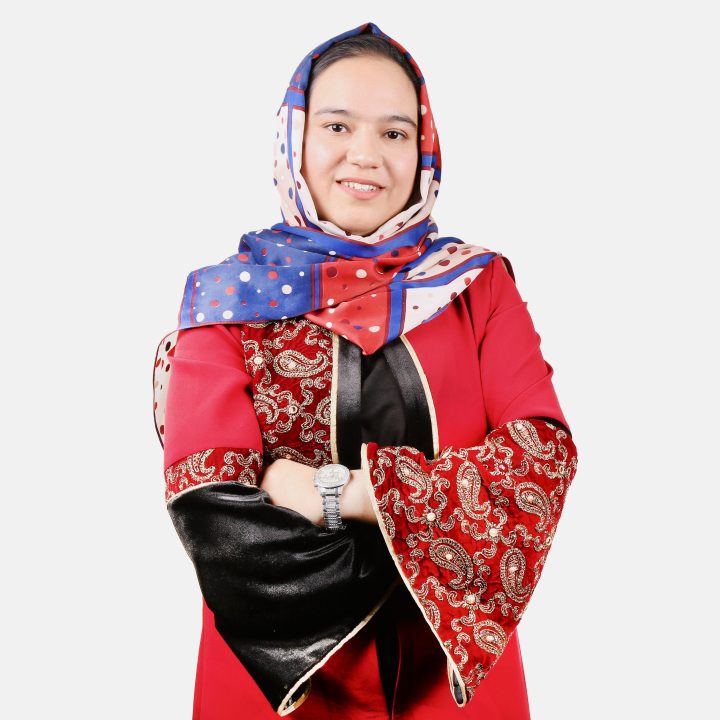
One second-cohort fellow, Arezo, has since taken responsibility for Aseel’s HR function.
It also reveals the difficulty awaiting AWTL as it grows.
A curriculum can be distributed to hundreds of people. Meaningful responsibility cannot be scaled quite so mechanically. Every additional fellow requires work worth owning, managers willing to delegate it, and enough organizational capacity to let people make decisions rather than merely observe them.
Can Fellows Become Revenue Contributors?
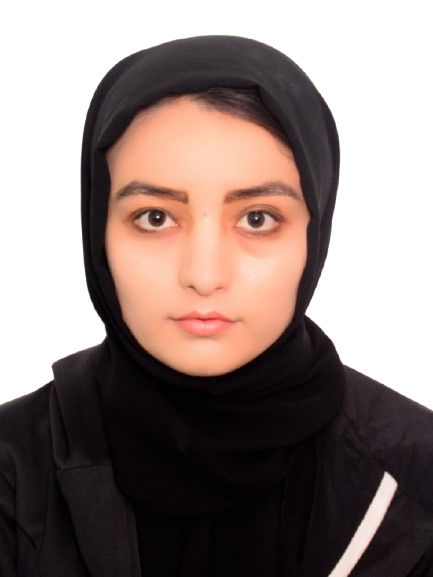
Nargis Akbari, an AWTL fellow who worked with Aseel’s Business Development team, offers one example of what happens when that responsibility reaches the commercial side of the organization.
During her fellowship, Akbari helped introduce organizations to Aseel’s technology and onboarded around seven partners. She says her partnership work contributed approximately US$10,000 in revenue in a month.
Her conversations with prospective partners went beyond selling an idea.
Organizations wanted to know whether Aseel’s AidOS platform would fit their existing humanitarian operations. They raised questions about usability, data security, and how the technology would work alongside established processes.
“I listened carefully to their needs, explained how AidOS works, answered their questions, and shared real examples of how it supports fundraising and humanitarian operations,” Nargis says.
She ultimately helped onboard around seven organizations.
For Aseel, the significance isn’t simply that a fellow hit a commercial target. Her experience tests whether someone entering through the fellowship can eventually represent the company’s technology to outside organizations, build trust, and contribute to growth.
That becomes increasingly relevant if Aseel wants graduates to open markets and lead strategic partnerships rather than remain in junior roles.
From UI Designer to Product Manager: Testing the Leadership Pipeline

Zainab Turkmen, who joined AWTL as a UI Design Fellow before becoming Product Manager for CampaignPlus, shows how the same model can translate into product ownership.
Her progression took her from designing interfaces to making decisions around users, product priorities, and real-world outcomes on one of Aseel’s fundraising platforms.
“The biggest change was moving from designing screens to understanding users and solving real problems,” she says.
Her responsibilities have included initiatives connected to Aseel’s humanitarian campaigns. A Ramadan campaign helped deliver food packages to more than 2,100 people, while another initiative involved onboarding 26 campaign organizers. She has also contributed to features intended to improve the fundraising experience.
The numbers matter, but the shift in responsibility matters more.
A designer can be evaluated on an interface. A product manager has to weigh users, technical constraints, organizational priorities, and consequences beyond the screen.
“Before, I saw products mainly as tools to solve problems,” Zainab says. “But my experience at Aseel showed me that every decision we make can have a real impact on people’s lives.”
Nargis and Zainab are not proof that the model can work everywhere. They are narrower evidence of something AWTL will need to reproduce if it expands: the transition from completing assigned work to becoming responsible for outcomes.
AWTL No Longer Has to Prove the Same Thing
Outside Aseel, the conversation appears to be shifting, too.
Layma Murtaza, Aseel’s Co-Founder and Chief Partnerships Officer, remembers spending AWTL’s early days explaining why investing in Afghan women’s technology skills was worthwhile and whether the program could function despite severe operational constraints.
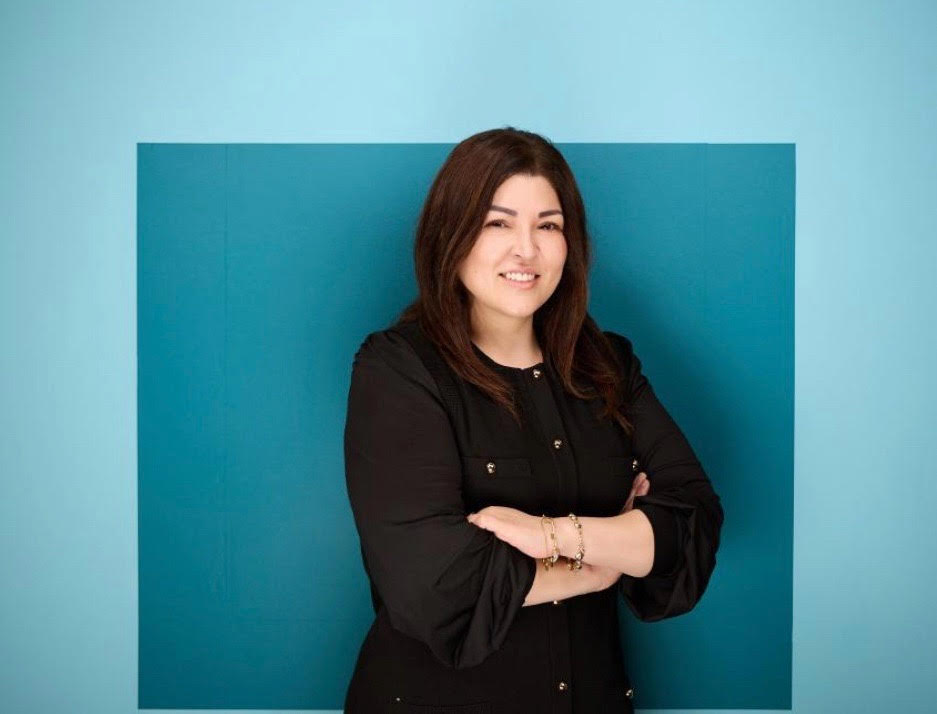
“It was initially framed as a humanitarian intervention,” she says.
Today, she says, the questions are different.
“Partners aren’t asking ‘does this work’ anymore. They’re asking ‘how do we scale’.”
Murtaza says companies working with Aseel have asked whether AWTL graduates can take on contract work. NGOs in countries, including Sudan, have approached the organization about how its mentorship pipeline was structured. Some donor discussions have shifted toward multi-year commitments instead of one-off grants.
None of those signals guarantees successful replication.
But they suggest external interest is moving beyond individual beneficiaries toward the machinery behind the program.
And that creates a new test: whether AWTL can transfer its method, rather than simply grow its Afghan cohort.
Why Placement Alone Is a Weak Measure of Success
One lesson Murtaza believes could travel beyond AWTL concerns how workforce programs define success.
“The biggest lesson is that workforce development and leadership development can’t and shouldn’t be sequenced,” she says. “They have to be designed together from day one.”
She makes a similar argument about placement.
“The second lesson is about designing for retention, not only placement.”
AWTL is building structures intended to keep graduates connected beyond their initial roles, including a peer community, partnership coalition, resource hub, and continued professional support.
Murtaza says the longer-term measure should be whether someone remains employed or active in the sector 18 months later, rather than whether they simply secured a job after training.
For Afghan women, that distinction carries particular weight. Formal professional pathways have been severely restricted, meaning a first job doesn’t necessarily provide the network or institutional support that usually accompanies a career.
Aseel’s longer-term ambition is therefore for alumni to begin creating that infrastructure themselves: graduates hiring graduates, mentoring newer fellows, and opening opportunities without AWTL acting permanently as the intermediary.
“Money builds the program, but access builds the alumni network’s own gravity,” Murtaza says.
If that happens, the strongest network AWTL builds may eventually be one it no longer has to manage.
Scaling AWTL Will Require More Than Funding
That possibility depends heavily on what happens around the program.
Murtaza identifies two partnership needs for AWTL’s next phase: technical partners and international companies.
The first is particularly important if the program moves deeper into AI.
AI tools and employer expectations change quickly. Murtaza argues that training will therefore require partners willing to co-design curriculum around current technologies and real industry problems rather than hand over static courses.
International companies can address another bottleneck: access.
Murtaza wants partners to provide introductions to hiring managers, professional workshops, interview preparation, industry exposure, and opportunities for fellows to participate in panels and professional conversations.
Funding remains necessary. But the next phase requires something harder to purchase: entry into networks where jobs, expertise, and opportunities circulate.
That may ultimately determine whether an alumni ecosystem can become self-sustaining.
Why 100 Fellows May Be the Wrong Measure of Scale
Naikkhwah sees one clear operational benchmark ahead: successful graduation, demonstrable impact, and ultimately 100% placement.
Khalid sets a very different test.
He says he would consider AWTL to have matured and over-delivered when one of its fellows goes on to positively affect more than 500,000 people.
His examples vary widely.
Zainab could one day scale CampaignPlus into a platform facilitating tens of millions of dollars in transparent humanitarian aid. Another fellow could expand Aseel’s marketing reach to millions. Someone elsewhere in the ecosystem could build technology that brings education to Afghan women at scale.
“Who knows,” Khalid says. “But I know it’s coming up soon.”
It reframes what reaching 100 fellows would actually mean.
Headcount measures how large a program becomes.
It doesn’t measure the influence of the people who leave it.
The Real Test: Can Leadership Scale With the Program?
AWTL’s earliest challenge was access: could Afghan women facing extraordinary restrictions still find a pathway into technology and professional work?
Two cohorts have begun answering that question.
The next one is harder.
Aseel is considering larger cohorts, deeper specialization in areas such as AI, and eventual expansion into other regions where opportunities for women in technology remain limited. External organizations are beginning to ask about replication. Alumni are taking on greater responsibility.
But the very elements Aseel credits for producing those outcomes—close mentorship, meaningful work, accountability, trust, and early leadership opportunities—are also the elements most vulnerable to scale.
Training 100 people is one challenge.
Giving 100 people something consequential to own is another.
That may be the real test of AWTL’s next phase: not how many fellows it can enroll, but whether it can keep producing people capable of making the program itself increasingly unnecessary.
Highlights
- AWTL’s Unusual Bet: Treat Fellows Like Employees
- What Changes When Fellows Carry Business KPIs?
- Can Fellows Become Revenue Contributors?
- From UI Designer to Product Manager: Testing the Leadership Pipeline
- AWTL No Longer Has to Prove the Same Thing
- Why Placement Alone Is a Weak Measure of Success
- Scaling AWTL Will Require More Than Funding
- Why 100 Fellows May Be the Wrong Measure of Scale
- The Real Test: Can Leadership Scale With the Program?
Read the Chinese article here.
Related posts:
 Three Organizations Join Forces to Help More Than 1,000 Indonesian Youth Build Future-Ready Skills
 Adeline Tiah’s Take on Leadership & Workforce Transformation
 Michelle Mah: Mental Health is a Strategic Advantage for Leaders
 International Women’s Day: What Writing Women’s Stories Taught Me About Empowerment