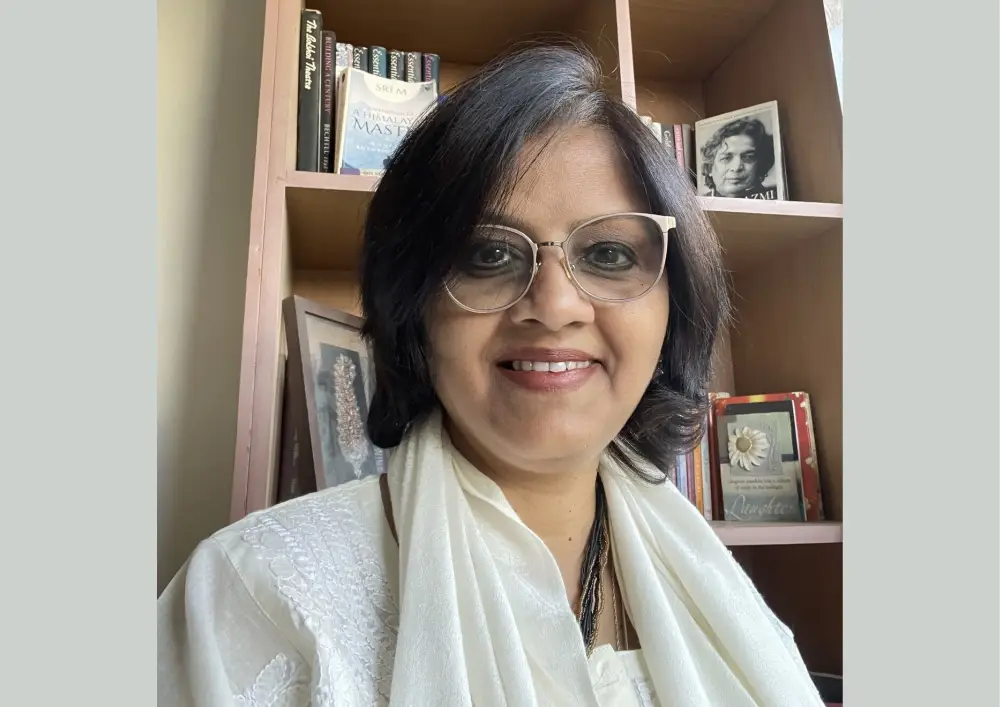
Companies are racing to integrate artificial intelligence into their operations. But as technology takes on more responsibilities, are organisations developing the human capabilities needed to keep pace?
For Carmistha Mitra, a global human capital executive with more than 28 years of experience, this question sits at the heart of the future of work.
Her career spans organisations including Unilever, Coca-Cola India, Samsung, Mahindra Group and Axis Bank, where she has worked across human capital strategy, leadership development and organisational transformation.
Those experiences have shaped a conviction that challenges how businesses approach technological change.
“Every organizational crisis that gets labelled a technology problem is, underneath it, a human capability problem,” she argues.
While companies invest in AI to improve efficiency and productivity, Mitra believes many are overlooking the leadership, judgement and organisational trust required to make those investments effective.
Highlights
The Question CXOs Aren’t Asking About AI
AI pilots, automation initiatives and digital transformation programmes have become familiar features of corporate strategy.
But Mitra believes executives need to ask a more fundamental question:
“What is the organization’s core human capability once the routine cognitive work is gone?”
For her, the future of work comes down to whether organisations can make sound decisions faster than the world changes around them.
To achieve this, she advocates Connected Intelligence, an approach integrating four interdependent capabilities:
- Inner Intelligence: Self-awareness and adaptive judgement.
- Relational Intelligence: Trust and collaboration across differences.
- Systems Intelligence: Understanding interdependencies rather than operating in silos.
- Emergent Intelligence: Recognising and responding to unfamiliar challenges.
Mitra argues that these capabilities should not be treated as separate development initiatives. They belong within an organisation’s operating model, alongside capital allocation and business strategy.
Without that integration, even substantial technology investments may fail to deliver their intended value.
When AI Makes Decisions About People, Who Is Accountable?
AI can reduce administrative burdens and improve productivity, but its growing role in workforce decisions introduces questions about transparency and trust.
Having worked on AI integration across performance, productivity and employee engagement systems, Mitra believes technology should support human judgement rather than replace it.
“AI earns trust when it makes people more legible to themselves. It destroys trust the moment it starts making decisions about people without them.”
She identifies three principles for responsible implementation.
First, AI should reduce friction in repetitive tasks, such as manual reporting and administrative processes, while preserving human discretion in sensitive situations, including coaching and promotion decisions.
Second, employees should understand how AI influences decisions affecting their careers, including the information used to reach those outcomes.
Third, leaders must remain accountable rather than deferring responsibility to automated systems.
“‘The system flagged it’ is not leadership accountability,” she warns.
For Mitra, these principles reflect Relational Intelligence: maintaining trust and human connection even as technology becomes more deeply embedded in workplace decisions.
Why Technical Skills Alone Won’t Build Resilience
Many organisations invest heavily in technology and operational capabilities. Mitra believes fewer devote comparable attention to self-awareness, adaptability and interpersonal trust.
These human capabilities become particularly important when established processes are disrupted or employees must navigate unfamiliar challenges.
Through her work with organisations across India and the Middle East, Mitra focuses on developing the four dimensions of Connected Intelligence together rather than as isolated initiatives.
Her philosophy is captured in three words: “outthink, outlast, outlead”.
She views Connected Intelligence not as another corporate culture programme but as a way to strengthen organisational resilience.
The objective is to help businesses absorb disruption, respond to change and make better decisions across different levels of leadership.
What Gen Z Is Revealing About Leadership
Multigenerational teams are becoming a permanent feature of the workplace, bringing different expectations about hierarchy, purpose and career development.
Mitra believes senior leaders should pay closer attention to what younger employees are signalling rather than dismissing their attitudes as impatience.
Gen Z’s scepticism of traditional hierarchy and emphasis on meaningful work, she argues, may reveal broader weaknesses in organisational trust.
For leaders, the answer is not to imitate younger employees or abandon established practices.
Instead, Mitra advocates genuine two-way mentoring, where experienced professionals share institutional knowledge while younger colleagues contribute fresh perspectives.
This reciprocal exchange allows organisations to retain valuable experience while adapting to changing expectations.
It also reflects her broader belief that effective leadership depends on collaboration across differences rather than expecting everyone to work or think alike.
The Human Capability Question Missing From Boardrooms
As companies increase their AI investments, boards are under pressure to demonstrate progress in digital transformation.
Yet Mitra believes one critical question is frequently overlooked:
“Who in this organization owns the human capability layer that has to exist beneath every technology investment we make?”
Boards may approve substantial technology budgets without equally examining whether their organisations have the leadership pipelines, workforce readiness and culture needed to support implementation.
Unlike software deployment or financial performance, human capabilities can be harder to capture in quarterly reporting.
But Mitra argues that they are just as important in determining whether transformation succeeds.
For her, workforce capability should be treated as a strategic responsibility rather than a separate HR initiative.
Final Thoughts: The Future of Work Is a Leadership Decision
Mitra believes the organisations that succeed over the next decade will not necessarily be those that automate the most.
They will be those that deliberately develop the human capabilities needed to work alongside increasingly sophisticated technology.
Her Connected Intelligence framework challenges executives to look beyond efficiency and consider whether their organisations are becoming more adaptable, collaborative and capable of making sound decisions.
As she puts it, businesses must choose to become their “best future version, not merely their most efficient present one”.
For leaders, the question is no longer simply how much AI their organisations can adopt, but whether their people and leadership capabilities are prepared for what comes next.
Highlights
Read the Chinese article here.
Related posts:
 This CEO Believes That Unlearning Will Shape the Leaders Who Rise in 2030
 After Advising 1,500 Executives Across 52 Countries, She Says One Leadership Myth Is Finally Breaking.
 AI Can Make Your Messages Sound Better. But Could It Make You Look Like a Worse Leader?
 Dr Caroline Dawson: Building Workforce Skills with Clarity