
Mental health is no longer a side conversation; it’s fast becoming a defining factor in how leaders perform, connect, and grow. Michelle Mah, therapist, perinatal mental health specialist, and founder of Rebalance Training & Consulting, wants more leaders to realise this isn’t just a wellness issue, it’s a strategic advantage.
Through her personal experience of burnout and her work across therapy and organisational consulting, Michelle helps leadership teams rethink resilience, emotional intelligence, and the hidden costs of hustle culture.
In this Q&A, she shares powerful insights on how self-compassion, psychological safety, and generational shifts are reshaping what effective leadership truly looks like.
Highlights
Rewriting the Rules of Work and Resilience
Q: What personal turning point led you to transform your healing journey into Rebalance Training & Consulting?
A: Transformations rarely happen in a single dramatic leap—they’re usually a series of honest reckonings. For me, years battling bulimia and burnout weren’t just personal struggles; they became a lens through which I saw the silent suffering in high-achieving environments. The real turning point was recognising how workplaces often reward stoicism and self-sacrifice while quietly punishing vulnerability.
Back then, mental health or psychological safety barely featured in workplace conversations. I realised that by sharing my story, I could help normalise real discussions about wellbeing and growth. Rebalance isn’t just about teaching resilience; it’s about living it—and helping others do the same.

Q: How do you get senior leaders to take mental health, mindfulness, and culture seriously in performance-driven environments?
A: You start by speaking their language: performance, results, sustainability. But I don’t stay there. I show leaders the data—how organisations that prioritise psychological safety and wellbeing consistently outperform those that don’t.
The real shift comes when leaders experience this firsthand. I invite them to try small, practical experiments: a mindful pause before a high-stakes decision, or a genuine check-in with their team. These aren’t about “wellbeing for wellbeing’s sake”—they’re about clarity, agility, and smarter decision-making. Leaders quickly notice they make better choices and inspire deeper engagement when they’re not driven by stress and fear.
The key is reframing emotional intelligence traits like empathy and self-awareness as core competencies, not soft skills. In turn, these traits help leaders confront blind spots, adapt to uncertainty, and foster innovation.
Indeed, as Amy Edmondson’s research on psychological safety demonstrates, cultures that embrace learning and vulnerability consistently outperform those that resist them.
In short: prioritising mental health and culture isn’t a luxury—it’s a strategic edge for sustainable high performance.
Q: What workplace beliefs about burnout and success need to be unlearned for real change to happen?
A: First, the myth that relentless busyness and self-sacrifice prove value or commitment. This belief normalises burnout as part of the success journey. It typically begins with small habits—skipping lunch, answering emails late at night, or feeling guilty for taking breaks—and gradually reflects a culture that rewards self-neglect.
Another myth is that burnout is a personal failing. Many high performers internalise stress, thinking they just need to be stronger or better organised. But burnout is systemic, not just individual. Offering wellness apps without addressing deeper cultural issues is like putting a Band-Aid on a broken bone.
We also need to move past the idea that rest is a “reward” for productivity. That’s why rest and recovery are not just nice-to-haves—they’re essential for sustaining creativity, focus, and long-term performance.
When leaders actively model healthy boundaries—by taking breaks, declining non-essential tasks, and openly discussing their limits—they send a clear and powerful message: wellbeing is not a luxury, it’s a strategic imperative.
The Human Side of Leadership

Q: What’s the biggest disconnect you see between generations at work, and how can organisations bridge it?
A: It’s less about age and more about assumptions. Older leaders often equate success with duty and endurance, while younger colleagues prioritise meaning, flexibility, and authenticity. The metrics for success differ, but almost everyone wants to feel seen and valued.
Ultimately, bridging the gap isn’t about compromise—it’s about embracing new ways of engaging. This includes learning to influence differently, showing greater compassion, and cultivating a culture where individuals of all tenures feel safe to express what truly matters.
To put it into action, tools like structured dialogue, reverse mentoring, and co-created values help lay the foundation of trust that innovation ultimately depends on.
Q: How are today’s younger generation reshaping the conversation around purpose and wellbeing at work?
A: This generation refuses to separate who they are from what they do. They expect work to support—not erode—their wellbeing and question the “why” at every level. As a result, their demand for transparency, inclusion, and authenticity is pushing organisations to fundamentally rethink what success truly means.
Each generation gets labelled a “problem generation”—Gen Z now, Millennials before—but the core desires remain the same: meaning, connection, and recognition. The specifics change, but the need for respect and contribution is universal.
Q: Across therapy and consulting, what’s the most impactful tool you’ve seen help leaders reconnect with purpose?
A: Self-compassion. Not as indulgence, but as an honest, courageous, and nurturing inner relationship. It disrupts the belief that our worth is defined by productivity or perfection.
When leaders embrace self-compassion, they learn to meet setbacks with curiosity instead of self-criticism. They become more human, more connected, and more capable of ethical action. It strengthens their capacity to lead through uncertainty and fosters trust within their teams.
Importantly, it doesn’t mean avoiding accountability. It means owning mistakes, learning, and growing—without getting stuck in shame. It’s the psychological infrastructure for purposeful, resilient leadership.
Q: If you could rewrite one common narrative about success at work, what would it be—and what would you replace it with?
A: The idea that hard work is the ultimate path to success. It may have worked in an industrial era, but today, it’s outdated—and harmful. It leads to burnout, stifled creativity, and disconnection from purpose.
I understand why people overwork, especially amid layoffs and economic uncertainty. Fear of being seen as dispensable drives many to perform busyness. But it’s a trap. Overextending yourself often makes you less effective and more at risk of burnout.
In today’s world, success no longer hinges on sheer output alone. Instead, it comes from adaptability, strategic thinking, and emotional intelligence. While AI takes over repetitive tasks, our unique value increasingly lies in creativity, relationship-building, and innovation.
The most forward-thinking organisations are already redesigning roles around people’s strengths, promoting psychological safety, and empowering employees to prioritize both achievement and wellbeing.
Final Thoughts: Purpose-Led Leadership Starts With Inner Work
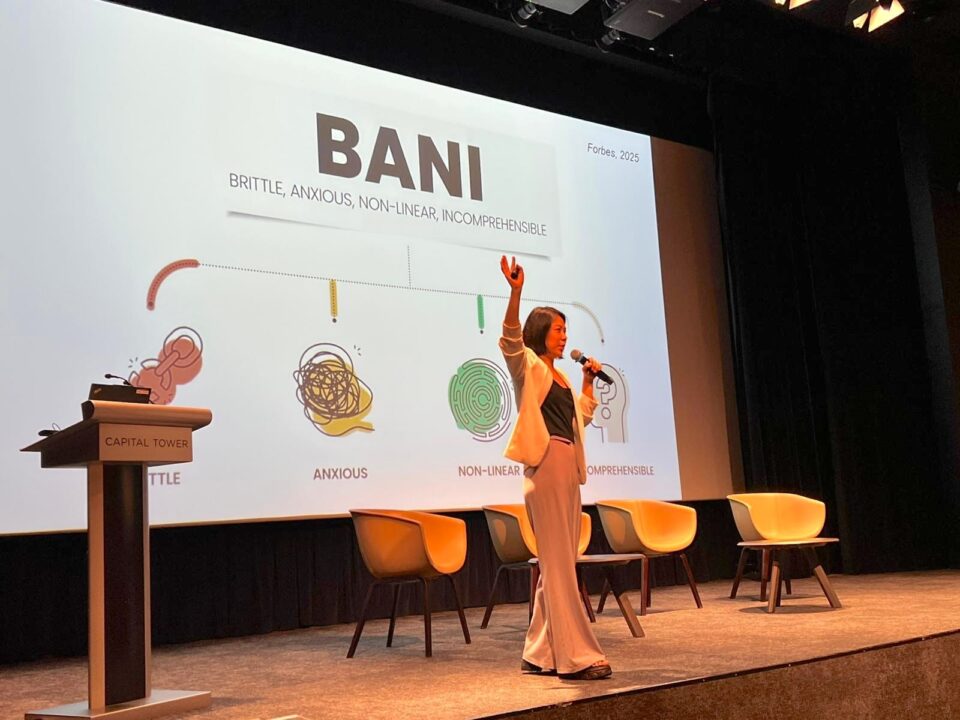
Michelle Mah’s journey shows that sustainable leadership grows from truth, courage, and self-awareness—not from perfection or relentless grind. In her work with leaders, she brings therapy and transformation into the boardroom, challenging outdated success scripts and advocating for cultures of care and clarity.
In an era increasingly defined by complexity, rapid change, and AI acceleration, the leaders who truly thrive are those who lead from within. They make space for reflection, extend compassion to themselves and others, and, most importantly, recognise that real success begins with psychological safety.
Michelle’s work through Rebalance Training & Consulting is not only shifting how we talk about mental health at work—it’s redefining what it means to lead well.
Highlights
Read the Chinese article here, or listen to the podcast here.