


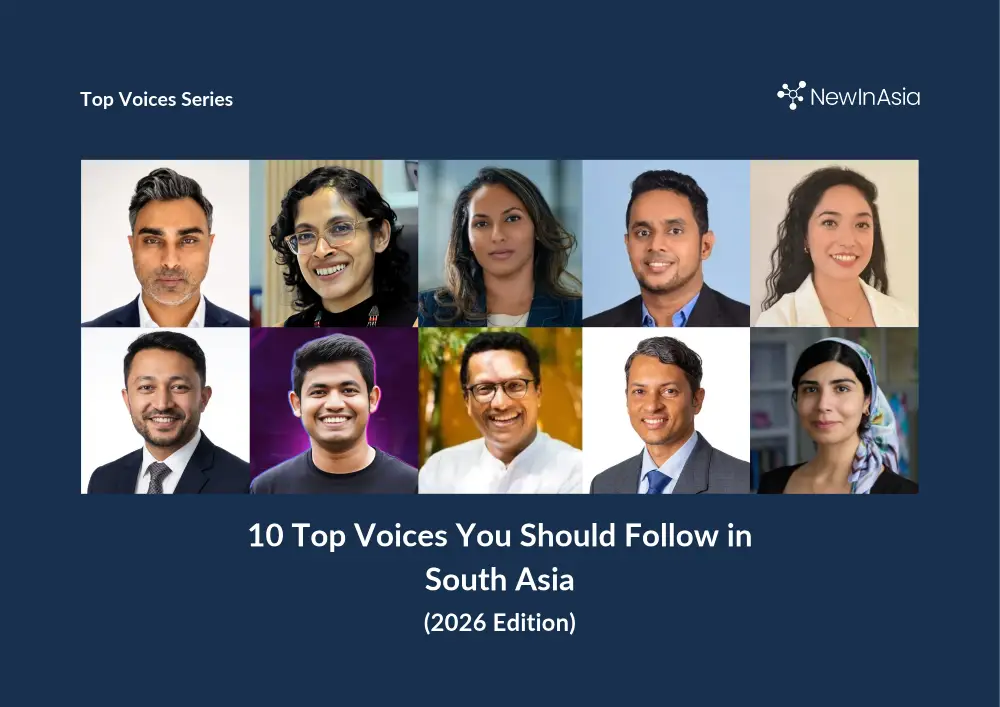
South Asia’s progress is being built under very different conditions. Bangladesh is working to attract global capital and create stronger pathways into technology careers. Nepal is developing new businesses and workplace capabilities. Sri Lanka is tackling questions across health, agriculture, sustainability, and innovation, while the Maldives and Afghanistan bring very different perspectives on small-state leadership, education, and access.
The 10 Top Voices You Should Follow in South Asia (2026) are worth following because they work close to these realities. Their perspectives come from investing, researching, operating, educating, and building within systems that often face resource, institutional, or social constraints.
Together, they show something important: progress across South Asia is not one story. It is a series of practical experiments in how countries, companies, and communities turn ambition into capability.
Highlights
Editorial Note:
This feature is independently curated by the NewInAsia editorial team and is not a paid or sponsored listing. Selections are based on publicly available information, primarily from LinkedIn, and consider factors such as expertise, consistency of public contributions, engagement quality, professional credibility, and relevance to the featured topic. This is an editorial selection, not a definitive ranking.
Rahat Ahmed
Founder & Managing Partner, Anchorless Bangladesh

Rahat Ahmed brings an investor’s perspective to a question Bangladesh continues to face: how does a growing economy attract more international capital without being misunderstood from the outside?
Through Anchorless Bangladesh, he focuses on bringing global investment into Bangladeshi opportunities. His wider involvement with Pathao, Shikho, SAJIDA Foundation, and diaspora network B/deshi also puts him close to founders, impact capital, and ecosystem development.
That makes his perspective useful beyond funding announcements. Ahmed often examines what new investments, companies, and diaspora initiatives signal about Bangladesh’s broader trajectory.
For founders and investors, his value lies in connecting individual deals to the larger narrative: how Bangladesh presents itself globally, where capital sees opportunity, and what still needs to change for the ecosystem to mature.
Neelika Malavige
Professor, Department of Immunology and Molecular Medicine, University of Sri Jayewardenepura
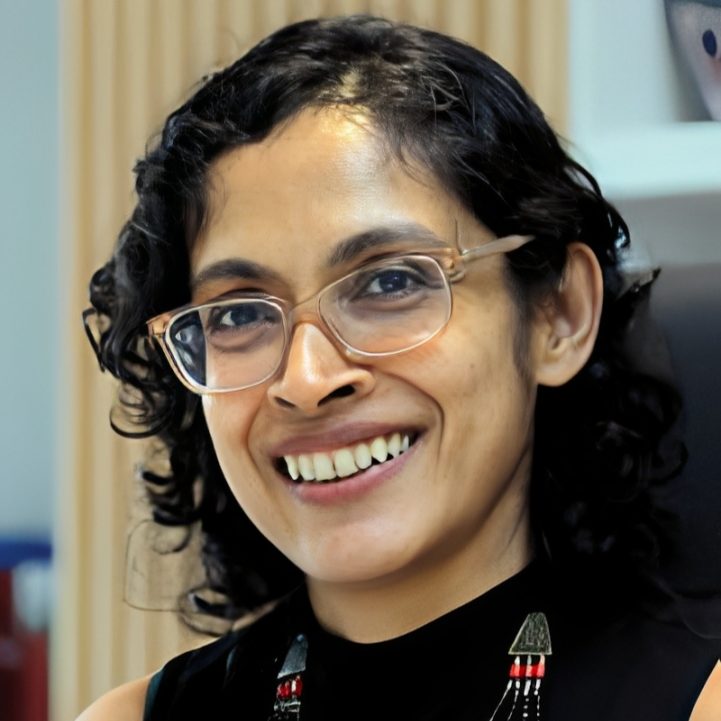
Neelika Malavige brings scientific depth to one of South Asia’s persistent public-health challenges: dengue.
Her research examines how immune responses, antibodies, innate immunity, and vascular leak contribute to disease severity, and increasingly integrates immunology and genomics to inform therapeutics and public health strategies.
What makes her perspective distinctive is the connection between laboratory science and clinical relevance.
Malavige often explains new dengue research, therapeutic developments, and collaborations in terms of what they could mean for treatment and disease management. For healthcare professionals, researchers, and anyone following regional health innovation, she offers a view of how scientific discoveries move from understanding disease mechanisms toward potential real-world application.
Nurain Janah
Founder & Chair, Kandūfā Foundation

Nurain Janah brings a small-state perspective to conversations that are often dominated by much larger economies.
Her experience spans corporate governance, finance, tourism, business transformation, and philanthropy, alongside leadership roles at HARIM, Maldives Premier Bank, and the Kandūfā Foundation.
She often explores AI governance, technology diplomacy, leadership, finance, and economic development through a central question: how can smaller countries participate in shaping global systems rather than simply responding to them?
That lens makes her particularly relevant for leaders thinking about representation, resilience, and economic agency. Janah’s perspective shows how issues such as technology governance and global competition can look very different when viewed from a country with smaller institutions, different constraints, and its own cultural priorities.
Dr. Thiwanka De Fonseka
Chief Sustainability Officer, Komar

Dr. Thiwanka De Fonseka brings an operational perspective to sustainability in the global apparel industry.
At Komar, a billion-dollar US-based apparel brand, he leads environmental and product sustainability pillars, along with sustainability-related regulatory, traceability, and reporting initiatives, and works across industry frameworks and non-profit organizations including Cascale, ZDHC, BCI, and Textile Exchange. His experience therefore sits close to the point where climate commitments become sourcing, manufacturing, materials, and supply-chain decisions.
That is what makes his perspective useful.
De Fonseka frequently uses industry data and operational examples to examine decarbonisation, sustainable sourcing, circularity, chemical management, climate targets, etc., and to question whether existing approaches are sufficient. For business and sustainability leaders, he offers a practical view of the gap between announcing environmental ambitions and implementing them across complex global supply chains.
Pooja Dangol
Founder & Learning and Development Consultant, PD Training & Consultation

Pooja Dangol approaches workplace learning from a simple premise: organizations often do not have a training problem; they have a performance problem.
Having worked with more than 100 organizations and 7,000 professionals, she focuses on leadership capability, communication, HR systems, workplace culture, and organizational development.
Her distinctive contribution is what happens after training ends.
Dangol regularly challenges assumptions about managers, employee performance, and learning interventions, asking whether new knowledge actually changes behavior at work. For HR professionals and business leaders, that makes her perspective particularly practical. She shifts the conversation away from workshops and participation rates toward stronger managers, clearer communication, better collaboration, and whether learning produces measurable improvements in everyday performance.
Santosh Pandey
Country Manager, Yango Nepal

Santosh Pandey offers an operator’s view of entrepreneurship and technology-driven business growth in Nepal.
His experience spans consumer ventures including Oho Cake and Offering Happiness, while his current role leading Yango Nepal puts him close to mobility, platform operations, and market expansion. He is also involved in teaching, mentoring, and youth leadership initiatives.
Pandey often connects those experiences to broader questions around Nepal’s startup ecosystem and opportunities for young people.
For founders and emerging professionals, his perspective is useful because it sits between entrepreneurship and execution. Rather than discussing startup culture in isolation, he shows how products, platforms, teams, and business models have to adapt to Nepal’s market realities—and how ecosystem development depends on giving more people opportunities to participate.
Abdur Rakib
Chief Operating Officer, Programming Hero & Phitron

Abdur Rakib brings a hiring and workforce perspective to the AI-era skills debate.
At Programming Hero and Phitron, he has helped scale operations across learning communities that reach millions of people. More than 6,500 Programming Hero learners have secured jobs, including 2,100+ in remote roles. His experience therefore gives him direct exposure to the point where education meets employer expectations.
That is the question running through much of his perspective: what actually makes someone employable?
Rakib regularly discusses technical careers, AI-era skills, job preparation, and professional development, often grounding his advice in student and placement outcomes. For young professionals, educators, and employers, his value comes from focusing less on credentials alone and more on the skills, habits, and readiness companies appear to reward when making real hiring decisions.
Dilhan C. Fernando
Chairman & CEO, Dilmah Tea | Chairman, Kahawatte Plantations

Dilhan C. Fernando brings a producer-centered perspective to business, agriculture, and sustainability.
His leadership across Dilmah Tea, Kahawatte Plantations, and the Dilmah Ceylon Cinnamon Company places him directly within the relationship between global consumer products and the growers, communities, land, and natural resources behind them.
Fernando’s distinctive lens is that commercial value and responsibility are difficult to separate.
He often connects tea, agriculture, ethical business, nature, and sustainability to the consequences of business decisions for producers and communities. For business leaders, his perspective offers a reminder that supply chains are not simply systems of procurement and distribution. They are relationships—and long-term business decisions can shape livelihoods, ecosystems, and the resilience of the industries themselves.
Heminda Jayaweera
Executive Director, TRACE Sri Lanka | Co-Founder Jendo | Co-Founder, 3H Innovations

Heminda Jayaweera offers a ground-level view of Sri Lanka’s innovation ecosystem.
His work spans TRACE Sri Lanka (Sri Lanka’s largest innovation park), healthtech platform Jendo, technology-enabled reforestation initiative Thuru, IoT services, natural extracts-based startup 3H, and a number of startup-development initiatives.
Rather than concentrating on one industry, Jayaweera’s perspective is about what happens when entrepreneurship is applied to different local problems. He has co-founded and invested in a number of deeptech startups as well, and he is a leading angel investor from Sri Lanka.
He tends to highlight ventures, projects, young founders, and initiatives already being built, giving readers visibility into activity that might otherwise remain fragmented across the ecosystem. For founders, investors, and professionals interested in Sri Lankan innovation, his value lies in showing the experiments underway on the ground — and the people attempting to turn local ideas into scalable businesses and solutions.
Pashtana D.
Executive Director, LEARN Afghan
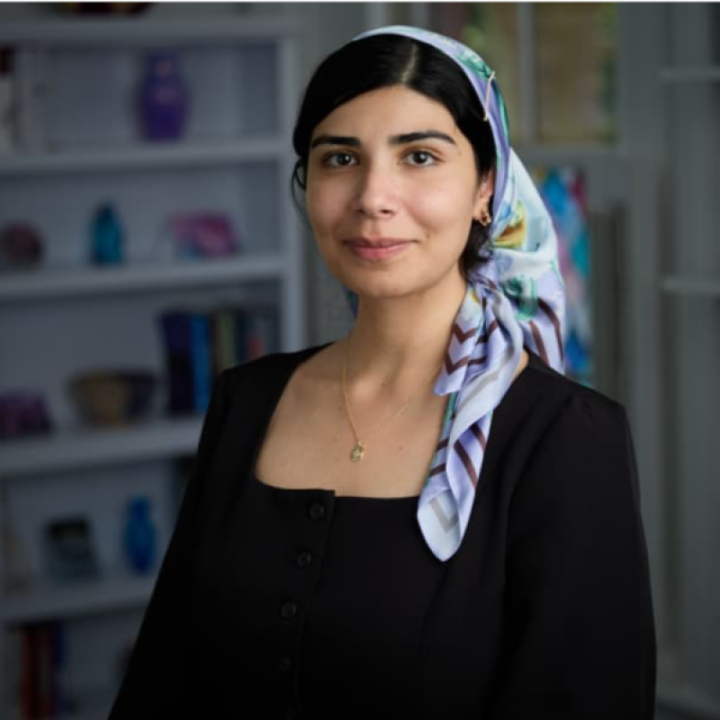
Pashtana D. brings a perspective on education shaped by conditions where access itself cannot be taken for granted. In Afghanistan, where girls are banned from education beyond Grade 6 and women from university, her work centres on keeping education possible for those denied it.
Through LEARN Afghan, which she founded in 2018, she has developed community-based, online, offline, SIM-based, and radio learning models alongside healthcare and livelihood initiatives. Working with local female educators and communities, she has built and adapted learning pathways that allow girls to continue their education under severe restrictions, while also addressing barriers such as unreliable internet, poverty, and restricted movement. Her work connects access to learning with the support and opportunities needed to build a future beyond it.
Her distinctive question is therefore not simply how education can improve, but how it can continue when learners are expressly barred from conventional classrooms. This requires more than alternative delivery: it requires community trust, attention to the safety of students and teachers, and sustained support so that girls can progress rather than lose their education with each new restriction.
Pashtana’s work and advocacy centre on girls’ education, Afghan women’s rights, digital learning, and opportunities for young people. For educators and development professionals, her work offers practical lessons in adaptability, local ownership, and designing education around the realities learners actually face rather than the systems institutions wish existed.
Final Thoughts: South Asia’s Progress Is Being Built Under Pressure
The 10 Top Voices You Should Follow in South Asia (2026) illustrate how differently progress can take shape across the region.
Some are trying to connect local businesses with global capital. Others are turning education into employment, research into better health outcomes, sustainability targets into operational changes, or technology into access where conventional systems fall short. In smaller markets, the challenge can also be gaining a meaningful role in global conversations rather than simply adapting to them.
What connects these voices is not a single sector or definition of success. It is their proximity to the constraints that determine whether an idea actually works.
Following them offers a view of South Asia from inside that process—where institutions, markets, skills, communities, and practical execution continuously shape progress.
Highlights
Read the Chinese article here.