
Across Asia, organisations are moving quickly to give employees access to generative AI, enterprise copilots, and automation platforms. But access alone does not mean transformation.
Employees may be using AI to draft reports, analyse information, prepare presentations, support customer communication, and assist with decision-making. Yet if approval processes, managerial expectations, performance measures, and accountability remain unchanged, the organisation may still be operating according to a pre-AI model of work.
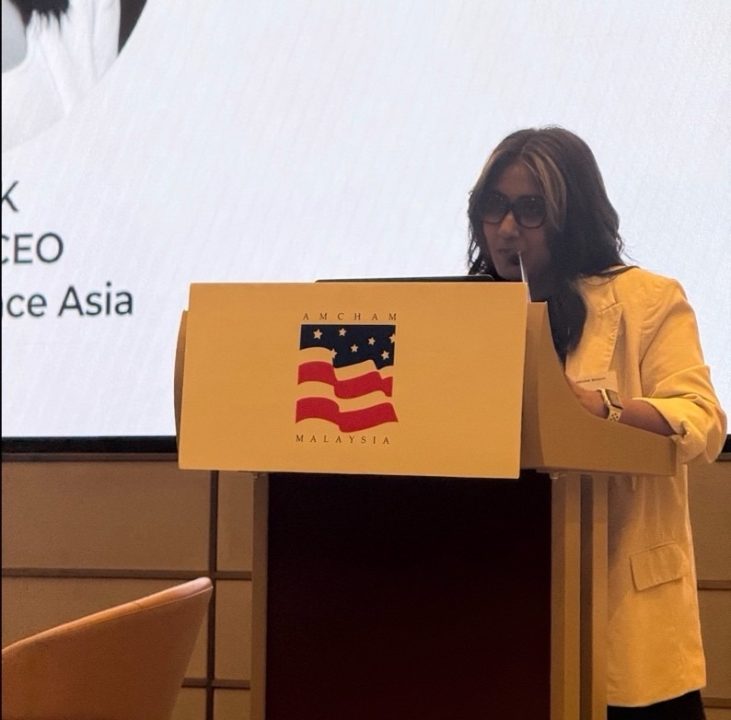
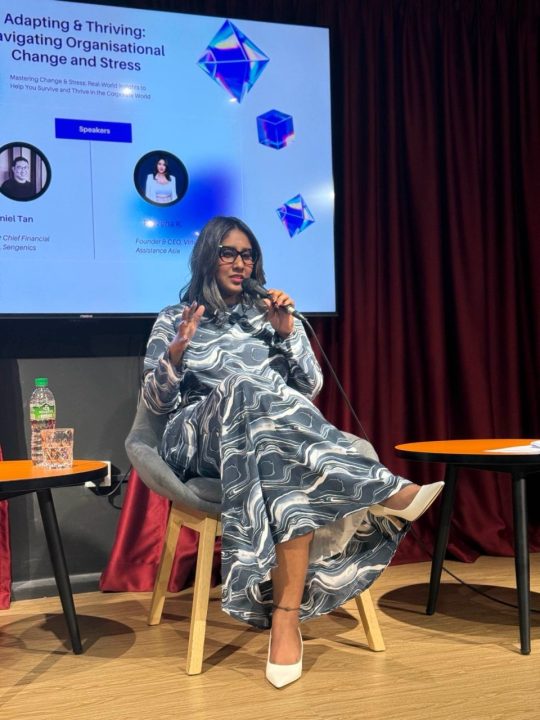
Pravena K works at the intersection of workforce capability, leadership, and Human + AI transformation. She is the Founder and CEO of Virtual Assistance Asia, where she leads corporate training, consulting, and workforce capability programmes across Southeast Asia, and also serves on the AI Programs Advisory Board at the Global Skill Development Council.
For Pravena K, the question is no longer simply whether organisations are adopting AI. It is whether they are changing the way work, judgement, and accountability are structured because AI now exists.
Highlights
- AI Has Changed. The Way We Work Hasn’t.
- Hundreds of AI Users Can Create a Dangerous Illusion
- The Question Isn’t “Can AI Do This?”
- Your AI Dashboard May Be Measuring the Wrong Thing
- AI Can Recommend the Decision. It Can’t Take the Blame.
- “The Algorithm Said So” Is Not an Accountability Model
- The Companies Buying the Most AI Won’t Necessarily Lead
- Your Managers Are About to Manage Work They Didn’t Fully Produce
- The Better AI Gets, the More Valuable These Human Skills Become
- Final Thoughts: Asia’s Bigger Problem May Not Be an AI Adoption Gap
AI Has Changed. The Way We Work Hasn’t.
One of the most consistent patterns Pravena observes in her work is organisations introducing AI into workflows designed entirely for human execution.
The technology may enable experimentation and individual productivity gains, but genuine transformation only occurs when the operating environment begins changing around it.
Employees might use AI to synthesise research, prepare presentations, draft reports, support customer communication, or assist with decisions. Meanwhile, approval processes remain the same. Managerial expectations remain the same. Performance measures remain the same. Decision rights may still be unclear.
AI has entered the organisation, but the organisation itself has not been redesigned for AI-enabled work.
A genuinely transformed organisation should be able to articulate where AI creates value within a workflow, where human review is required, what information may or may not be entered into AI systems, how outputs are validated, when escalation is necessary, and who ultimately owns the decision.
These are not merely technical questions. They involve governance, leadership, workforce capability, role design, and accountability.
This is why Pravena increasingly sees AI transformation as an organisational design challenge rather than a technology-access challenge.
“AI adoption begins when the technology enters the workplace. AI transformation begins when the organisation changes the way work, judgement, and accountability are structured because that technology now exists.”
Hundreds of AI Users Can Create a Dangerous Illusion
High usage can make an organisation appear further along than it really is.
A company may have hundreds of employees regularly using AI for research, communication, reporting, or content creation. Pravena describes this as individual or partial adoption if there is no coherent Human + AI operating model surrounding that activity.
The warning signs are practical: employees do not share a common understanding of how AI outputs should be validated, which systems are approved, what decisions should remain human-led, or who remains accountable for AI-assisted work.
Unstructured adoption can actually introduce additional complexity.
Different employees may use different tools with different security and data-handling standards. Some may over-rely on generated outputs. Others may duplicate existing processes because AI has simply been layered onto the old workflow. Managers, meanwhile, may struggle to assess the quality of AI-assisted work because organisational expectations have not evolved alongside the technology.
The number of people using AI, then, says relatively little about how mature the organisation has become.
The Question Isn’t “Can AI Do This?”
Instead of asking whether AI can perform a particular task, Pravena believes organisations should examine how the entire task should function in a Human + AI environment.
Consider a workflow involving research and decision-making.
AI might support research, synthesis, pattern identification, drafting, or scenario generation. A human professional can then interpret that information, apply context, verify its accuracy, and make the final judgement.
The appropriate division of responsibility depends on the nature and risk of the work.
That makes workflow redesign more than an exercise in identifying tasks to automate. Organisations need to define the respective roles of humans and AI, establish appropriate review and escalation mechanisms, and ensure accountability remains visible throughout the process.
The objective is not simply to insert AI into an existing sequence of work. It is to determine whether that sequence should change now that AI can perform parts of the cognitive workload.
Your AI Dashboard May Be Measuring the Wrong Thing
Licence activation, prompt volume, and frequency of use can show whether employees are engaging with AI. They cannot, by themselves, show whether the organisation is becoming more capable, efficient, or effective at making decisions.
Pravena argues that the more meaningful measures are connected to workflow performance and organisational outcomes.
Is AI reducing cycle times? Is it decreasing repetitive administrative work? Has output quality improved? Is there less rework? Are employees getting faster access to information? Is decision support becoming stronger? Are professionals able to spend more time on higher-value work?
Depending on the context, organisations might also examine whether risks are being identified earlier, whether customer or employee responses are improving, or whether managers are receiving more useful information for decision-making.
The same principle applies to workforce development.
Attendance at an AI training programme is not, by itself, a capability outcome. The more important test is what employees can do afterwards.
Can they recognise appropriate AI use cases within their roles? Can they evaluate whether an output is reliable? Do they understand confidentiality and data-handling boundaries? Can they recognise when human judgement should override or challenge an AI-generated recommendation?
Frequent AI use can coexist with poor-quality work. Measuring activity without measuring what that activity improves can therefore give leaders an incomplete picture.
For Pravena, the more useful question is not simply, “How much are our people using AI?”
It is: “What is measurably better because our people are using AI?”
AI Can Recommend the Decision. It Can’t Take the Blame.
As AI becomes capable of performing more analytical and decision-support work, the boundary between machine output and human judgement becomes increasingly important.
Pravena’s position is clear: “AI can participate in a decision-making process, but it cannot own the consequences of that decision.”
AI can analyse large volumes of information, identify patterns, compare documents, summarise evidence, generate scenarios, and challenge assumptions. These capabilities can substantially improve the speed and breadth of decision support.
But analytical capability should not automatically become decision authority.
How much autonomy AI receives should depend on the level of risk, the consequences of error, and the degree of professional accountability involved.
AI may have greater autonomy in relatively low-risk activities. In higher-impact contexts — including recruitment, employee evaluation, financial decisions, legal analysis, healthcare, safety, and other regulated environments — human oversight should be significantly stronger.
Accountability ultimately remains with the individuals and organisations that design, approve, and use the system.
“The Algorithm Said So” Is Not an Accountability Model
The governance problem becomes particularly visible when responsibility is obscured by technology.
“The system recommended it” or “the algorithm ranked the candidate” can sound as though responsibility has shifted from a person to a machine.
It has not.
A person selected the system, determined the data and criteria, approved its use, and decided whether its recommendation should influence the final action.
This is where Human-in-the-Loop design becomes critical.
AI may perform substantial portions of the cognitive workload by reading, extracting, synthesising, comparing, and identifying possible issues. Where the consequences warrant it, the professional must retain responsibility for interpretation, contextualisation, verification, and final judgement.
But defining accountability on paper is only the beginning.
Responsible AI has to become an operational behaviour. Employees need practical clarity about what information can be entered into AI systems, what outputs must be verified, when an issue should be escalated, which decisions cannot be delegated, and who signs off on the final output.
Governance becomes meaningful when employees can apply it to the work in front of them.
The Companies Buying the Most AI Won’t Necessarily Lead
Over the next three years, Pravena expects the distinction between genuine AI leaders and organisations that merely appear AI-ready to become increasingly visible.
The differentiator, she argues, will not necessarily be the number of AI tools an organisation owns or how much experimentation is taking place.
Instead of beginning with the question of which AI platform to purchase, organisations can begin by examining where work is slow, repetitive, fragmented, or cognitively demanding — and then determine what should change.
Decision rights will also need to become much more explicit.
As AI becomes embedded in everyday work, employees need to know where AI may recommend, where human verification is mandatory, and where final authority must remain entirely human.
Without that clarity, speed and automation can introduce ambiguity around both quality and accountability.
The organisations that move further will therefore be those that treat AI not simply as another layer of software, but as a reason to reconsider how work itself is organised.
Your Managers Are About to Manage Work They Didn’t Fully Produce
AI-enabled work also changes what organisations require from managers.
Managers will increasingly supervise work that has been partially produced, analysed, or informed by AI. They may not have generated every part of that work themselves, yet they still need to assess whether it is accurate, appropriate, and fit for purpose.
That requires a different form of managerial literacy.
Leaders need to be capable of questioning AI-generated outputs, understanding their limitations, and ensuring that increased speed does not replace judgement.
This also changes what AI capability development should look like.
Generic awareness programmes become less useful when finance, HR, operations, sales, executive support, education, and leadership teams all interact with AI differently.
Rather than relying primarily on broad tool demonstrations, Pravena sees a need for role-specific capability based on actual workflows, risks, and responsibilities.
The question shifts from whether employees know how to use an AI tool to whether they know how to use it appropriately in the work they are responsible for.
The Better AI Gets, the More Valuable These Human Skills Become
AI is not only changing workflows. It is also forcing organisations to reconsider role design itself.
As AI absorbs more repetitive cognitive tasks, Pravena expects the relative value of human capabilities such as judgement, contextual reasoning, communication, relationship-building, ethical reasoning, collaboration, and leadership to increase.
That creates a paradox.
The more capable the technology becomes, the more important it is for organisations to understand which distinctly human capabilities need to be strengthened rather than displaced.
AI may take on more reading, extracting, synthesising, comparing, and pattern identification. But organisations still need people capable of understanding context, navigating consequences, working with others, exercising professional judgement, and taking responsibility for the decisions that follow.
The Human + AI workforce is therefore not only about determining what technology can do. It also requires organisations to become more deliberate about what they need humans to do particularly well.
Final Thoughts: Asia’s Bigger Problem May Not Be an AI Adoption Gap
Asia’s AI race is often framed around access, adoption, and speed. Pravena K sees a different challenge emerging.
Organisations are already adopting AI. The more significant question is whether they can redesign themselves quickly enough to use it effectively.
That means moving beyond technology stacks and experimentation towards clearer decision rights, role-specific workforce capability, practical governance, new expectations for managers, and work structures that deliberately define where humans and AI each add value.
For Pravena K, Asia may therefore be facing less of an AI adoption gap and more of an AI operating-model gap.
The organisations that close that gap will move beyond simply being AI-enabled. They will be deliberately structured for Human + AI work, with clearer workflows, stronger capability, better governance, and more explicit accountability.
The next phase of AI transformation in Asia may be less about getting AI into the workplace — and more about rebuilding the workplace around what AI has made possible.
Highlights
- AI Has Changed. The Way We Work Hasn’t.
- Hundreds of AI Users Can Create a Dangerous Illusion
- The Question Isn’t “Can AI Do This?”
- Your AI Dashboard May Be Measuring the Wrong Thing
- AI Can Recommend the Decision. It Can’t Take the Blame.
- “The Algorithm Said So” Is Not an Accountability Model
- The Companies Buying the Most AI Won’t Necessarily Lead
- Your Managers Are About to Manage Work They Didn’t Fully Produce
- The Better AI Gets, the More Valuable These Human Skills Become
- Final Thoughts: Asia’s Bigger Problem May Not Be an AI Adoption Gap
Read the Chinese article here.