



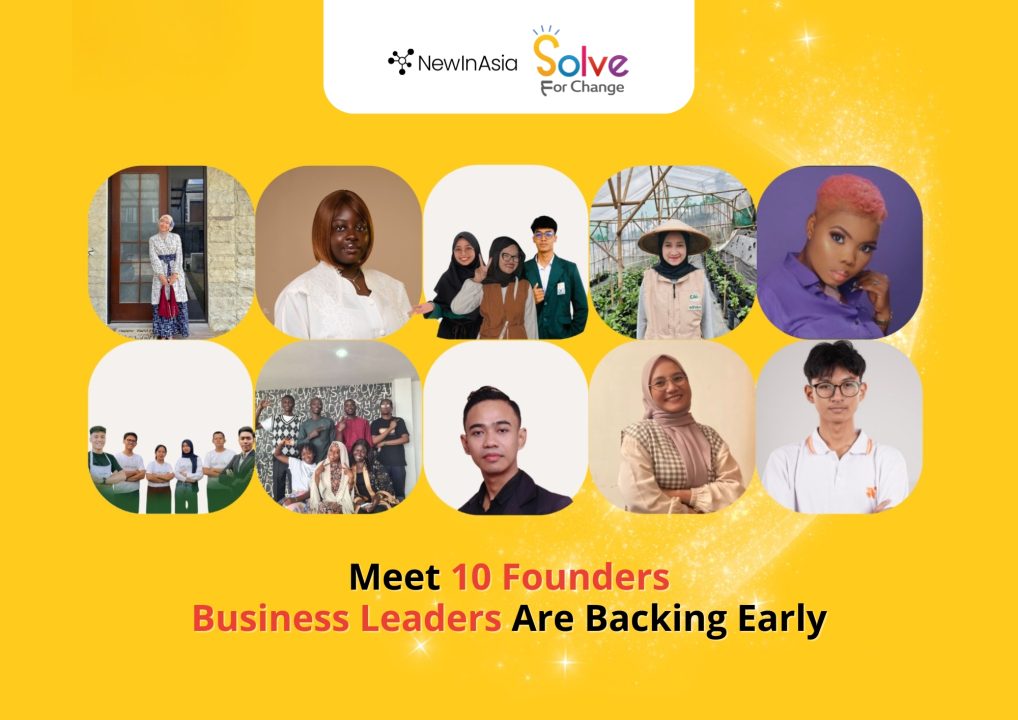
Fifty smallholder farmers in Pasirlangu Village, West Bandung, spent the first weeks of this year digging out from under a landslide — homes gone, farmland buried, and for many of them, their only source of income gone with it.
By mid-year, a cooperative called Koperasi MILFA had a plan running: financial literacy training, soil testing, sustainable farming guidance, and market matchmaking for the affected farmers, with a mandate to turn 50 trained “local champions” into a knowledge network reaching over 100 more. Not a multi-year recovery program. Months.
A few hundred kilometers away, three Indonesian high school students were solving a quieter but equally structural problem — the fact that free peer tutoring exists everywhere and nowhere at once, scattered across group chats and social posts with no way for a struggling student to actually find it. They built Ajarin, a centralized platform connecting students with volunteer peer tutors, and set a goal of 150 active users by the end of the year.
Neither team had a term sheet. Neither had a funding history. What they had was a grant capped at USD 465 — smaller than some executives’ monthly parking budget — and a deadline.
Highlights
Strip Away the CSR Framing
Both ventures are grantees of Solve for Change, a microgrant initiative run by Solve Education!. Its premise is simple: small, community-driven organizations solving real problems in education, livelihoods, climate, and digital equity often don’t fail for lack of a good idea — they fail for lack of early belief, funding, and a network willing to open doors. Solve for Change provides catalytic capital, access to Solve Education!’s edbot.ai learning platform, and mentorship from a community of founders, investors, and business leaders who — this is the part worth pausing on — don’t just write checks. They help find the ventures in the first place.
It’s easy to read that as a nice CSR story and move on. But look at the mechanics for a moment, because they resemble something your audience already claims to want and rarely sees done well: a systematic way to find conviction early, before a market validates it for you.
The Filter Investors Claim to Want but Rarely Build
Every investor says they want to find talent before everyone else does. In practice, most “early-stage” conviction is really late — it arrives after a founder has traction, press, or a warm introduction from someone credible. Genuinely early conviction, the kind formed before any of that exists, is rare precisely because it’s hard to build a repeatable process for it.
Solve for Change has, functionally, built one.
Its selection process scores proposals on Impact (40%), Feasibility & Sustainability (20%), Community Relevance (20%), and Visibility & Engagement (20%) — a rubric that reads less like a grant checklist and more like an investment memo, just applied to a 17-year-old with a village-level problem instead of a founder with a VC deck and a data room.
From there, applicants move through judge scoring and a public engagement stage, a filter tight enough that of the 250-plus youth-led ventures the program has supported to date, only 18 have gone on to be funded and built.

What This Filter Sees Before the Market Does
That selectivity is where the “systems approach” praise for Tarunira, a Bali-based venture, becomes instructive. Tarunira set out to convert an underused local resource — palmyra palm sap — into diabetic-friendly sugar, eco-friendly packaging, and organic fertilizer, while creating income for farmers, women, and youth in the process. What made judges take notice wasn’t the product. It was that the founders had connected agriculture, livelihoods, climate action, technology, and women’s empowerment into one coherent initiative — the kind of multi-variable thinking that usually takes founders years and several failed pivots to develop, not a first proposal.

That’s the pattern across the portfolio, if you look for it rather than for individual feel-good stories: a rural MSME collective turning household waste into a soap business and, more importantly, learning to track income and sell online for the first time. A team modernizing jamu — Indonesia’s traditional herbal drink — into something a Gen Z audience will actually buy, while building income for the women who’ve always produced it.
None of these needed a slick pitch deck to win funding — a filled-out template and a clear milestone plan did the job. They’re overlooked value, run through a structure that forces execution speed and measurable outcomes within months, not years
You’re Being Shown Something, Not Asked for Something
If you sit on the funding or mentorship side of the table — whether that’s a venture fund, a corporate innovation budget, or a personal appetite for early-stage bets — the interesting question isn’t “should I fund a $465 grant.” It’s what a program like this reveals about where founder-grade thinking is forming, well before it’s investable by any conventional definition.
Three things worth taking from it:
Selectivity is a signal, not a marketing line.
Feasibility, community pulls, and systems-level thinking — not sector, not size of ask — are what separate the 18 from the 250-plus.
Small capital is a stress test, and the founders know it.
Yusuf Amos Enyojo, whose venture Inspirational Spring has already reached over 200 young Nigerians with computer literacy training, put it plainly: “We are not held back by systems, but by inaccessible knowledge.” That’s not a founder waiting for more funding to start solving the problem — it’s one who’s already found the actual bottleneck, on a grant most companies would call a rounding error.

The mentorship model is the differentiator, not the money.
Solve for Change’s patrons contribute expertise, networks, and storytelling support alongside funding. That’s a more replicable model for executives thinking about how to engage meaningfully with early-stage talent than writing a one-off CSR check — and one that scales with your own network, not just your budget.
What does backing a founder at this stage actually get you, beyond the goodwill? Three things, concretely.
First, a relationship formed before a founder is “investable” by any conventional measure — the kind of early access that’s impossible to buy once a venture has traction, press, or a competing term sheet on the table.
Second, a low-cost way to test your own judgment: mentoring or advising a venture this early is a cheap, fast way to find out whether your read on a founder or a market holds up, without the capital exposure of a real bet.
Third, and least talked about — visibility. Business leaders who step in as patrons don’t remain anonymous funders; they publicly put their names behind ventures they’ve spotted before anyone else did. That’s reputational capital that compounds if even one of these ventures goes on to matter.
Final Thoughts: Notice Early, or Notice Last
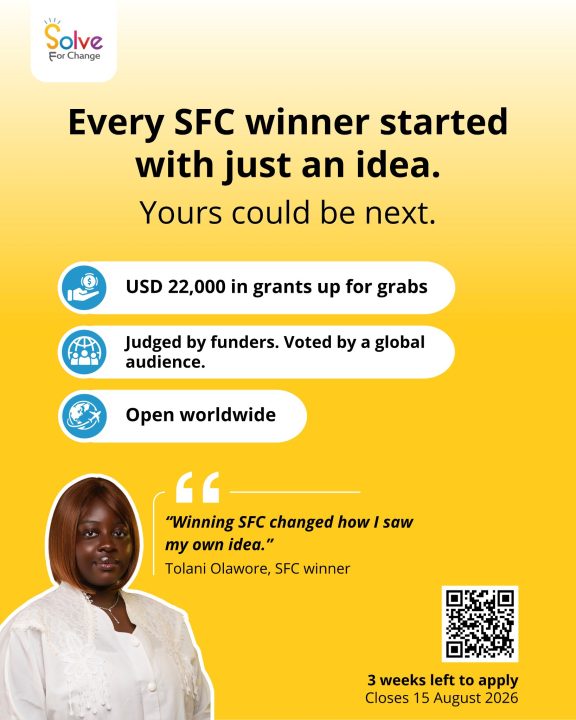
Solve for Change’s current grant round closes 15 August 2026, with USD 22,000 in total grants available across the batch.
That deadline matters less than the standing invitation behind it: business leaders can join the program’s patron network on a rolling basis to mentor founders, open doors through their networks, or amplify promising ventures — not just fund them. If that’s you, the entry point is straightforward: solveforchange.org.
Whether or not you engage with this specific round, the more durable takeaway is the model itself: structured, criteria-driven, low-capital scouting can surface founder-grade thinking in places conventional pipelines never look — a landslide-recovery cooperative, a trio of teenagers building an ed-tech platform, a Bali collective rethinking a palm tree.
The next generation of founders isn’t waiting for the market to notice them. Programs like this are betting that the leaders who notice first — as mentors, as patrons, as simply attentive readers — will be the ones who understand where value comes from next.
Highlights
Read the Chinese article here.
Related posts:
 Cayden Chang: Building Wealth with Purpose and Resilience
 Singapore’s Plastic Problem Isn’t a Lack of Ideas. It’s What Happens After the Pilot.
 Straits Interactive and Asia Pro Ventures Collaborate on AI-Powered Incubator and Investor Platforms
 Introducing NIA’s 2025 Editorial Fellows: Voices Behind the Change