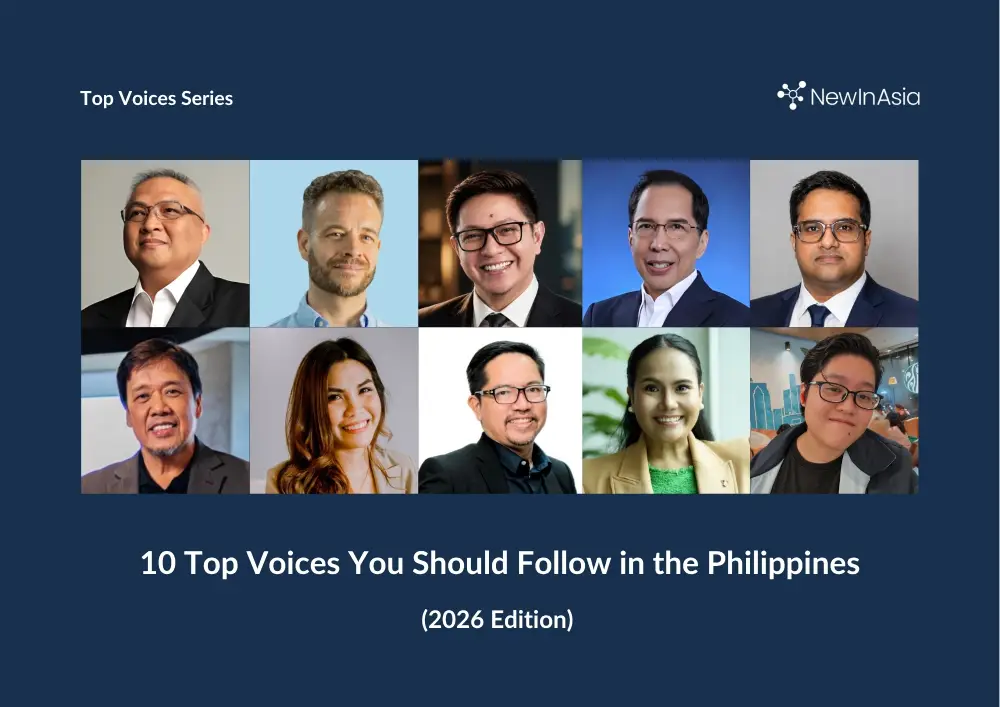
The Philippines is entering a period where technology, infrastructure, workforce transformation, financial inclusion, sustainability, and industrial growth are becoming increasingly interconnected.
The 10 Top Voices You Should Follow in the Philippines (2026) stand out not simply because of their positions or visibility, but because their real-world experience gives them a distinctive perspective on those shifts. Some are leading major companies. Others are building new ventures, transforming healthcare systems, developing AI, strengthening agriculture, or helping Filipino professionals participate more competitively in the global economy.
What makes their perspectives worth following is proximity. They are making decisions, testing ideas, managing systems, and solving problems inside the changes they discuss.2
Highlights
Carl Cruz
President and CEO, Globe
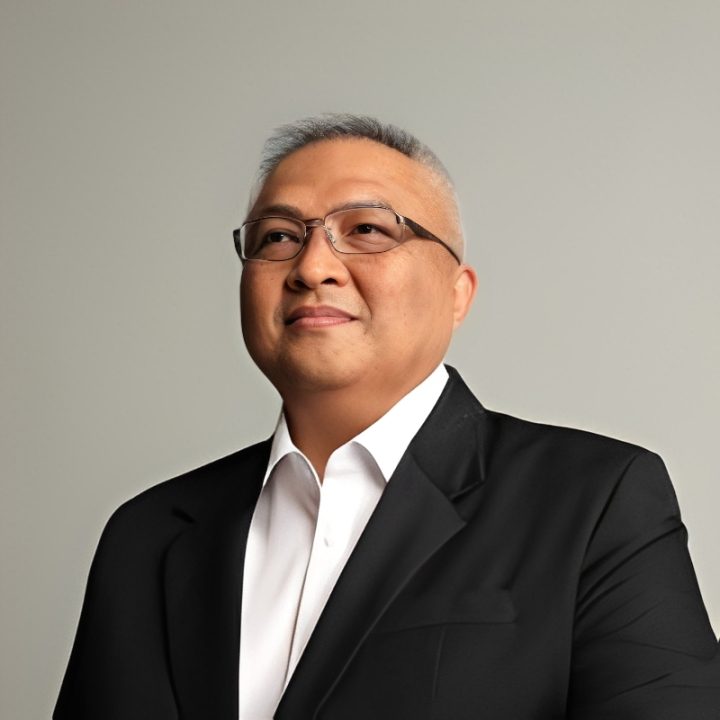
Carl Cruz brings more than three decades of leadership experience across the Philippines, India, Thailand, Sri Lanka, Nigeria, Ghana, and Francophone West Africa. Before becoming President and CEO of Globe in 2025, he led Airtel Nigeria and previously spent more than 30 years at Unilever in roles spanning sales, customer development, country management, and regional leadership.
That background gives him a broad view of how large organisations adapt across very different markets while staying close to customers.
Cruz often explores telecom, digital inclusion, customer experience, AI, and enterprise innovation through that leadership lens. In particular, he connects technology and connectivity with their practical impact on Filipinos. Rather than treating digital infrastructure as an end in itself, his perspective brings the conversation back to access, customer experience, and how technology can serve people at scale.
Nicolas Bivero
CEO & Co-Founder, Penbrothers

Nicolas Bivero has spent more than two decades building businesses and operations across Asia, with much of that journey shaped by the Philippines. In 2014, he co-founded Penbrothers in Manila to help companies solve workforce and operational challenges through Filipino talent.
The company has since hired more than 5,000 people and built offshore teams for startups, small businesses, and enterprises. Bivero also spent more than a decade leading Philippine operations for the Uyeno Group across maritime, solar, and related businesses.
That experience gives him a particularly grounded perspective on the future of work. Bivero regularly examines Filipino talent, outsourcing, AI, remote work, and workplace culture through the realities of building distributed teams. His lens goes beyond whether remote work will grow: he looks at how global employment is changing and what the Philippines and its professionals need to navigate those shifts.
Dr. Rey Fremista
Founder & Chief Consultant, MindGrit
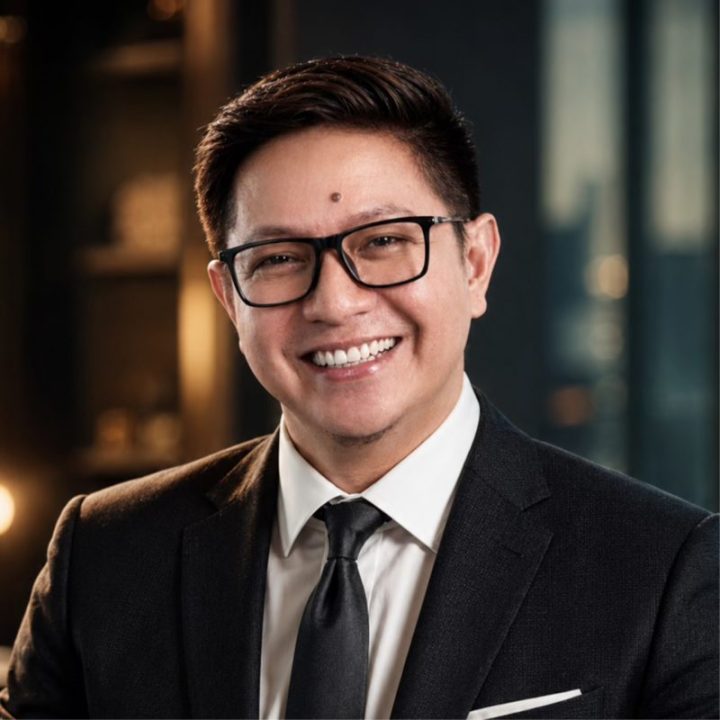
Dr. Rey Fremista works at the intersection of leadership, quality, organizational performance, and transformation. As Founder and Chief Consultant of MindGrit, he works with leaders and organizations to turn strategy into execution by strengthening leadership capability, improving systems and processes, and building organizations that can adapt and perform in an increasingly complex business environment.
His experience spans nearly two decades across operational excellence, quality management, leadership development, organizational transformation, and education.
He is a five-time President of the Philippine Society for Quality and currently serves as its Chair. He is also an Academician of the International Academy for Quality and a Presidential Appointee to the Philippine Quality Award Executive Committee. Alongside his consulting and industry work, he teaches operations management, strategic management, business intelligence, and quality across several universities.
A recurring theme in Fremista’s work is the gap between knowing what needs to change and actually making change happen. His perspectives explore leadership, team effectiveness, organizational capability, AI, customer experience, quality, and business performance. Rather than treating transformation as the adoption of the latest management idea or technology, he focuses on the leadership behaviors, capabilities, and systems that enable organizations to turn change into sustained performance.
Alexander Ablaza
Chief Executive Officer, Climargy Inc
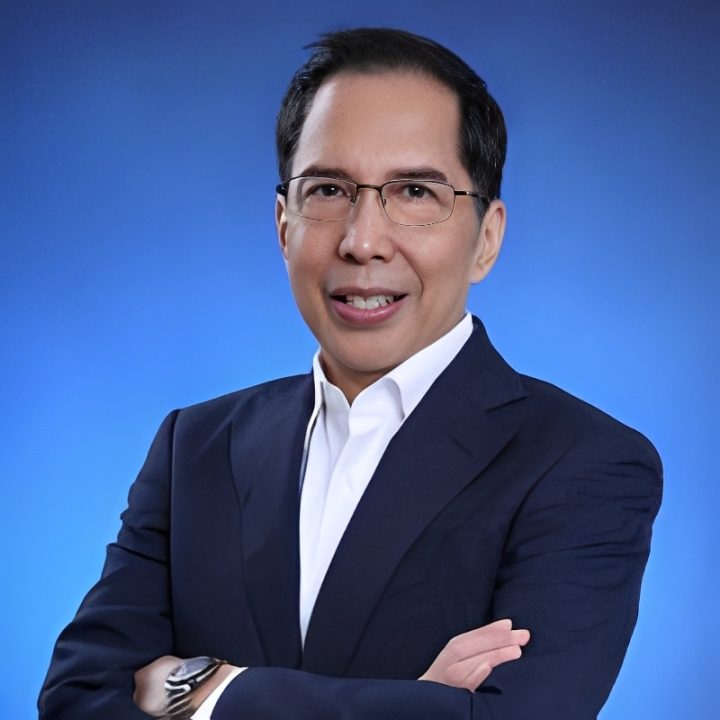
Alexander Ablaza has spent the last 26 years focused on expanding energy efficiency and clean-energy deployment across 17 Asian markets. His work has included the identification, due diligence, and financial close of more than $3 billion in direct investments, alongside policy, market transformation, and financing initiatives.
As CEO of Climargy, he focuses on developing and financing energy-efficiency projects for commercial and industrial organisations. He also chairs both the Asia-Pacific ESCO Industry Alliance and the Philippine Energy Efficiency Alliance.
That background gives Ablaza a highly specific perspective on climate action: how technically viable opportunities become investable projects. He consistently connects energy efficiency with climate finance, regulation, and market design, bringing attention to the structures behind implementation. Sustainability, through his lens, is therefore not simply about setting targets, but about creating the financial and policy conditions that allow projects to move forward at scale.
Vicky A. Mathur
Vice President – Global Supply Chain & Commercial, SteelAsia Manufacturing Corporation
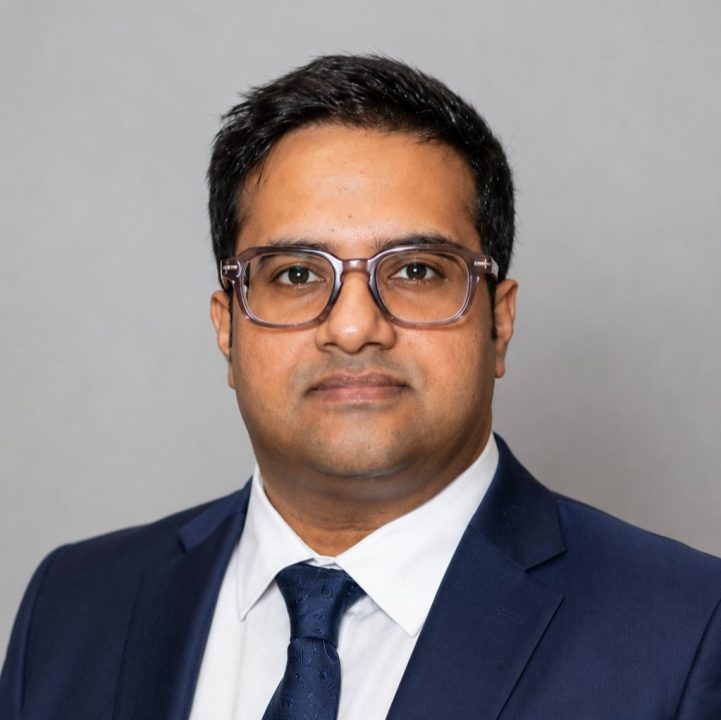
Vicky A. Mathur brings a cross-border industrial perspective to how geopolitics, trade, infrastructure, and sustainability are reshaping the physical supply chains that keep economies moving.
With more than 13 years of experience across Asia, the Middle East, Africa, and Europe, he has worked across procurement, international trading, logistics, exports, and commercial operations in the steel industry. At SteelAsia, he oversees global sourcing, commercial strategy, and export operations across multiple mills, including the procurement of more than 200,000 tons of steel billets each month.
Steel is foundational to industrial development, underpinning infrastructure, construction, energy, transportation, manufacturing, and economic growth. As the Philippines’ flagship steel manufacturer, SteelAsia plays a strategic role in strengthening the country’s domestic industrial base and reducing dependence on imported steel. Its importance to the country’s development was underscored by President Ferdinand Marcos Jr., who personally led the inauguration of SteelAsia’s Compostela Works in 2024.
Mathur’s role also places him close to SteelAsia’s transition toward Electric Arc Furnace (EAF) steelmaking and lower-carbon production, connecting supply-chain decisions with the broader transformation of the steel industry.
He regularly examines how geopolitics, trade, infrastructure, technology, and sustainability are changing global supply chains. Crucially, he approaches these shifts from inside industrial operations, where changes in markets or policy ultimately become questions of materials, suppliers, logistics, costs, inventories, and production. His perspective offers a practical view of what industrial resilience requires on the ground, and how companies can turn volatility into supply-chain advantage.
Follow Vicky A. Mathur for insights on global supply chains, industrial resilience, international trade, steel, and sustainable manufacturing.
Jojo Malolos
Chief Executive Officer, PayMongo
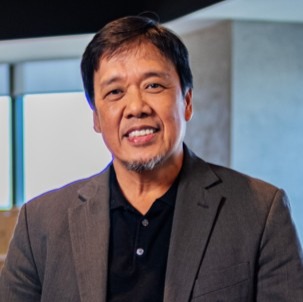
Jojo Malolos builds financial services for markets where formal banking has failed to keep pace with how people and businesses actually transact.
Since February 2023, he has led PayMongo, the BSP-regulated financial technology company helping fast-growing Filipino businesses collect payments, move money, access working capital, and manage transactions in one platform. PayMongo also provides the licensed financial rails that fintechs, banks, and platforms embed into their own products.
His career spans the Philippines, Latin America, and Africa. Before PayMongo, Malolos served as CEO of JG Digital Equity Ventures and Data Analytics Ventures at the Gokongwei Group, where he co-founded GoTyme Bank. Earlier, he helped expand access to financial services for unbanked customers through mobile-money ventures including WING Specialised Bank and Smart Money. He also serves on the Southeast Asia Senior Advisory Council of Women’s World Banking.
Malolos writes from the operating floor. He returns to a persistent problem: merchants can trade for years, generate real cash flow, and remain invisible to credit systems built around paperwork and collateral. His work examines how transaction data can close that gap—and what financial products must solve when they meet the realities of merchants, fragmented infrastructure, and emerging markets.
Shary Ann Pineda
Founder, Shepherd Accounting Solutions

Shary Ann Pineda has built her work around a part of business growth that often receives less attention: the financial systems behind it.
As Founder of Shepherd Accounting Solutions, she leads a remote bookkeeping agency serving clients across the United States, United Kingdom, Australia, and Canada. Her work includes bookkeeping, reconciliations, financial reporting, clean-up projects, and preparing business records for accountants.
She also operates The Bookkeeper Secret Academy, which has trained more than 5,000 students and built a community of more than 76,000 aspiring and working virtual bookkeepers.
Pineda’s perspective connects two sides of the remote economy. She shares practical lessons around bookkeeping, financial operations, onboarding, and client management while also examining how Filipino professionals can build the skills and systems required to serve international businesses. The result is a grounded view of remote work from both the business owner’s and service provider’s side.
Frank Vibar
Chief Information Technology Officer, Asian Hospital and Medical Center
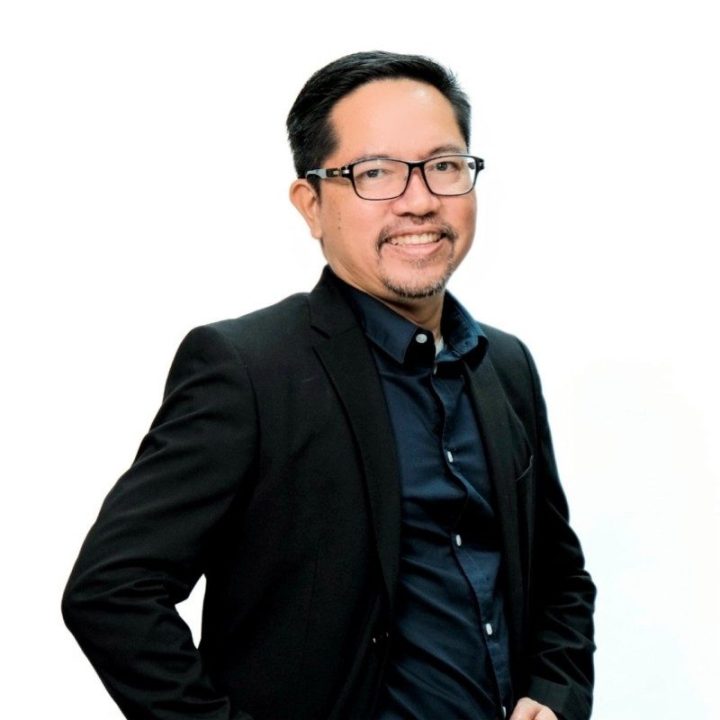
Frank Vibar brings more than 25 years of technology leadership to one of the most complex environments for digital transformation: healthcare.
As CIO of Asian Hospital and Medical Center, he leads technology strategy across clinical systems, infrastructure, cybersecurity, data, AI, and digital innovation. Previously, as Group CIO of Metro Pacific Health, he developed enterprise architecture and technology roadmaps across a network of more than 20 hospitals.
His work has included electronic medical records, patient portals, enterprise data platforms, AI adoption, managed security operations, and business continuity systems.
Frank frequently translates responsible AI, cybersecurity, data, and digital transformation into practical questions for healthcare organisations. His perspective keeps the focus on what technology means for hospitals, clinicians, patients, and operational teams. Rather than treating AI or digitalisation as goals on their own, he examines how they can create measurable value while healthcare organisations manage security, complexity, and trust.
Cherrie Atilano
Founding Farmer and President, AGREA
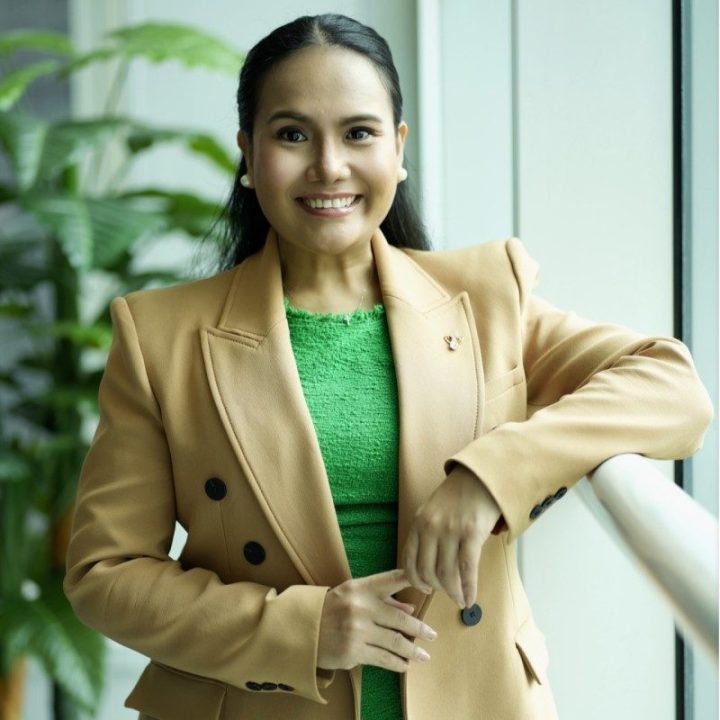
Cherrie Atilano has worked in agriculture since childhood and has built her career around making food systems more inclusive, resilient, and sustainable.
As Founding Farmer and President of AGREA, she leads initiatives that have reached 37,000 farmers and women food producers. Her work spans women’s economic empowerment, nutrition, regenerative farming, agroecology, climate-smart agriculture, and youth opportunity.
She also serves in global roles connected to nutrition, food systems, and employment, including the World Economic Forum, the Scaling Up Nutrition Movement, and the World Bank’s Solutions for Youth Employment initiative.
Atilano tends to frame agriculture as something much larger than food production alone. She connects farming with nutrition, livelihoods, women’s economic participation, climate resilience, and community development. That systems-level perspective gives readers a view of how changes in agriculture can ripple through families and communities while addressing environmental and economic challenges at the same time.
Danielle Meer
Co-Founder and Director of AI, BYC Ventures | Director of Artificial Intelligence, Prismo Technology

Danielle Meer represents a more builder-driven side of the Philippines’ AI conversation.
A competitive programmer and three-time StackLeague Coding Champion, he has worked across AI development, blockchain engineering, and software experimentation. He is currently Co-Founder and Director of AI at BYC Ventures and Director of Artificial Intelligence at Prismo Technology.
His profile reflects a hands-on technical path rather than a purely managerial one, with work spanning machine learning, AI engineering, and emerging approaches such as homomorphic encryption.
Meer often shares what he is actively building and experimenting with, from AI tools and agentic workflows to data and new development approaches. That gives him perspective and an immediacy that broader discussions about AI can lack. Readers get to see the technology from a developer’s side: how new tools change workflows, what can actually be built with them, and how experimentation is reshaping software development.
Final Thoughts: Where the Philippines Finds Its Next Advantage
The 10 Top Voices You Should Follow in the Philippines (2026) point to a country whose next phase of growth will depend not only on adopting new technologies, but on strengthening the systems around them.
Connectivity must translate into inclusion. AI must work responsibly inside organisations. Financial technology has to solve real merchant and consumer problems. Energy transition requires financing structures that can move projects from possibility to execution. Meanwhile, workforce competitiveness, food security, healthcare modernisation, and industrial resilience all depend on people who can connect strategy with what happens on the ground.
Across these different fields, one pattern becomes clear: the Philippines’ opportunities are increasingly tied to execution, capability, and participation.
Following these voices in 2026 offers a closer look at how those questions are being worked through—and what they reveal about the country the Philippines is becoming.
Editorial Note:
This feature is independently curated by the NewInAsia editorial team and is not a paid or sponsored listing. We research professionals using publicly available information, primarily LinkedIn, and conduct an editorial review based on factors such as expertise, consistency of public contributions, engagement quality, professional credibility, and relevance to the featured topic. This is a curated editorial feature, not a definitive ranking.
Highlights
Read the Chinese article here.