Across Australia and New Zealand, some of the most interesting conversations about the future are happening where technology meets real-world execution. AI needs infrastructure and governance. Sustainability needs practical pathways. Careers are becoming less linear, while businesses are reconsidering how they communicate, build brands, use data, and respond to changing expectations.
The 10 Top Voices You Should Follow in Australia & New Zealand (2026) bring experience from inside these shifts. They include founders, educators, executives, researchers, policy specialists, and operators who have built businesses, influenced systems, taught communities, or tested new ideas in practice.
What connects them is not a single industry. It is their ability to turn experience into perspectives that help others understand what is changing—and what those changes look like beyond the headlines.
Highlights
Vinh Giang
CEO, Luminary Productions | Communication Skills Teacher
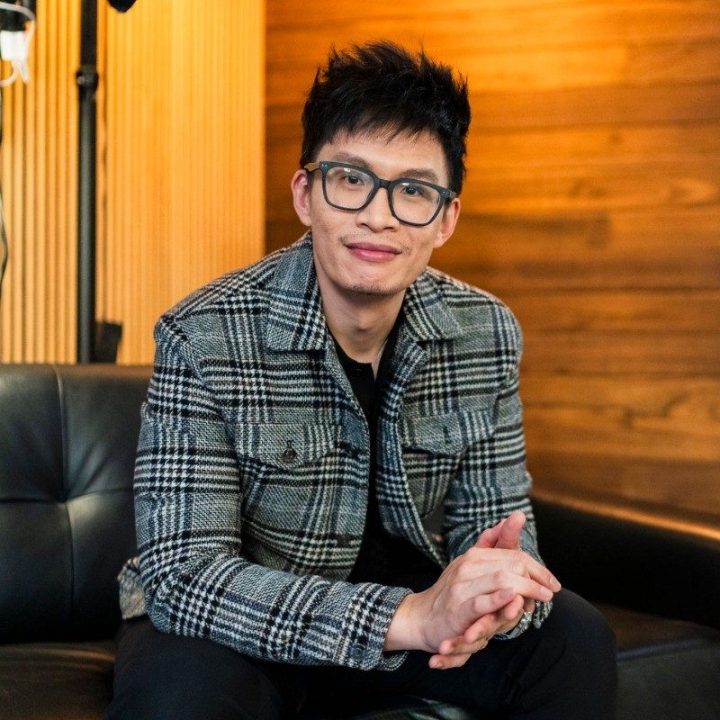
Vinh Giang’s path into communication began through an unlikely medium: magic. After years spent studying performance and audience reactions, he moved from performing himself to teaching others how to communicate with greater confidence and impact.
Today, Giang teaches public speaking and communication through his STAGE masterclasses and has worked with professionals and organisations around the world. His experience combines performance, psychology, influence, business, and years of closely observing how audiences respond.
That background makes his approach highly practical. Giang regularly breaks communication down into skills people can actually work on, from voice and body language to confidence, curiosity, and entering conversations effectively. Rather than treating communication as something people either naturally possess or lack, he presents it as a craft that can be studied, practised, and improved.
Robin Khuda
Founder and Chief Executive Officer, AirTrunk

Robin Khuda has spent his career building and leading technology infrastructure businesses, culminating in the founding of AirTrunk in 2015. The company developed a hyperscale data-centre platform spanning markets across Asia-Pacific and the Middle East.
In 2024, a consortium led by Blackstone and including Canada Pension Plan Investment Board acquired AirTrunk in an A$24 billion transaction, with Khuda continuing as an investor. His wider involvement now includes the Business Council of Australia, the Centre for Australia-India Relations, and philanthropic work supporting areas including STEM education.
That experience places Khuda close to one of AI’s less visible requirements: physical infrastructure. He examines data-centre growth alongside investment, energy, water, safety, and community impact. His perspective broadens the AI conversation from software and models to the infrastructure—and responsibilities—required to support digital growth at scale.
Reza Rad
CEO, RADACAD

Reza Rad has spent more than 20 years working hands-on with data architecture, business intelligence, warehousing, analytics, and increasingly AI. After working as a consultant inside larger firms, he founded RADACAD with an emphasis on practical value and education.
His work now spans consulting, training, books, conferences, and community building. He also leads the Microsoft Fabric & Power BI Summit, the Difinity Conference, and the New Zealand Business Intelligence Users Group.
That combination of technical implementation and education gives Rad a clear lens on how data technologies evolve in practice. He regularly explains Microsoft Fabric, Power BI, DAX, data governance, architecture, and technology migrations, turning product developments into guidance professionals can apply. For readers working with data, his perspective helps bridge the distance between new capabilities being announced and the decisions required to actually use them.
James Hurman
Founder & Chair, Previously Unavailable
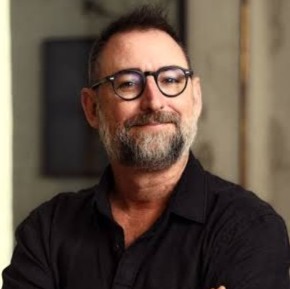
James Hurman sits at the intersection of creativity, brand strategy, entrepreneurship, and advertising effectiveness.
He founded and chairs Previously Unavailable, an innovation studio working on new products, brands, and businesses. He is also a co-founder of Tracksuit and AF Drinks, an investment committee member for Brand Fund, and the creator of the Master of Advertising Effectiveness. His books include The Case for Creativity and Future Demand, exploring the commercial value of creativity and long-term brand building.
Those different roles give Hurman a perspective shaped by both theory and building companies. He examines advertising effectiveness, creativity, brand investment, and the tension between long-term brand building and performance marketing. By drawing on real campaigns and businesses, he makes marketing strategy less abstract and brings the conversation back to what actually creates sustainable commercial growth.
Loma Naser
Public Policy Modelling & NDIS Consultant

Loma Naser approaches disability policy from two directions: the systems shaping it and the providers working within it.
Before moving into the NDIS space, she spent more than a decade in risk and internal audit, including serving as a Chief Audit Executive in organisations of up to 35,000 people and working in strategy advisory at EY. She has since built whole-of-government cost modelling referenced against six ANAO reports, contributed submissions to government inquiries, and worked directly with NDIS providers on operations, compliance, referrals, rosters, and payments.
That combination keeps her analysis unusually close to implementation. Naser examines NDIS reform, disability services, provider compliance, and regulatory change through their practical consequences. Her perspective connects decisions made at the policy level with what providers and communities experience once those decisions reach the frontline.
Dr Mahsa McCauley
UNESCO Commissioner (Communication & Information), New Zealand | Founder & Director, She Sharp | Head of Computer & Information Sciences, AUT

Dr Mahsa McCauley combines technology governance, computer science, AI research, education, and advocacy for greater participation in technology.
She serves as Communication and Information Commissioner for the New Zealand National Commission for UNESCO. She is also the Founder and Director of She Sharp and Head of the Department of Computer and Information Sciences at Auckland University of Technology (AUT), where she is an Associate Professor with research interests spanning AI, machine learning, and the Internet of Things.
In 2014, McCauley founded She Sharp, a nonprofit connecting girls, tertiary students, and professionals with learning and networking opportunities in technology. Her work in technology governance also includes participation in ISO committees covering AI, cybersecurity, and privacy.
McCauley therefore approaches AI from more than a technical angle. She connects governance and ethics with education, innovation, and opportunity, bringing attention to how New Zealand develops technology while also developing the people who will shape it.
Alec Tang
Sustainability Reporting Board Member, External Reporting Board

Alec Tang has built his career around turning sustainability challenges into practical organisational and economic questions.
A Chartered Environmentalist, his experience spans academia, business, and the public sector, including work on climate strategy, liveability, wellbeing, sustainability programmes, and organisational transformation. He currently serves on New Zealand’s Sustainability Reporting Board and the Chapter Zero New Zealand Steering Committee, while also teaching sustainable business at Auckland University of Technology.
That breadth allows Tang to connect environmental issues with how institutions and companies make decisions.
He regularly explores climate, nature, natural capital, biodiversity, renewable energy, infrastructure, and sustainable business. Rather than separating environmental goals from economic activity, his perspective considers how sustainability becomes embedded in strategy, reporting, investment, infrastructure, and the long-term decisions organisations make.
Natalie Tran
Founder, Transition With Purpose | Career & Business Coach

Natalie Tran knows career reinvention from both sides of the conversation.
She began in accounting at Deloitte before moving through finance roles and eventually becoming an Executive Director at Goldman Sachs Asset Management. She later left that career, retrained in wellbeing, coaching, and personal development, and founded Transition With Purpose.
Tran has since guided more than 9,000 professionals through career development, transition, and personal-branding programmes. She also works with executives and professionals navigating redundancy, leadership changes, consulting, and self-employment.
That journey shapes how she examines the changing nature of careers. Tran explores reinvention, portfolio careers, strategic networking, professional positioning, and changing models of work. Her perspective is especially relevant for experienced professionals reconsidering what career progression means when the next chapter may involve repositioning existing expertise rather than simply moving into another conventional role.
Kelly Slessor
CEO, Tribe Gen AI

Kelly Slessor has spent three decades working across retail, digital growth, technology, data, and customer experience. More than a decade ago, she developed an AI-powered personalised shopping platform, giving her experience with AI in commerce well before its current wave of adoption.
She has since worked with retailers and property groups on digital channels and customer experiences, and now leads Tribe Gen AI, where the focus is helping retail and e-commerce businesses use AI across workflows, content, and growth.
That history gives Slessor a practical filter for emerging AI tools. She regularly examines commerce agents, AI governance, tool selection, and operational applications while testing new technologies herself. Instead of treating every development as transformative, her perspective asks a more useful question for businesses: where can this technology realistically improve the way retail and e-commerce teams work?
Mike Casey
Chief Executive Officer, Rewiring Aotearoa
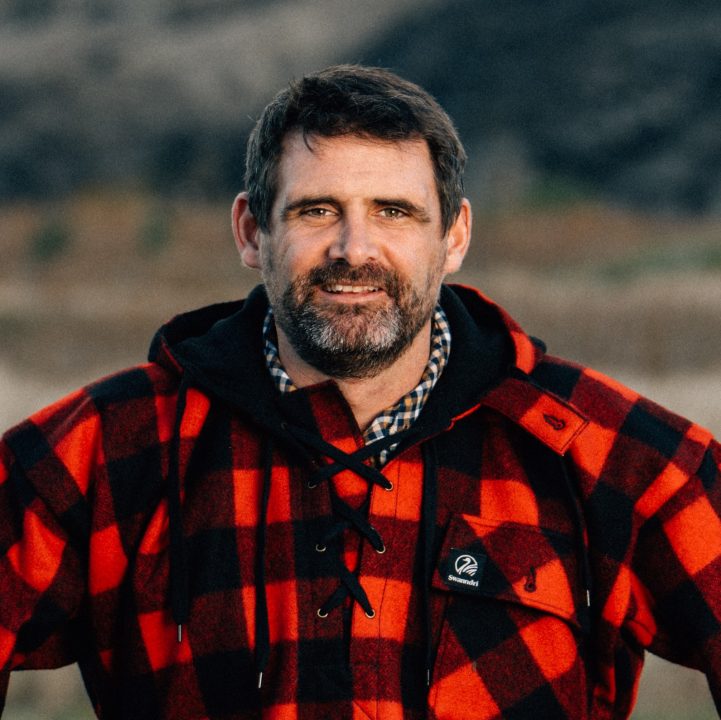
Mike Casey’s case for electrification begins with something tangible: a cherry orchard.
At Electric Cherries in Central Otago, Casey and his partners created an operation running its machinery without diesel or gas, electrifying 21 machines across tractors, frost fighting, orchard vehicles, and irrigation. He says the operation saves upwards of NZ$50,000 in energy costs.
That experience became a foundation for his current role as CEO of Rewiring Aotearoa, a nonprofit working to accelerate New Zealand’s transition toward an electrified economy. Before agriculture, Casey co-founded GradConnection and founded the Sydney startup hub Fishburners.
His perspective connects energy policy with practical demonstration. Casey examines electricity regulation, renewable energy, industrial decarbonisation, LNG, and electrification through a simple underlying question: what happens when fossil-fuel machines are actually replaced with electric alternatives?
Where the Future of Australia & New Zealand Gets Put to the Test
The 10 Top Voices You Should Follow in Australia & New Zealand (2026) show that having access to new ideas and technologies is only the beginning. What matters is what happens when those ideas encounter the realities of infrastructure, organisations, communities, and everyday decision-making.
AI must prove its value beyond the hype, supported by infrastructure, useful data, responsible governance, and applications that solve real problems. Climate ambitions face their own test, whether through electrifying machinery, accounting for natural capital, or embedding sustainability into business decisions. Changes in careers, communication, disability services, and marketing similarly depend on whether new thinking can translate into better outcomes in practice.
That is where these perspectives intersect. They come from people working at very different layers of change—from helping individuals communicate or reinvent their careers to building digital infrastructure, shaping more responsible technology, and demonstrating new approaches to energy.
Together, they offer a compelling view of Australia and New Zealand in 2026: the future is not only being discussed here. It is being built, applied, questioned, and tested against what actually works.
Editorial Note:
This feature is independently curated by the NewInAsia editorial team and is not a paid or sponsored listing. We research professionals using publicly available information, primarily LinkedIn, and conduct an editorial review based on factors such as expertise, consistency of public contributions, engagement quality, professional credibility, and relevance to the featured topic. This is a curated editorial feature, not a definitive ranking.
Highlights
Read the Chinese article here.