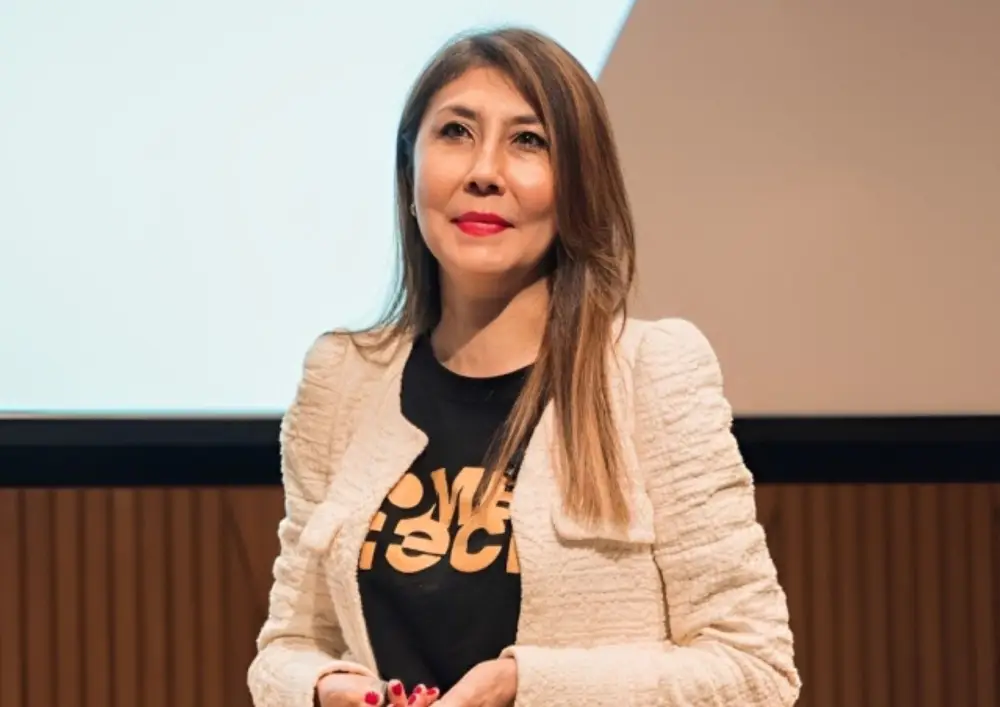
For Yuki Aizawa, technology has never been the destination.
It is a tool — one that can either reinforce inequality or help redesign systems to become more inclusive, ethical, and human-centered.
Across more than two decades working between ASEAN, Japan, Australia, the Middle East, and Europe, the Japanese-Malaysian entrepreneur and emerging technology advocate has built her career at the intersection of innovation, sustainability, and cross-cultural leadership. Today, through her work at RINNE Technologies & Consulting and Women in Tech Global, she focuses on a broader question that extends beyond startups or digital transformation alone:
Who gets included in the future being built?
Grounded by the Japanese philosophy of ikigai — a sense of purpose rooted in meaning and contribution — Aizawa believes the next generation of innovation ecosystems must move beyond surface-level inclusion and rethink the systems, incentives, and structures shaping access to opportunity itself.
Highlights
Why Ikigai Became More Than a Philosophy
Q: You often anchor your work in ikigai — purpose-driven impact. How has this philosophy shaped the way you build and lead ventures like RINNE Technologies & Consulting?
A: Ikigai did not come to me as a theory. It came from struggle.
There were moments in my life where I had to rebuild not only professionally, but also personally. Those experiences forced me to ask a deeper question: What can I contribute that makes this life — and this work — meaningful?
That is when ikigai became more than an idea. It became my compass.
In the Japanese sense, ikigai is quiet, grounded, and deeply personal. It is not about chasing perfection or constant achievement. It is about coherence — aligning what gives meaning to your life with the work you choose to build.
At RINNE, that philosophy is reflected in our belief in technology for good, guided by three pillars:
- Sustainability
- Innovation
- Inclusion
I strongly believe commercial success and purpose are not opposing forces. When designed intentionally, they strengthen each other.
That is why I do not believe in chasing every opportunity.
I believe in building with discernment — asking whether the work creates lasting value, whether it solves a real problem, and whether it contributes to systems that are more responsible and more future-facing.
Ikigai taught me that meaningful work is not just about scale.
It is about alignment — between conviction, contribution, and value creation.
Why Ethical Technology Requires More Than Good Intentions
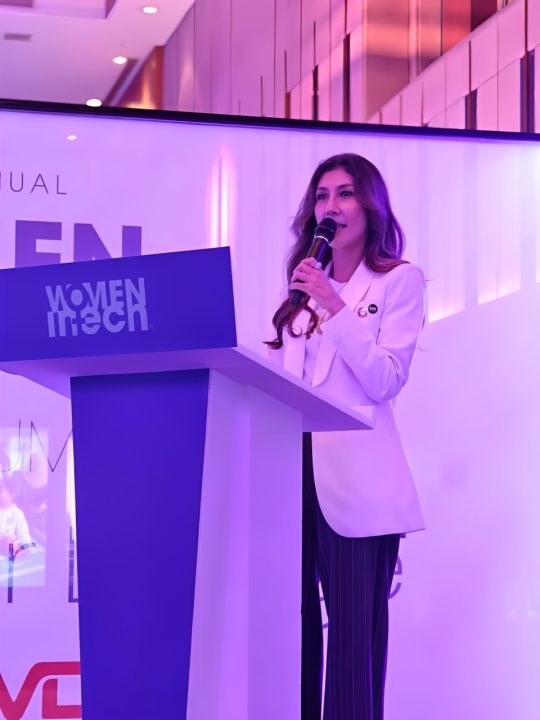
Q: Across your work in fintech, ESG, and Women in Tech Global, how do you ensure emerging technologies are truly inclusive and ethical in practice?
A: Across sectors, I have seen the same pattern repeatedly: innovation moves quickly, but inclusion often arrives as an afterthought.
Technology is frequently treated as if it were neutral. But technology reflects the assumptions, incentives, and blind spots of the people building it.
To make innovation truly inclusive and ethical, I look at three layers.
First is design: Who is in the room when the solution is imagined?
Second is access: Who can actually use, afford, or benefit from the solution?
And third is capital: Who gets funded to build in the first place?
This third layer is especially important because inequity often reproduces itself quietly through funding systems.
In the tech industry, there is often strong language around impact. But language alone is not enough.
Ethical innovation requires intentionality.
It requires leaders to ask difficult questions early:
- Who benefits?
- Who may be excluded?
- What assumptions are being embedded into the model?
Without that discipline, innovation simply scales bias and inequality faster.
The Leadership Skill Most People Still Underestimate
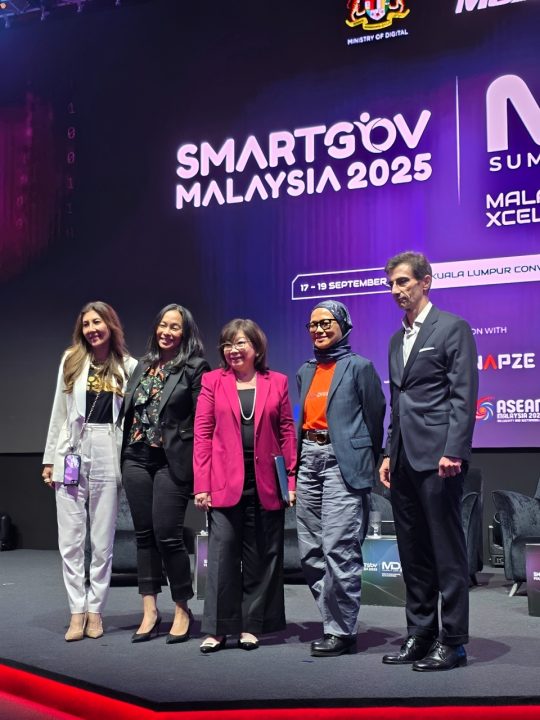
Q: You’ve worked across multiple regions and cultures. Can you share a moment where emotional or cultural intelligence changed the outcome of a project?
A: I have learned that strategy is rarely the real bottleneck.
Alignment is.
And alignment often depends on two disciplines I return to constantly: respect and reflection.
Respect is not just politeness. It genuinely recognises that different ways of thinking, deciding, and collaborating are valid.
Reflection is equally important. Especially during conflict or difficult negotiations, it means pausing long enough to ask: “Where is this reaction coming from?”
Culture is not surface-level.
It shapes trust, timing, hierarchy, communication, and decision-making in ways that are often invisible unless you intentionally slow down and pay attention.
I saw this very clearly during a cross-border initiative involving stakeholders from Japan and Southeast Asia.
On paper, the partnership made perfect sense. Everyone aligned conceptually. Meetings were constructive. There was goodwill on all sides.
But the project stalled because each side was operating from a different cultural logic around trust and decision-making.
In Japan, consensus often happens quietly before the meeting through internal alignment and buy-in.
In many Southeast Asian environments, alignment emerges more dynamically through discussion and relationship-building inside the meeting itself.
Once we adjusted the process — creating more pre-alignment on one side and more iterative dialogue on the other — momentum returned.
That experience reinforced something important for me: EQ and CQ are not soft skills.
They are execution skills.
Why Representation Alone Is Not Enough
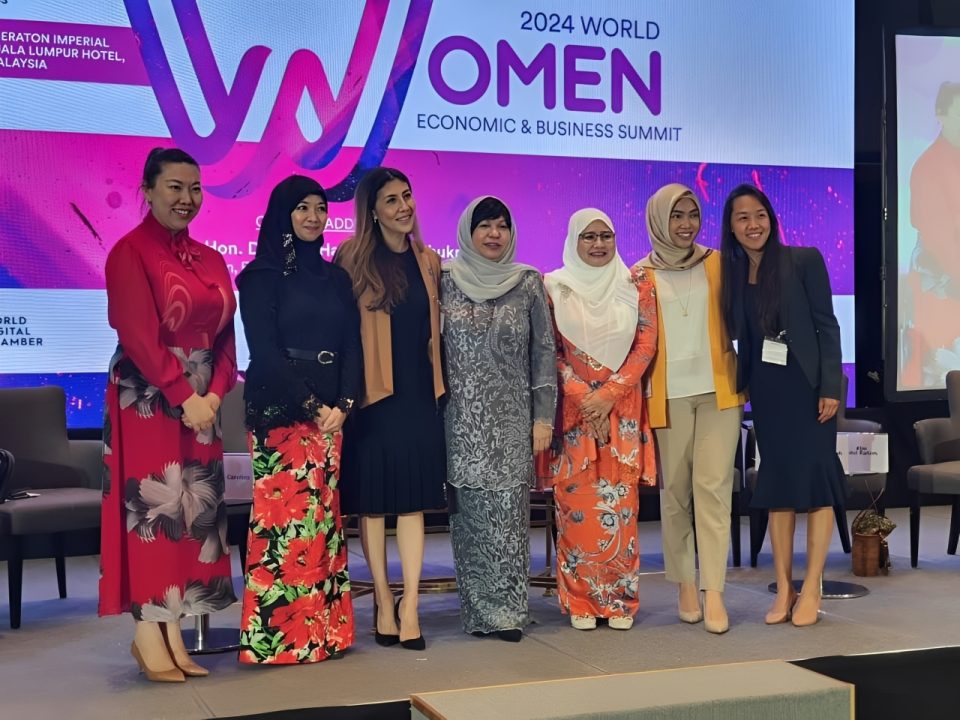
Q: As both a founder and advocate for women in tech, what systemic barrier do you still see persisting today?
A: One barrier I still see very clearly is access to decision-making power.
We are seeing more women entering entrepreneurship and technology. But there are still too few women deciding:
- Where capital goes
- What success looks like
- Which ideas are considered investable
I feel this personally. Having sat across from investors who nodded politely but never wrote the cheque, I have watched women founders with stronger traction get passed over for peers with better pitch decks and closer network proximity. Furthermore, my own expertise has been questioned in ways my male counterparts rarely face.
That is why I care not only about supporting women founders but also about increasing the number of women in investment and capital allocation roles.
If we only focus on helping women pitch without changing who evaluates those pitches, we are addressing symptoms — not systems.
The change required is structural, not symbolic.
That means:
- Backing more diverse fund managers
- Challenging inherited assumptions about what “investable” looks like
- Creating real pathways for women to become investors themselves
Inclusion does not happen through good intentions alone.
It must be designed into the system.
Rethinking What Merit Actually Means
Q: Your doctoral research focuses on inclusive funding architectures in ASEAN. What insight has challenged your own assumptions most?
A: One insight that challenged me deeply is how often innovation ecosystems present themselves as meritocratic when they are not.
What gets recognised as “merit” is often shaped by:
- Network proximity
- Familiarity with investor language
- Alignment with dominant business norms
Across ASEAN, I have seen founders with strong traction and deep community relevance remain overlooked because they do not fit the expected profile.
At the same time, other founders gain momentum much earlier because they understand how to signal credibility in ways investors already recognise.
That forced me to question my own assumptions, too.
If inclusive funding is truly the goal, then the challenge is not simply opening more doors.
It is reconsidering how the room itself is designed:
- Who defines value
- What kinds of growth are rewarded
- Whose stories become the default blueprint for success
Because ecosystems are never neutral.
They are designed — intentionally or otherwise.
Final Thoughts: The Future Cannot Be Built Using Systems Designed to Exclude
If there is one thread connecting Yuki Aizawa’s work across technology, investment, sustainability, and cross-cultural leadership, it is this belief:
The future cannot be built using systems that were never designed to include everyone.
Whether through RINNE Technologies & Consulting, Women in Tech Global, regional ecosystem-building, or her ongoing doctoral research into inclusive funding, her focus remains consistent — creating structures that allow more people to participate meaningfully in innovation, leadership, and economic opportunity.
And perhaps that is the deeper challenge facing today’s technology and business leaders.
Not simply building faster.
But building differently.
Because the ventures that matter most may not only be the ones that scale successfully, but the ones that make scale itself more human, more ethical, and more accessible to others.
Highlights
Read the Chinese article here.