In the wake of a crisis, some people rebuild what was lost. Others build what was missing in the first place — the systems, habits, and communities that make resilience possible long after headlines fade.
Robin Takashi Lewis, co-founder of mymizu and co-CEO of Social Innovation Japan, has spent more than a decade working at the intersection of technology, community design, and social entrepreneurship.
From helping millions reduce plastic waste through a simple refill habit to building platforms that connect companies, governments, and citizens, his work reflects a consistent philosophy: passion may spark action, but systems are what sustain impact.
Highlights
- The Moment That Turned Service Into a Long-Term Mission
- Building Products People Use, Not Just Praise
- Staying Grounded Across Different Worlds
- What 2,000 Kilometers Taught Him About Resilience
- The Changemakers Who Turn Intentions Into Impact
- Building the Infrastructure for the Next Decade
- Final Thoughts: Turning Good Intentions Into Systems That Last
The Moment That Turned Service Into a Long-Term Mission
Q: From co-founding mymizu to building Social Innovation Japan, your work consistently blends technology, community, and impact. What personal experiences first shaped your commitment to social entrepreneurship?
A: My journey into social entrepreneurship began in Tohoku, Japan, after the 2011 Great East Japan Earthquake.
I volunteered along the coast in the months following the disaster. What struck me most wasn’t only the destruction, but the strength of local communities. Recovery wasn’t driven by one organisation — it was driven by neighbours helping neighbours, small businesses reopening, and people rebuilding step by step.
Later, while working with nonprofits and international organisations, I saw a recurring challenge: passionate teams doing meaningful work, but constrained by short-term funding and fragmented systems. There was energy and purpose — but not always sustainable infrastructure.
That contrast shaped my path.
We founded Social Innovation Japan to build platforms that help more people take action — not just talk about change. The goal was to design collaborative systems that bring together companies, governments, educators, and citizens to co-create solutions.
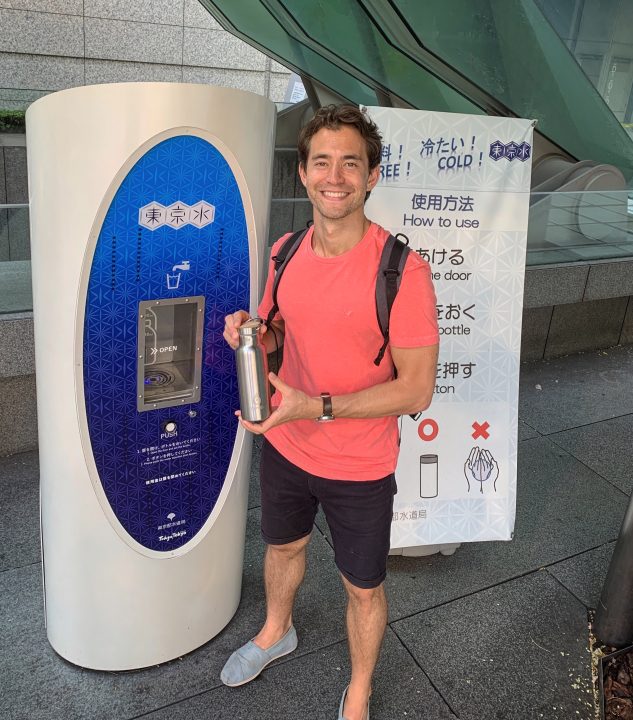
From that foundation came initiatives like mymizu, a free water refill app that reduces plastic waste by making sustainable behaviour simple and accessible. It also includes programs like HELENA POWERS, which support women entrepreneurs in turning purpose-driven ideas into viable ventures.
For me, social entrepreneurship is not about one project. It’s about designing structures that allow impact to scale beyond any single individual — and empowering others to become changemakers in their own right.
Building Products People Use, Not Just Praise
Q: mymizu has helped save millions of plastic bottles by changing everyday behavior. What have you learned about designing solutions that people actually adopt — not just admire?
A: Co-creation has been at the core of mymizu from the beginning.
The refill map grows because users suggest locations. Businesses sign up daily to install water points across Japan and beyond. Schools run student-led initiatives. Local governments integrate refill points into sustainability and heat resilience strategies. Companies embed refill culture into their workplaces. The system evolves because many actors shape it.
When people help design a solution, they’re far more likely to use it and advocate for it. It becomes theirs, not ours.
Storytelling has also been essential. Data matters, but stories move people. Sharing the number of plastic bottles avoided is powerful. But telling the story of a café owner proudly offering free water to local children, or students leading refill campaigns in their schools, makes the impact human and relatable.
Cross-sector collaboration is what allows behaviour to scale. A single app cannot shift culture alone. But when schools educate, companies incentivise, municipalities support infrastructure, and citizens participate, refill culture becomes normal. It shifts from being an environmental gesture to everyday behaviour.
The lesson is simple: design with people, tell stories that invite participation, and build bridges across sectors so small actions become part of a larger system.
Staying Grounded Across Different Worlds
Q: You work across startups, universities, nonprofits, and government partners. How do you navigate these different worlds while staying grounded in your core mission?
A: Each sector operates differently, but they all respond to incentives.
Startups prioritise speed and growth. Governments focus on stability and risk management. Universities emphasise research and learning. Nonprofits centre their work on mission and community impact.
Rather than asking partners to “do good,” we focus on building genuine win-win solutions. Sustainable collaboration only happens when each party benefits in a meaningful way. For companies, that might mean advancing ESG goals, strengthening brand credibility, or engaging employees. For municipalities, it may improve public health, climate resilience, or waste reduction. For universities, it can provide hands-on learning and real-world relevance.
When incentives align and value flows both ways, partnerships become resilient rather than transactional.
At the same time, staying grounded requires clarity. At Social Innovation Japan, our mission is to support people and organisations in co-creating solutions for a more sustainable future. That mission acts as a compass. If a partnership strengthens collective impact and empowers more people to act, we lean in. If it pulls us away from that purpose, we step back.
Win-win thinking keeps collaborations healthy. Mission clarity keeps them meaningful.
What 2,000 Kilometers Taught Him About Resilience
Q: Your 2,000+ km journey along Japan’s coastline led to the Michinoku Trail initiative. How did that experience change how you think about resilience, community, and leadership?
A: The Michinoku Coastal Trail stretches 1,025 kilometers along Japan’s northeast coast. I completed a full thru-hike over 53 days and have since returned multiple times to walk different sections. Altogether, I’ve walked more than 2,000 kilometers along the trail.
Spending that much time on foot changes how you think.
Progress is slow. Weather shifts. Plans fall apart. You rely on local communities for food, shelter, and guidance.
I began to see resilience not as something dramatic, but as something steady and quiet — guesthouse owners reopening after disaster, fishermen rebuilding livelihoods, communities maintaining traditions while adapting to a changing world.
Leadership, in that context, is about presence and consistency. It’s less about control and more about showing up, listening, and continuing forward even when conditions are uncertain.
The experience also shaped how I think strategically. When I first walked the trail, I noticed that almost no one had documented it in English for international hikers. It was a remarkable route with deep cultural and historical significance, yet no comprehensive guide existed for global travellers. From a Blue Ocean Strategy perspective, the opportunity was clear — create value in an unexplored space.
So I built an English-language guide and community platform. Not because I had a grand plan, but because I saw a gap and recognised the potential for the trail to contribute to long-term economic and social recovery.
The trail reinforced a lesson I carry into all my work: progress happens step by step. Resilience is built through consistency. And sometimes leadership begins simply by moving forward into uncertainty.
The Changemakers Who Turn Intentions Into Impact
Q: As a podcast host and lecturer, you spend a lot of time amplifying other changemakers. What qualities do you see consistently in people who turn good intentions into real-world impact?
A: Several patterns stand out.
They start before they feel fully ready. They test ideas early rather than waiting for perfect conditions. They listen deeply and prioritise co-creation. They obsess over building real value.
Most importantly, they understand that social change is a marathon, not a sprint. They bring urgency, but they also recognise that systems change requires endurance.
Great leaders manage polarities well. They balance patience with urgency. They think short-term and long-term simultaneously. They respect tradition while embracing innovation. They hold tension without becoming reactive.
Another often-overlooked quality is self-care. The most effective changemakers understand that their energy is part of the system. They protect their health, relationships, and mental space. They treat rest as discipline, not indulgence.
Becoming a father reinforced this for me personally. Time and energy are finite. If your impact model burns you out, it isn’t sustainable. Longevity matters — both for individuals and for the systems they’re trying to change.
The leaders who create lasting impact aren’t always the loudest. They’re the ones who stay committed over the long run.
Building the Infrastructure for the Next Decade
Q: As climate pressures intensify and social systems face new strain, where are you focusing your energy next — and what kind of infrastructure do you believe the future requires?
A: As climate change intensifies, extreme heat is becoming a serious public health issue in Japan. One of our priorities is making hydration and cooling information more accessible — integrating refill data with cooling shelter information so cities become safer and easier to navigate.
More broadly, I’m focused on building what I call “collective infrastructure” — systems that make it easier for people to act in alignment with their values.
Across my work, whether through mymizu, Social Innovation Japan, the Michinoku Trail community, or our podcast, the thread is consistent: lower the barriers to action, invite people in, and build systems that last.
Passion may spark action. But systems are what sustain impact.
Final Thoughts: Turning Good Intentions Into Systems That Last
Robin’s work reminds us that impact doesn’t scale because an idea is inspirational — it scales because participation is easy, shared, and repeatable.
From refill stations to coastal trails to cross-sector collaborations, the principle is consistent: reduce friction, invite ownership, and design for the long term.
In a world that often celebrates individual heroes, Robin is building something quieter and more durable — a collective infrastructure that empowers ordinary people to act on what they already care about.
And in an era defined by climate urgency and systemic strain, that may be the most practical form of leadership: showing up consistently, designing for real life, and building systems that outlast any single individual.
Highlights
- The Moment That Turned Service Into a Long-Term Mission
- Building Products People Use, Not Just Praise
- Staying Grounded Across Different Worlds
- What 2,000 Kilometers Taught Him About Resilience
- The Changemakers Who Turn Intentions Into Impact
- Building the Infrastructure for the Next Decade
- Final Thoughts: Turning Good Intentions Into Systems That Last
Read the Chinese article here.