STEM is increasingly shaping how industries evolve, how businesses innovate, and how societies prepare for an AI-driven future. Across the United States, Asian women are playing a defining role in that transformation — leading global technology companies, advancing artificial intelligence research, modernizing industrial systems, and expanding access to STEM education for future generations.
This year’s list of Asian women advancing STEM in the US recognizes leaders whose impact extends far beyond individual success. Through engineering, science, entrepreneurship, enterprise technology, and advocacy, they are helping shape not only the future of innovation but also the future of representation in technical fields worldwide.
At a time when AI, cybersecurity, advanced computing, and digital infrastructure are reshaping the global economy, these women stand among the voices helping define what the next era of STEM leadership will look like.
Highlights
Reshma Saujani
Founder & CEO, Moms First

Reshma Saujani has become one of the most influential advocates for expanding women’s participation in technology and STEM education.
As founder of Girls Who Code, she built a movement focused on closing the gender gap in computing and reshaping what leadership in technology can look like for future generations. According to her profile, the organization has reached more than 185,000 girls across all 50 US states and territories through coding programs, educational initiatives, and a 13-book New York Times bestselling series.
Beyond Girls Who Code, Saujani has evolved into one of the most visible public voices on women’s empowerment, work, and representation in technology. Her TED Talk, “Teach girls bravery, not perfection,” has surpassed 54 million views globally, while her books — including Pay Up: The Future of Women and Work — have helped shape conversations around equity and opportunity in the modern economy.
In many ways, Saujani’s work highlights an essential reality for the future of STEM: innovation cannot advance meaningfully without expanding access to those historically excluded from it.
Anima Anandkumar
Bren Professor, Caltech

Anima Anandkumar has become one of the leading voices at the intersection of artificial intelligence and scientific discovery. A Bren Professor at Caltech and former Senior Director of AI Research at NVIDIA, her work has helped pioneer the use of AI for scientific modeling across areas including extreme weather forecasting, drug discovery, engineering design, and climate science.
Among her most influential contributions is the invention of Neural Operators, a deep learning framework used to model complex physical systems and train high-resolution AI weather forecasting models thousands of times faster than traditional systems. Her research has also contributed to breakthroughs ranging from anti-cancer drug development currently in clinical trials to safer autonomous drone navigation.
Anandkumar’s impact has earned recognition, including the TIME100 Impact Award, fellowships from the IEEE, ACM, and AAAI, as well as honors from the Guggenheim, Sloan, and Blavatnik Foundations. As AI increasingly reshapes scientific research itself, her work represents the growing convergence of STEM, computing, and real-world global challenges.
Yamini Rangan
Chief Executive Officer, HubSpot
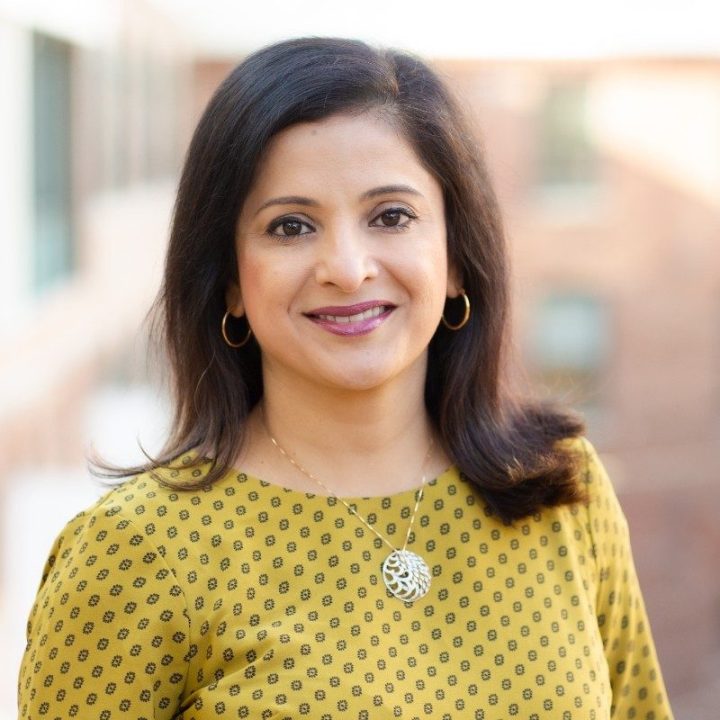
Yamini Rangan has scaled multi-billion dollar businesses and helped launch companies from zero to one across some of the world’s most recognized enterprise technology companies. Today, as CEO of HubSpot, she leads one of the most widely used customer and marketing platforms during a period of rapid AI-driven transformation in software and digital business.
Before HubSpot, Rangan held leadership roles at Dropbox, Workday, and SAP across engineering, product, and go-to-market operations. Her ability to bridge technical innovation with operational scale reflects the growing influence of Asian women in shaping the future of enterprise technology and AI-powered business infrastructure.
Fei-Fei Li
Co-Founder & CEO, World Labs
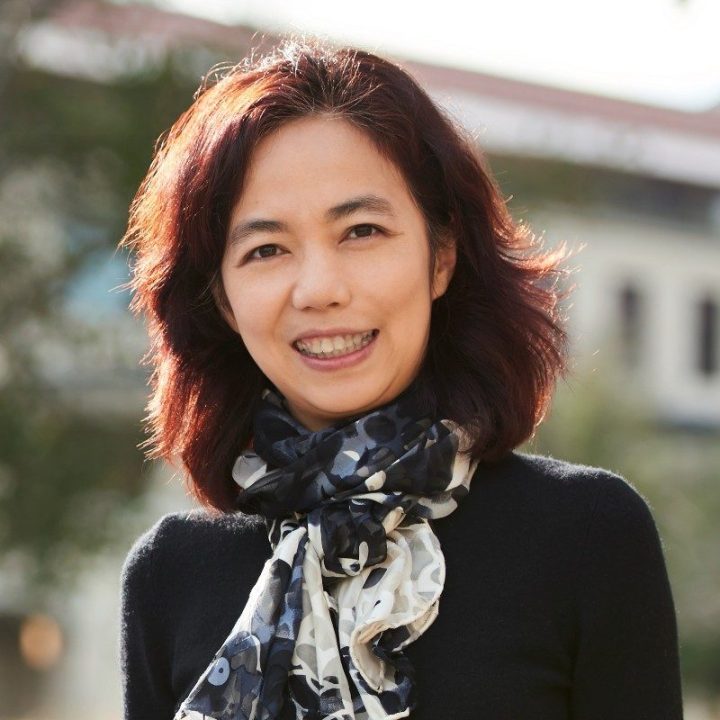
Fei-Fei Li is widely recognized as one of the most influential figures in modern artificial intelligence. A Stanford professor and pioneering AI researcher, she helped lead the development of ImageNet — the landmark visual database that accelerated breakthroughs in computer vision and deep learning worldwide.
Today, Li leads World Labs while continuing to advocate for more human-centered and ethical AI systems. She also founded AI4ALL, a nonprofit focused on increasing diversity and inclusion in artificial intelligence education. Her work has helped shape not only the technical evolution of AI, but also the broader global conversation around responsible innovation in STEM.
Prukalpa
Founder & Co-CEO, Atlan
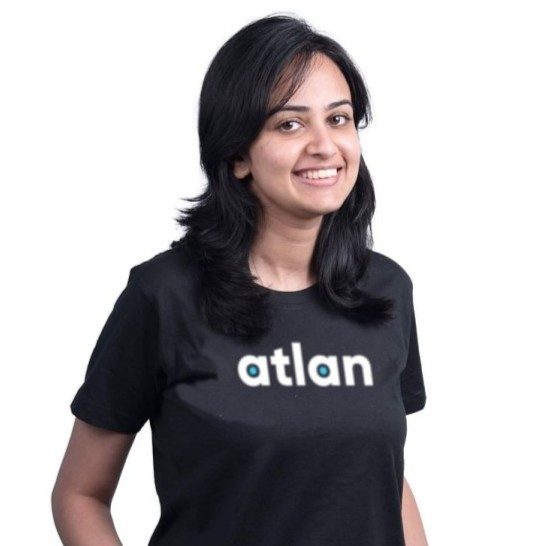
Prukalpa is helping organizations navigate one of the most important challenges in the AI era: making data usable, collaborative, and trustworthy at scale. As founder and co-CEO of Atlan, she leads a company building modern data infrastructure used by enterprises to manage increasingly complex AI and analytics workflows.
Her leadership has earned global recognition, including being named to the Forbes 30 Under 30 and Fortune 40 Under 40 lists. Beyond building Atlan, Prukalpa has also become an influential voice on the future of data teams, AI readiness, and responsible technology systems. In many ways, her work reflects how data infrastructure has become one of the foundational layers behind modern STEM innovation.
Aparna Chennapragada
CPO for AI Experiences, Microsoft
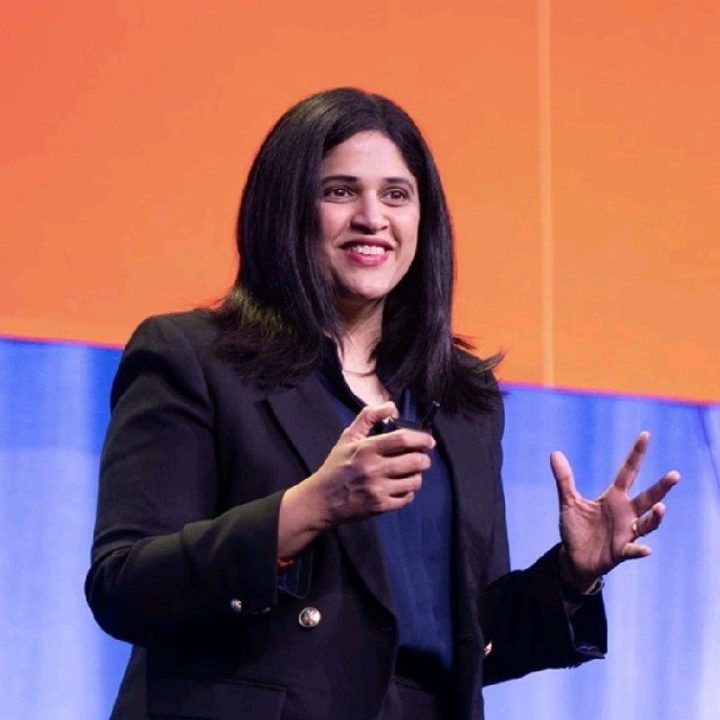
Aparna Chennapragada has spent years shaping how billions of people interact with intelligent technologies. At Microsoft, she leads AI Experiences, overseeing products connected to the company’s rapidly expanding AI ecosystem, including Copilot and next-generation AI-powered experiences.
Before Microsoft, Chennapragada held leadership roles at Google, where she helped launch products including Google Lens and contributed to YouTube’s recommendation systems — technologies used daily by millions worldwide. Her career sits at the intersection of artificial intelligence, product design, and human behavior, making her one of the most influential Asian women shaping how AI becomes integrated into everyday life.
Tiffany To
CEO & Co-Founder, Ontollo
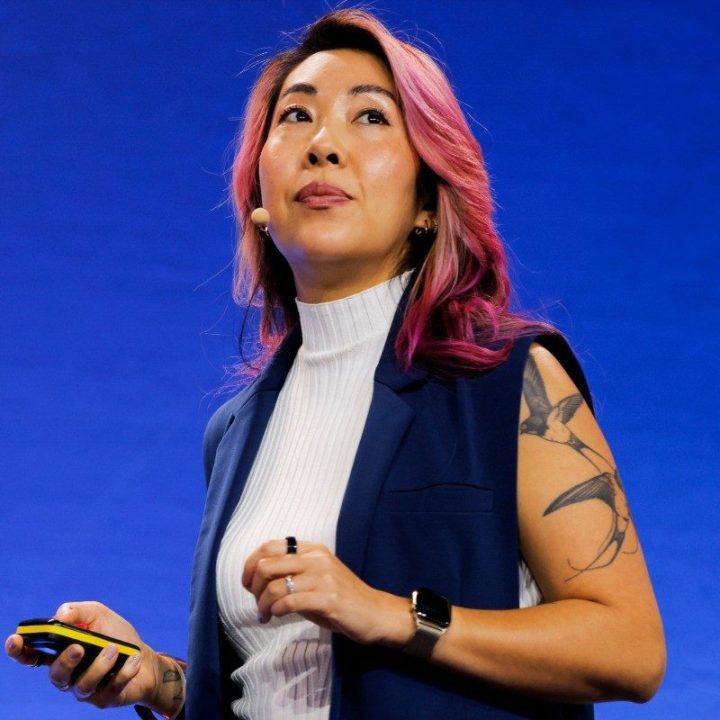
Tiffany To is part of a growing generation of founders applying AI to industries traditionally overlooked in mainstream technology conversations. As CEO and co-founder of Ontollo, she is building systems that use artificial intelligence to improve operational intelligence and industrial workflows.
Her background includes experience at companies such as VMware and Atlassian, giving her a strong foundation in enterprise technology and technical operations. What makes To’s work particularly notable is its focus on applied AI — not just as a consumer-facing trend, but as infrastructure capable of transforming how physical industries operate and scale in the future.
Neha Shukla
Founder, Innovation For Everyone

At just 21 years old, Neha Shukla has already emerged as one of the most visible young voices advocating for ethical and inclusive AI systems. As founder of Innovation For Everyone, she leads a global youth movement focused on AI ethics literacy that has reached more than 70,000 students across 35 countries through education, research, grassroots organizing, and policy engagement.
Shukla’s work spans an unusually broad range of institutions and initiatives for someone of her generation. She has served as Chair of the World Economic Forum’s Generation AI Youth Council, Youth Advisor to the US Department of Education for its largest White House STEM engagement initiative, and research intern within Microsoft’s Fairness, Accountability, Transparency, and Ethics (FATE) group focused on child-safe AI systems.
Her work and advocacy have been recognized by organizations including Forbes, CNN, The New York Times, and the Royal Family through the Diana Award. Through her books, public speaking, and policy work, Shukla represents a new generation of STEM leadership — one focused not only on advancing AI, but on ensuring it develops responsibly and inclusively.
Jane Li
Chief Technology Officer, Brady Corporation

Jane Li has scaled technology and engineering leadership across global manufacturing and industrial systems for decades. As Chief Technology Officer at Brady Corporation, she leads innovation and technology strategy for a company focused on workplace safety, industrial identification, and manufacturing solutions used across critical industries worldwide.
Jane Li has helped scale multi-billion dollar businesses while launching companies and initiatives from zero to one — reflecting a rare combination of operational scale and innovation leadership. As industrial systems increasingly integrate AI, automation, and connected infrastructure, her work highlights the growing importance of engineering leaders capable of translating technical innovation into real-world industrial impact..
Lindsay Hua
Director of Engineering, Trase

Lindsay Hua is helping shape the next generation of engineering leadership through both technical execution and advocacy for women in technology. As Director of Engineering at Trase, she leads engineering initiatives focused on scalable software and enterprise technology systems.
Beyond her operational role, Hua has also contributed to organizations supporting women in STEM, including the World Affairs Council, IGNITE, and WomenTech Network. Her work reflects a broader shift within the engineering world — one where leadership increasingly includes mentorship, inclusion, and building more sustainable technical communities alongside product development itself.
Beyond Representation — Building the Future of STEM
For decades, conversations around STEM often focused on access — who had the opportunity to enter technical fields and who did not. Today, the conversation is evolving. The question is no longer simply about participation, but about leadership, influence, and who gets to shape the technologies redefining society itself.
This year’s list of Asian women advancing STEM in the US reflects that shift. These leaders are not only contributing to innovation — they are helping define the systems, products, research, and communities that will shape the next generation of global progress.
From artificial intelligence and advanced manufacturing to cybersecurity, engineering, and STEM education, their work demonstrates that the future of innovation depends not only on technical breakthroughs but also on diverse perspectives capable of guiding technology responsibly and inclusively.
As the world enters a new era shaped by AI and accelerating scientific change, these women are helping ensure that the future of STEM is not only more advanced — but also more representative, collaborative, and globally connected.
Highlights
Read the Chinese article here.