SINGAPORE, Nov 17, 2025 – Singapore’s small and medium-sized enterprises (SMEs) are set to accelerate their digital transformation journeys through a new strategic collaboration between the Association of Small & Medium Enterprises (ASME), SMU Academy (SMUA), and Straits Interactive.
Unveiled at the launch of The AI Factory – AI Capability Guide for SMEs, the initiative introduces a practical, ecosystem-based approach to help non-technical professionals and SME leaders adopt and apply Generative AI (GenAI) safely, responsibly, and effectively.
Highlights
A National Push Toward Building “AI Bilingualists”
At the heart of this collaboration are three pillars: training, technology, and community.
- ASME will drive AI adoption by leveraging its extensive SME network.
- SMU Academy will provide academic and certification pathways — including the upcoming Industry Graduate Diploma in Generative AI and AI Governance.
- Straits Interactive contributes its award-winning Capabara platform, recently recognized by Meta’s Llama Incubator Programme for its innovation in open-weight AI.
“Singapore’s SMEs form the backbone of our economy,” said Ang Yuit, President of ASME. “Their ability to move from passive users to active creators of GenAI will determine our nation’s competitiveness in the digital age.”
“We’re not aiming to turn employees into coders,” added Jack Lim, Executive Director of SMU Academy. “We want business executives to understand how AI can solve real problems, improve decision-making, and drive innovation.”
Kevin Shepherdson, Founder and CEO of Straits Interactive, emphasized the initiative’s practical value: “This partnership offers a complete capability ecosystem — combining training, technology, and community support, so even non-technical professionals can build and deploy AI tools safely and sustainably.”
AI Transformation Must Be Inclusive, Says NTUC’s Patrick Tay
Guest-of-Honour Patrick Tay, Assistant Secretary-General of NTUC and Member of Parliament, delivered the keynote address, stressing the importance of fair and inclusive AI transformation.
“AI is changing how we work, learn, and lead,” Tay said. “As we embrace technology, we must ensure our people — our workers, our SMEs, our professionals — move forward together.”
He introduced the “4 Es” framework guiding Singapore’s GenAI journey:
- Evangelise AI awareness
- Equip people with relevant skills
- Enhance business capability
- Enact policies for responsible AI use
Calling AI “an augmentation promise, not a replacement challenge,” Tay encouraged businesses to invest in human development to support a just and future-ready transition.
Panel Discussions Spotlight SME Readiness and AI Talent Development
Two panel discussions explored how SMEs can navigate the shift from AI awareness to capability and how academia–industry collaboration can strengthen talent pipelines.
Panel 1: From AI Literacy to AI Capability — Building AI Bilingualists for SMEs
Moderated by Kevin Shepherdson, this panel included Patrick Tay, Ang Yuit, and Jack Lim.
- Lim highlighted SMU Academy’s stackable learning model, aligned with SkillsFuture, including the soon-to-launch graduate diploma.
- Ang called for stronger structural support, urging trade associations to co-design and co-administer grants with government agencies for greater impact.
- Tay pointed to the success of NTUC’s Company Training Committees (CTCs) and Job-Skills Integrators in embedding new skills into daily business operations.
“Transformation is sustainable only when people feel secure, supported, and skilled,” Tay noted.
Panel 2: The AI Factory Model — Academia–Industry Collaboration in Action
Moderated by Dr Sumitra Iyer, Associate Director of Academics at upGrad, the second panel shifted the focus to institutional partnerships.
- Professor Jay Gonzalez, Vice Provost of Golden Gate University, praised Singapore as “a model of academia in action,” highlighting strong alignment between universities, industry, and government.
- Rohit Sharma, President of upGrad, encouraged businesses to take the leap: “Start small, but start soon.”
- Celine Chew, co-author and Head of Learning & Development, emphasized human-centric transformation:
“It’s about moving from automation to augmentation. AI should enhance our abilities, not replace them.”
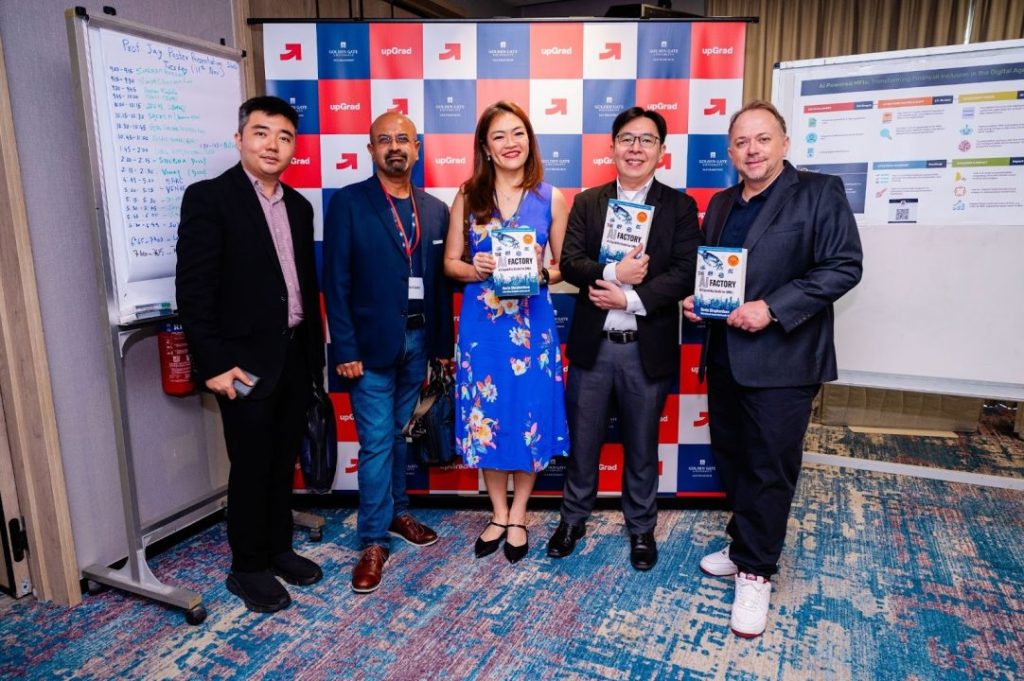
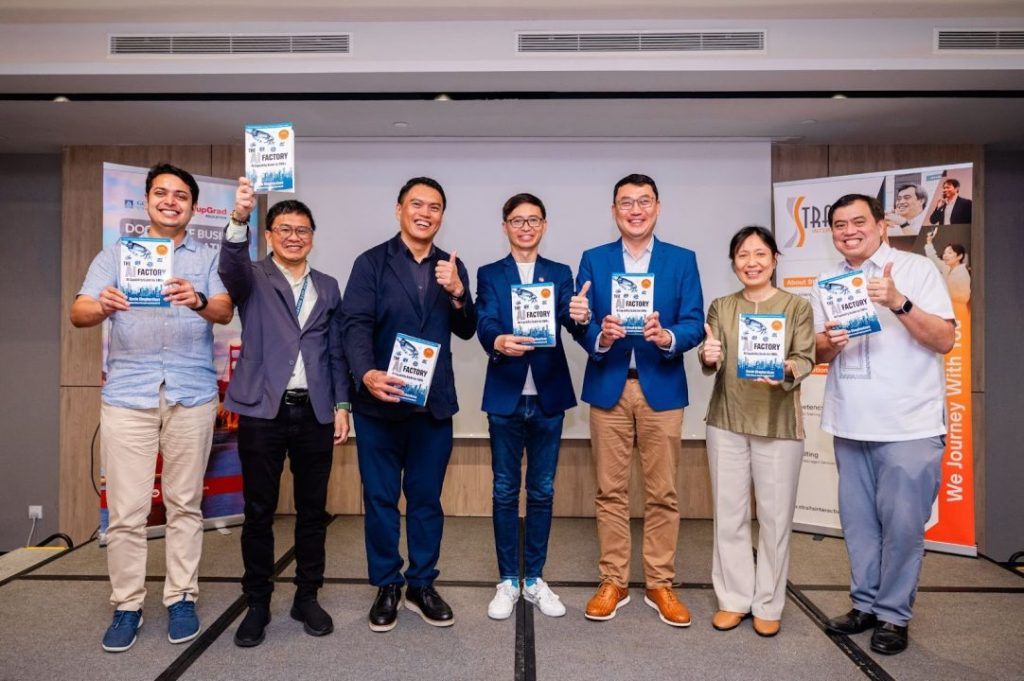
Launch of The AI Factory – A Guidebook for GenAI Adoption
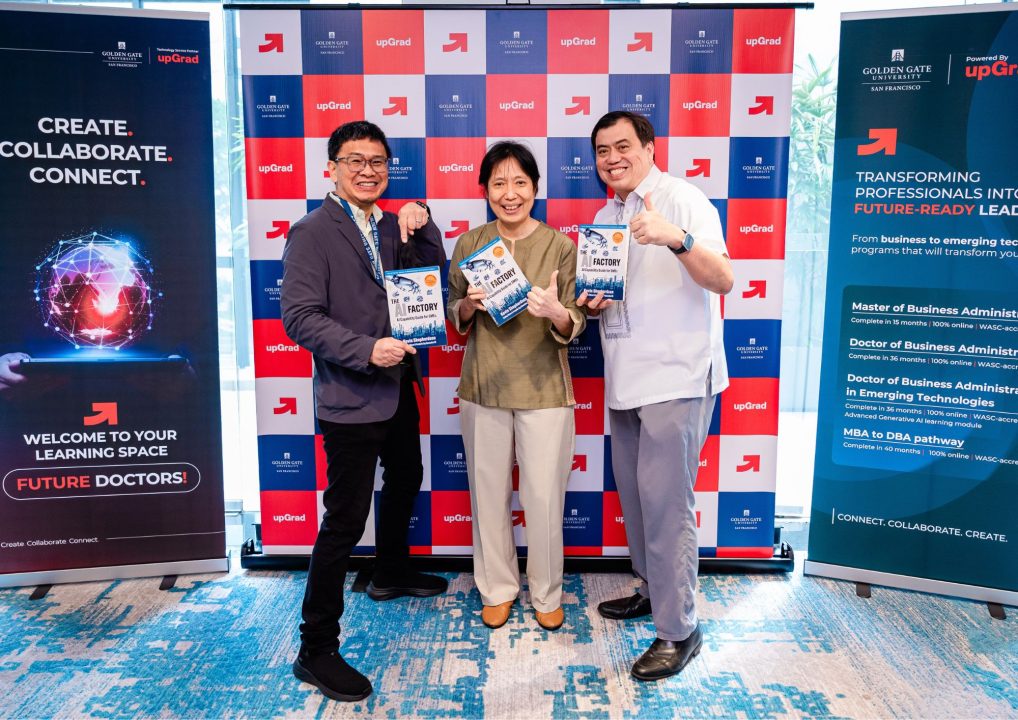
The event concluded with the official launch of The AI Factory – AI Capability Guide for SMEs, co-authored by Kevin Shepherdson, Celine Chew, and Professor Jay Gonzalez. The publication introduces a clear framework for building GenAI capability across five areas: knowledge, skills, tools, processes, and mindset.
A key highlight is its AI-blended format: alongside the book, readers gain access to an AI Toolkit — including curated digital resources and Capabara’s Tool Wizard, which enables users with no coding background to design, test, and deploy custom AI tools.
Priced at S$32 (inclusive of GST), the guide will be available in major bookstores across Singapore and Malaysia, and through online retailers starting in 2026.
“AI adoption isn’t just about access to tools — it’s about applying AI in the right context with the right skills,” said Shepherdson. “The AI Factory is our contribution to help SMEs do exactly that.”
From Strategy to Action: The Road Ahead
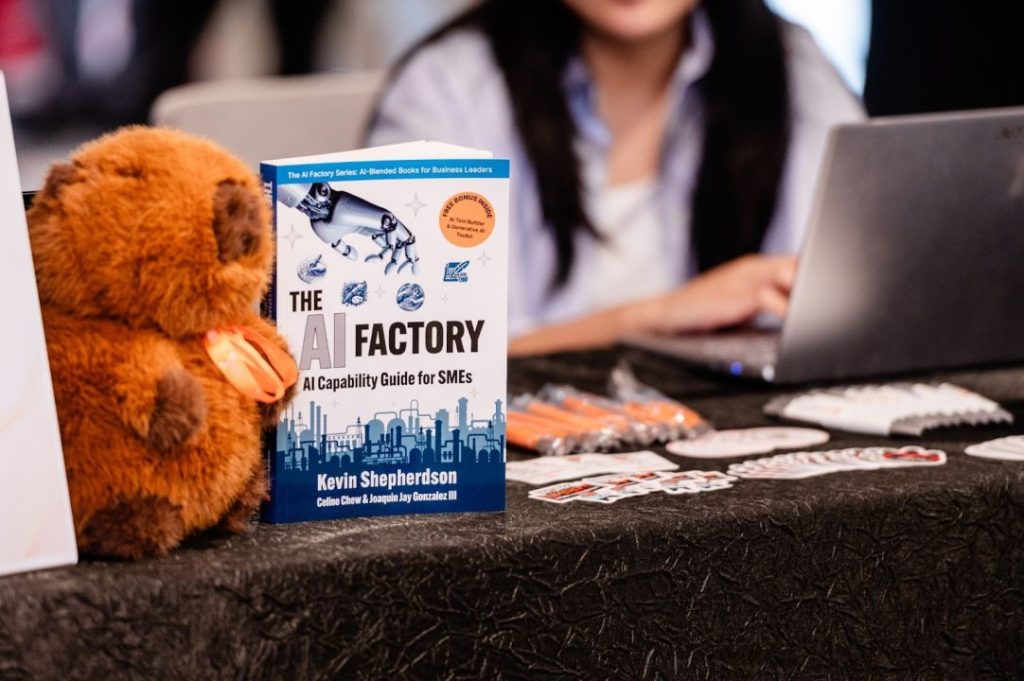
The AI Factory isn’t just a guidebook — it’s a blueprint for action. Backed by a national-level collaboration across academia, industry, and trade associations, it equips Singapore’s SMEs to go beyond GenAI awareness and start building real capability.
By combining hands-on tools, structured learning pathways, and a community-driven support system, this initiative lays the foundation for SMEs to innovate with confidence — and lead responsibly in the age of AI.
Highlights
Read the Chinese article here.