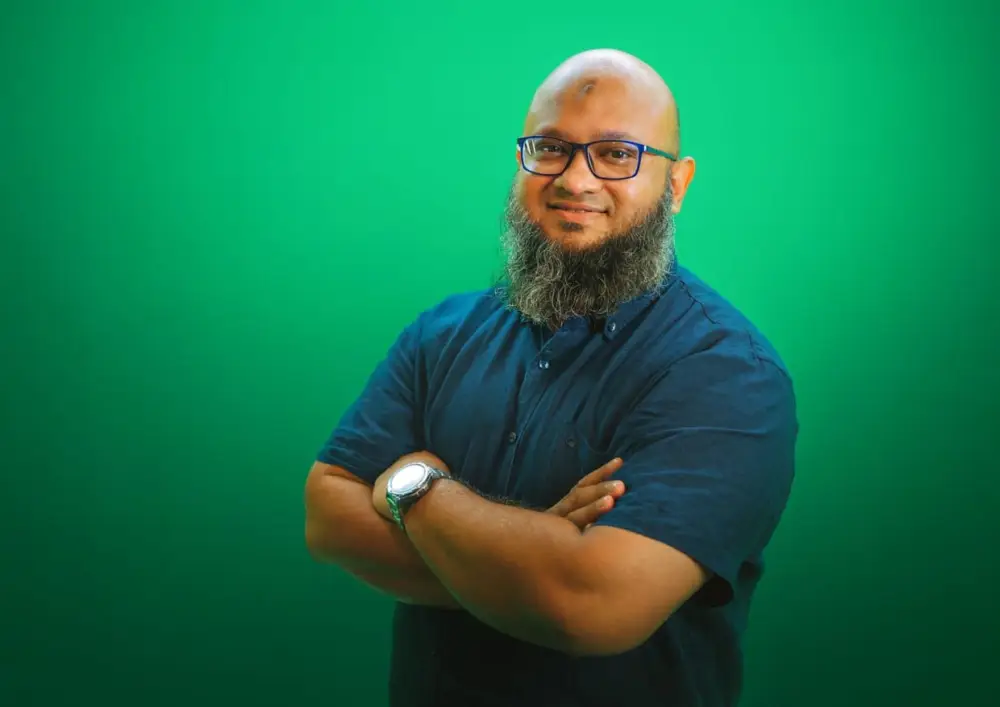
When you’ve spent over a decade watching the same market inefficiencies persist, you either ignore them — or you decide to solve them.
For Md. Mubir Mahmud Chowdhury, the problem of last-mile sales visibility first appeared in 2004 while working at Grameenphone. A decade later, it still hadn’t been solved. That insight sparked the creation of Sokrio, a field force automation and retail tech platform that today powers over 50 million retail visits and nearly $1 billion in trade invoices across Bangladesh and beyond.
In this Meet the Founder conversation, Mubir reflects on the long arc of Sokrio’s evolution: from failed startup to specialized success story, from reactive building to anticipatory innovation, and from field-level friction to platform-level transformation.
Highlights
Turning a Decade-Old Problem Into a Scalable Product
Q: Sokrio has enabled over 14 million retail visits and nearly $1B in invoices. What did you see in the market that others missed — and how did that insight shape your early product decisions?
A: My first awareness of this gap was back in 2004 — 2005, when I worked in direct sales at Grameenphone. Corporate clients were eager for structured sales reporting, but smartphones and mobile data weren’t common, so we tried to support them using SMS-based tools. That early attempt to close the visibility gap stuck with me.
Fast forward a decade: I left corporate life to become an IT entrepreneur in 2014 and was shocked to find the same problem still unsolved. This time, however, mobile internet and smartphones had matured, removing the biggest barriers we faced back then.
We began by building a simple proof of concept, then a commercial version in 2016. Even when my first company shut down, I continued believing in the core idea. In 2020, I rebuilt it as Sokrio — with a sharper focus, fewer distractions, and a deeper understanding of what field-based organizations actually need.
Our product today solves 90 — 95% of operational challenges for FMCG and distribution-focused businesses managing field sales and distribution. That’s the result of staying close to customer pain points, building iteratively, and resisting the temptation to expand into multiple verticals. I learned that the hard way with my earlier startup.
Now, we build with intentionality. We moved from reacting to problems to anticipating needs. We built the platform from scratch, stuck to one vertical, and created an IT-enabled services model to deliver long-term value — not just software.
Designing for Reality, Not Hype
Q: You’re not just building sales tech — you’re solving last-mile retail inefficiencies in emerging markets. What’s been your biggest challenge in balancing innovation with real-world complexity?
A: One of the biggest lessons I’ve learned is that innovation must stay grounded in real-world conditions. In Bangladesh, digital readiness varies widely. A feature that works well in HQ might fail on the road.
Our users include field sales reps and supervisors who work outdoors, with limited internet and tight schedules. If a feature takes five seconds too long to load, it can cause real frustration. Small inefficiencies lead to big trust issues, so everything we design must work reliably in their reality.
The other challenge is managing technical resources. You’re always choosing between building something exciting and fixing something essential. That tension is constant. We’ve learned that dependability must always come first. If it doesn’t work in the field, it doesn’t matter.
That’s why we design intentionally. Offline mode, multi-language support, and role-based analytics aren’t just features — they solve real pain points. Every innovation must strengthen, not distract from, the core experience.
Scaling Strategically, Not Just Quickly
Q: As a founder, what has helped you move from startup hustle to strategic scale — especially when serving both SMEs and large enterprise clients across 21 industries?
A: In the early days, we took on every client. But not all of them were ready for digital transformation. Many struggled with change management, and in some cases, internal resistance from field teams led to failed implementations.
At one point, our customer retention rate dropped below 50%. A closer look at the data showed most churn came from accounts with fewer than 20 active users. That insight changed everything. We shifted to onboarding only clients with 20+ field reps — those with operational discipline and readiness to adopt.
This strategic focus helped us boost retention to over 85% within a year. It also improved CAC efficiency and lifetime value.
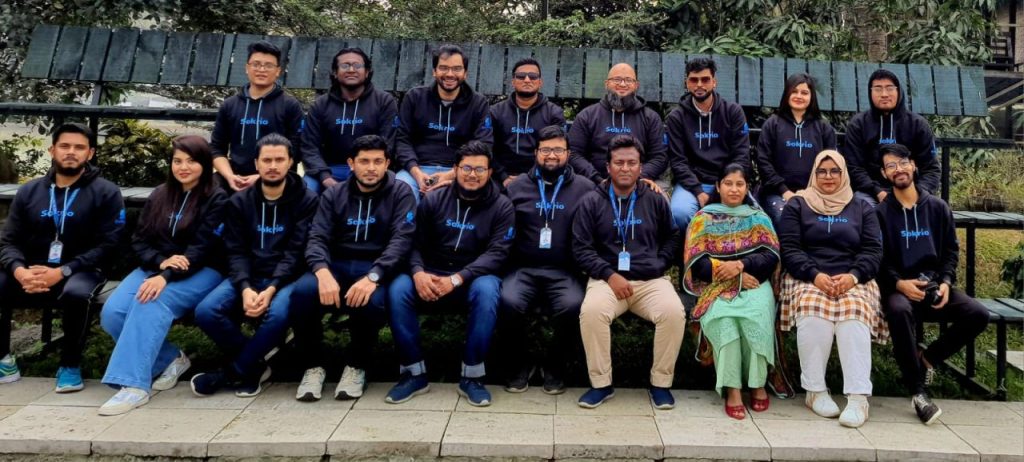
I also invested early in building the right team structure. In many startups, the CEO does everything — sales, support, tech. But that model isn’t sustainable. We chose discipline over chaos. Delegating empowered me to focus on strategy, partnerships, and product vision.
Now, with that foundation in place, we’re preparing for the next leap: AI-powered customer service, real-time multilingual support, and scalable expansion across time zones and regions.
Teaching as a Tool for Clarity
Q: You also teach entrepreneurship and B2B marketing. How does being an educator sharpen your thinking as a founder — and vice versa?
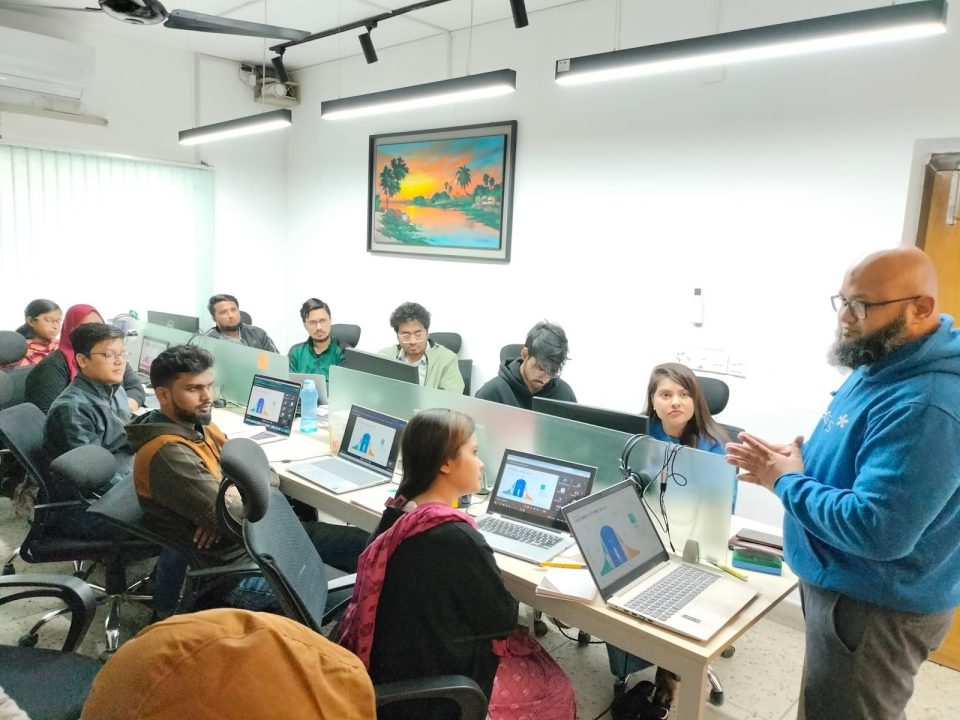
A: Teaching isn’t my core job, but it’s incredibly valuable. I teach at several universities, including IBA at the University of Dhaka. Preparing lectures helps me step back from operations and reflect systematically on what I’m doing.
It’s true what they say: if you want to master something, teach it. Classroom discussions expose me to fresh ideas, and organizing my thoughts helps me make better decisions at Sokrio.
Conversely, my founder experience keeps my teaching grounded. I bring real cases to class, and they remind me (and the students) that execution, not just theory, drives outcomes.
Teaching sharpens my clarity. It keeps me curious. And ultimately, it makes me a better builder.
Building the Future of Retail — Ethically and Inclusively
Q: Looking ahead, what’s next for Sokrio? How do you see your platform evolving as tech, finance, and retail models converge in emerging markets?
A: Sokrio is evolving from a sales visibility tool into a sales development platform — and ultimately into a Retail Growth Ecosystem.
We’ve already built strong foundations in automation and analytics. Now, we’re developing AI-powered predictive and prescriptive tools to help businesses grow smarter. Our roadmap includes multilingual AI support and Shariah-based ethical retail financing.
Why? Because we want to serve the broader Global South — not just Bangladesh. Retail ecosystems in Southeast Asia, Africa, and South America face similar challenges. We’re building a model that can scale across those markets.
And we’re doing it with two guiding principles: sustainability and empowerment. We want to be a company that operates ethically, treats its stakeholders fairly, and builds real capacity in emerging economies.
Growth matters. But integrity matters more.
Final Thoughts: From Field Tech to Global Trust
Over 29 million invoices. Nearly a billion dollars of trade. A platform rebuilt from scratch after failure. And now, one of the top 2.5% global startups in the Entrepreneurship World Cup.
Md. Mubir Mahmud Chowdhury’s journey with Sokrio proves that long-term wins don’t come from chasing trends — they come from staying close to the problem, listening hard, and iterating with purpose.
From winning Shark Tank Bangladesh to building a performance-led team serving 21 industries, Mubir is betting on the power of specialization and long-term thinking.
“Success isn’t about the exit. It’s about creating an ethical company that provides lasting value — to customers, employees, investors, and the economy.”
He’s not just building software. He’s building a system that redefines how retail grows across the Global South. And in doing so, he’s showing that persistence, paired with principle, is still a winning strategy.
Highlights
Read the Chinese article here.