For more than two decades, Kieron Boyle has helped build the foundations of the global impact economy — from designing the UK’s first national impact investment strategy to now leading 100x Impact, a global initiative at the London School of Economics backing ventures with the potential to improve a billion lives.
At LSE, he is also Professor in Practice and Director at the Marshall Institute, where he leads work on the impact economy. His work sits at the intersection of government, philanthropy, and investment, focused on a central question: how do the most promising ideas for social change actually reach scale?
As Chief Executive of 100x Impact, Boyle works with ventures aiming for something far more ambitious than traditional startup success. Instead of chasing billion-dollar valuations, these organisations pursue impact on the scale of billions — building models capable of transforming entire systems.
Across the global impact ecosystem, Boyle has observed a consistent pattern: the world does not lack promising ideas. What it often lacks are the systems that allow the most effective solutions to spread.
And increasingly, he believes Southeast Asia may be one of the most important places where that shift will happen next.
Highlights
Where Entrepreneurship Meets Systems Change
Boyle often returns to a simple principle that has guided much of his career: think like a system, act like an entrepreneur.
Many of the world’s most pressing challenges — in healthcare, education, and climate — are deeply embedded in the structures of economies and institutions. They cannot be solved by a single organisation acting alone. Yet at the same time, meaningful change often begins with entrepreneurs: individuals or teams building new models that demonstrate what better can look like.
Real transformation happens when those two forces connect.
Entrepreneurial innovations begin to reshape the systems around them, influencing markets, policies, and institutions. Over time, ideas that start as experiments can become embedded in the way entire sectors operate.
This philosophy ultimately led to the creation of 100x Impact, which focuses on identifying and supporting what Boyle calls social unicorns — ventures capable of improving the lives of hundreds of millions, or even billions, of people.
The challenge is not just building successful organisations. It is ensuring that the strongest ideas can spread through the systems around them.
The Difference Between Pilots and Population-Level Impact
In Boyle’s view, many promising solutions never move beyond the pilot stage because the conditions required for scale simply do not exist.
The world is full of initiatives that demonstrate meaningful results in small settings. Yet relatively few achieve population-level impact.
The distinction lies in how their models interact with broader systems.
A venture does not need to become a massive organisation itself in order to transform lives at scale. Often, the most powerful pathway is when governments adopt the model, markets absorb the innovation, or other organisations replicate the approach.
When those pathways open up, the original idea can spread far beyond the organisation that first created it.
At 100x Impact, Boyle and his team evaluate potential ventures through five core lenses:
- The significance of the problem being addressed
- The strength and effectiveness of the solution
- The organisation’s performance and operational capability
- The leadership behind the venture
- And most importantly, the pathways that allow the model to scale
That final factor — the impact endgame — often determines whether a promising initiative remains a pilot or becomes transformative.
The organisations that move beyond pilot mode usually have a clear vision of how their approach will eventually integrate into public systems, markets, or institutions capable of reaching entire populations.
Southeast Asia’s Moment of Opportunity
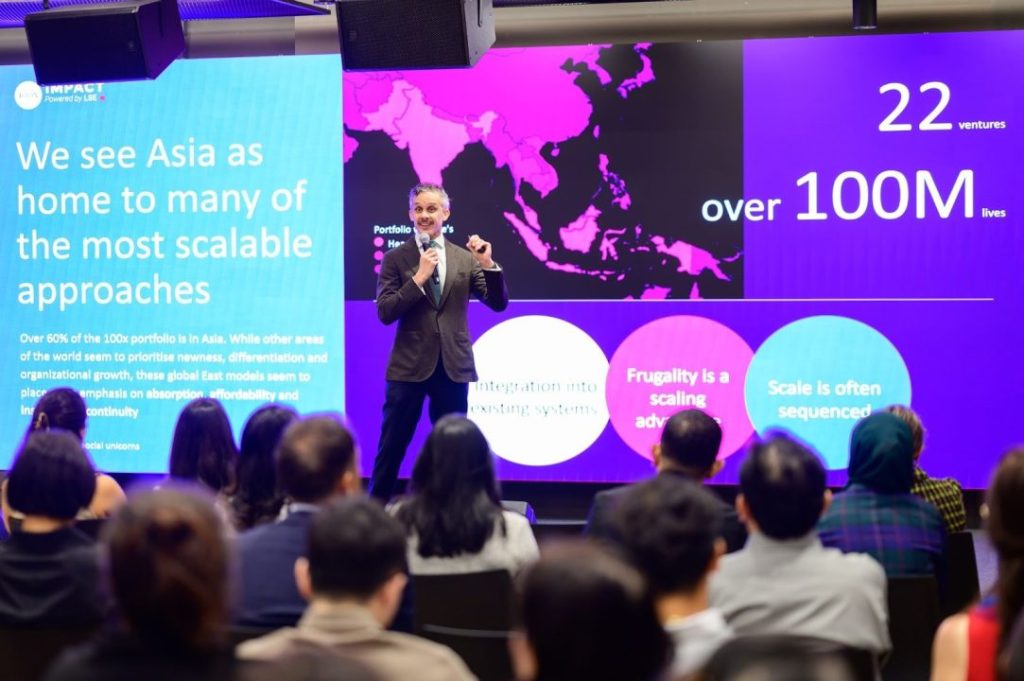
Boyle believes Southeast Asia is approaching a significant turning point for the impact economy.
The region represents roughly 10% of the global population and is experiencing rapid economic expansion. At the same time, Asia’s private wealth is expected to approach US$100 trillion by 2029, bringing with it growing philanthropic capital and more sophisticated family offices.
Governments across Southeast Asia also remain deeply involved in delivering essential services such as healthcare, education, and financial inclusion.
Together, these factors create fertile ground for social innovation.
Across the region, entrepreneurs are already developing solutions to major challenges — often using digital infrastructure to reach large populations.
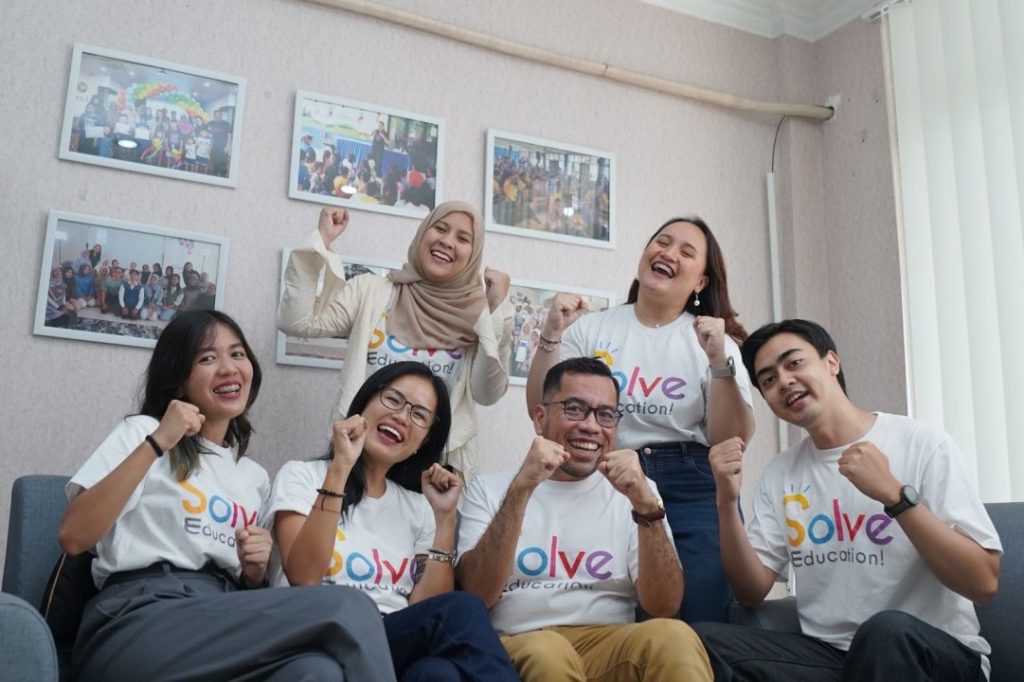
One example is Solve Education!, a behavioral science–driven organization operating across Asia and Africa that helps low-income youth build habits that turn learning into livelihood through adaptive digital learning and community-powered networks.
Guided by its philosophy “Turning Learning into Livelihood. Powered by Behavioural Science,” the organisation deploys its GAIN framework — Gamification, AI Coach, Incentives, and Networks — to create engaging learning environments that build persistence and motivation.
The model has demonstrated measurable outcomes at just $6 per successful result, independently verified by Impact Genome, and is scaled through a mission-aligned foundation and enterprise structure.
Yet despite this entrepreneurial energy, structural challenges remain.
Markets across Southeast Asia are fragmented by language, regulation, and geography. Capital is frequently mismatched with the needs of high-impact ventures. Many organisations fall into the so-called “missing middle” — too large for small philanthropic grants, but not yet suited to commercial investment seeking market-rate returns.
As a result, many promising organisations struggle to access the patient capital required to grow.
At the same time, the region still lacks sufficient learning platforms, policy pathways, and shared infrastructure to help successful innovations spread.
In Boyle’s words, Southeast Asia already has enormous entrepreneurial momentum. What it now needs is the ecosystem infrastructure that allows the strongest models to scale.
What Social Unicorns Look Like in Practice
Despite those challenges, Boyle sees clear evidence that Southeast Asia is already producing ventures capable of achieving impact at scale.
One example is SwipeRx, which addresses a fundamental challenge in healthcare across the region.
For millions of people, pharmacies serve as the first point of care. Yet the pharmacy sector is highly fragmented, and many pharmacists lack access to reliable training, professional networks, and efficient medicine supply chains.
SwipeRx has built a digital infrastructure that connects more than 300,000 pharmacy professionals across approximately 50,000 pharmacies, reaching over 150 million patients each month. Today, roughly one in three pharmacists in Southeast Asia uses the platform for training, information, or procurement.

Rather than creating a parallel healthcare system, the model strengthens an existing one — making the pharmacy network itself more capable and efficient.
Another example is Pandai, a learning platform tackling education access across Southeast Asia.
Backed by Y Combinator, Pandai uses AI to personalise study support for students, particularly in under-resourced schools. The platform now has around one million registered users, with students answering more than 500 million learning questions.
A pilot with Malaysia’s Ministry of Education found that 92 percent of students using Pandai improved academically, compared with just 15 percent in the control group.
Both ventures illustrate the same pattern: entrepreneurial innovation embedded within systems that already reach millions of people.
Building the Conditions for Impact to Scale
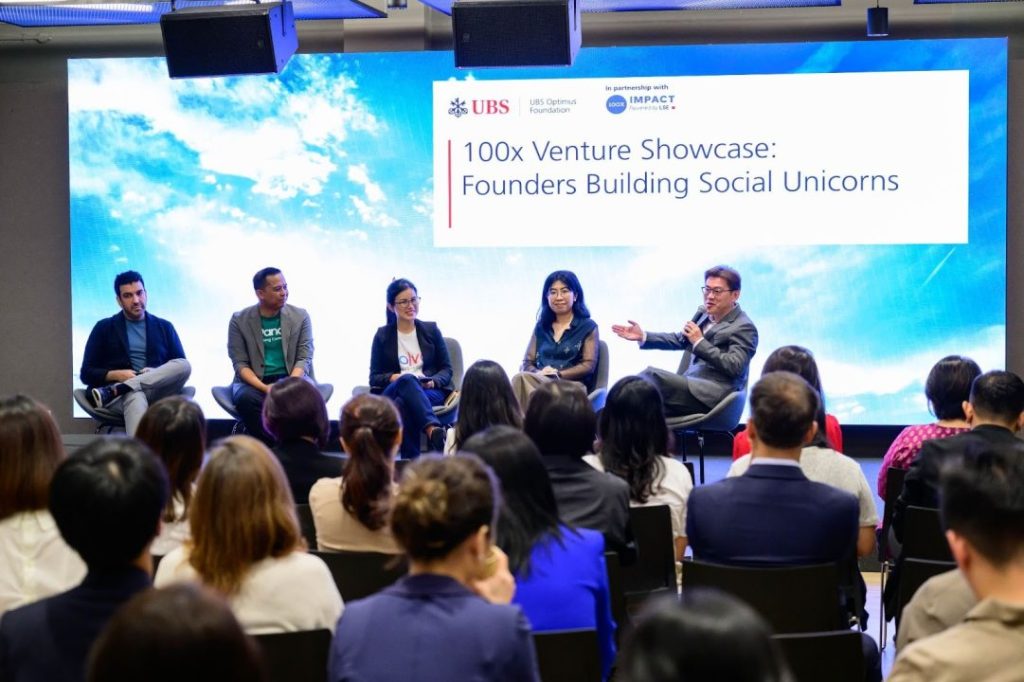
Through its Southeast Asia initiative, 100x Impact hopes to catalyse two types of progress.
The first is direct support for the region’s most promising ventures — helping them access the capital, capabilities, and partnerships needed to move from innovation to population-level impact.
The second is strengthening the broader ecosystem that allows these ventures to grow.
That includes building more coordinated capital stacks, encouraging collaboration between philanthropy and institutional investors, and creating platforms where founders and funders can learn from one another across the region.
Through partnerships with organisations such as UBS Optimus Foundation and with the academic platform of the London School of Economics behind it, 100x aims to help both the ventures themselves and the systems that support them evolve together.
Final Thoughts: The Real Question for Southeast Asia
For Boyle, the central question facing Southeast Asia today is not whether the region will produce social unicorns.
In many ways, it already is.
The more pressing question is whether the capital, institutions, and partnerships surrounding those ventures will evolve quickly enough to support them.
Because when the right ideas meet the right systems, the impact can extend far beyond a single organisation — reaching entire populations and reshaping how societies solve their most complex challenges.
And in Boyle’s view, Southeast Asia may be one of the most important arenas where that transformation unfolds in the years ahead.
Highlights
Read the Chinese article here.
Related posts:
 From 41 to 111 Startups — She’s Asking Why Southeast Asia’s Femtech Boom Still Isn’t Enough
 Top 10 Voices You Should Follow in South Korea (2025 Edition)
 Singapore’s Science + China’s Scale: Why APAC Biotech Winners Must Think Cross-border Early
 500 Million Records. Asia’s Real Health Innovation Is Trust.