For Lindsay Davis, building the femtech ecosystem in Asia isn’t just about startups — it’s about systems. As the founder of FemTech Association Asia, she has been at the forefront of shaping a fast-emerging sector that sits at the intersection of healthcare, technology, and investment.
Over the past few years, the region has seen rapid growth in women’s health innovation — but also persistent structural gaps. In this conversation, Lindsay shares where Southeast Asia stands today, what’s holding the ecosystem back, and what it will take to unlock femtech at scale.
Highlights
From Early Momentum to Ecosystem Gaps
Q: As Founder of FemTech Association Asia, how would you assess the current maturity of the femtech ecosystem in Southeast Asia — and where are the biggest structural gaps?
A: Southeast Asia’s femtech ecosystem is still in an early, but rapidly evolving stage. Its development has been shaped by academic research, public health priorities, regulatory constraints, and deeply ingrained cultural norms — alongside a growing group of innovators advancing women’s health through technology.
Over the past two decades, Asia has moved from isolated diagnostics to a more defined industry. Today, the region represents the third-highest number of femtech companies globally. From 2021 to early 2025 alone, Southeast Asia’s landscape grew from 41 startups — nearly 60% of them in Singapore — to 111 startups across more than 10 categories, including menstrual health, fertility, diagnostics, menopause, and sexual health.
But significant gaps remain.
Access to capital, clinical validation pathways, and cross-border scalability continue to limit growth. Women’s health research — particularly data focused on Asian populations — is still underrepresented, slowing product development.
Bridging these gaps requires coordinated ecosystem-building. Founders, investors, healthcare systems, governments, and corporates all need to work together to accelerate innovation that can scale regionally.

Reframing Femtech as a Core Investment Category
Q: The UNESCAP research highlights persistent funding gaps. What needs to shift among investors to unlock more catalytic capital?
A: The first shift is perception. Women’s health is still often framed as a niche category, when in reality it represents one of the largest and most under-addressed segments in healthcare.
Femtech is not limited to menstrual or fertility apps. It spans cardiovascular disease, metabolic health, workplace health, ageing, and preventative care — effectively serving half the population.
The second shift is investor literacy. Many investors in Southeast Asia are still unfamiliar with the commercial models and long-term value creation in this sector. Education, sector-specific funds, and stronger partnerships with healthcare providers can help de-risk investments.
Finally, catalytic capital is essential. Family offices and development finance institutions have a critical role to play in supporting early-stage ventures addressing major health gaps — even if they require longer timelines to scale.
Today, access to capital remains uneven across the region. Singapore continues to lead, with the majority of investors and funding activity concentrated there, while broader regional ecosystems are still developing.

Scaling Across Fragmented Markets
Q: Across fragmented Southeast Asian markets, what commercial models are proving most scalable?
A: The most scalable models combine digital platforms with strong ecosystem partnerships.
Direct-to-consumer platforms can scale quickly across borders, but long-term success often comes from integrating with B2B or B2B2C partners — including healthcare providers, insurers, employers, and pharmacies.
We’re also seeing growth in employer-led health benefits, particularly around fertility, maternity, and menopause. As companies compete for talent, women’s health is becoming a more important part of corporate health strategies.
Another strong model is platform-based care — integrating telehealth, health tracking, and specialist care. These are especially relevant in Southeast Asia, where access to healthcare varies widely between urban and rural populations.
Regardless of the model, one factor remains constant: consumer education. Femtech companies in Southeast Asia must go beyond product features to build trust, break stigma, and guide users with empathy and clarity. Localised storytelling and engagement are essential to adoption.
Singapore’s Role as a Regional Launchpad
Q: What role should Singapore play in accelerating femtech growth across Southeast Asia?
A: Singapore has a unique opportunity to act as both a collaborator and a launchpad for women’s health innovation.
It combines strong biomedical research, an active investor ecosystem, and a regulatory environment that supports health innovation. More importantly, it can serve as a convening hub — bringing together founders, investors, researchers, healthcare providers, and policymakers from across the region.
Platforms that enable collaboration and cross-border dialogue will be critical in shaping the next phase of the femtech ecosystem.

What a Mature Femtech Ecosystem Looks Like
Q: Looking ahead five years, what would signal that Southeast Asia has become a globally competitive femtech ecosystem?
A: There are a few clear signals.
First, the emergence of multiple femtech companies operating at a regional scale — serving millions of women across Southeast Asia.
Second, a more diverse and committed capital base, including dedicated women’s health funds and stronger institutional participation.
Third, deeper integration between startups and healthcare systems — where digital women’s health solutions are embedded into national strategies, hospitals, and insurance frameworks.
Ultimately, a globally competitive ecosystem will be one where Southeast Asia is not only adopting innovation, but exporting it — building solutions that address the needs of women across emerging markets.
Final Thoughts: Building Systems, Not Just Startups
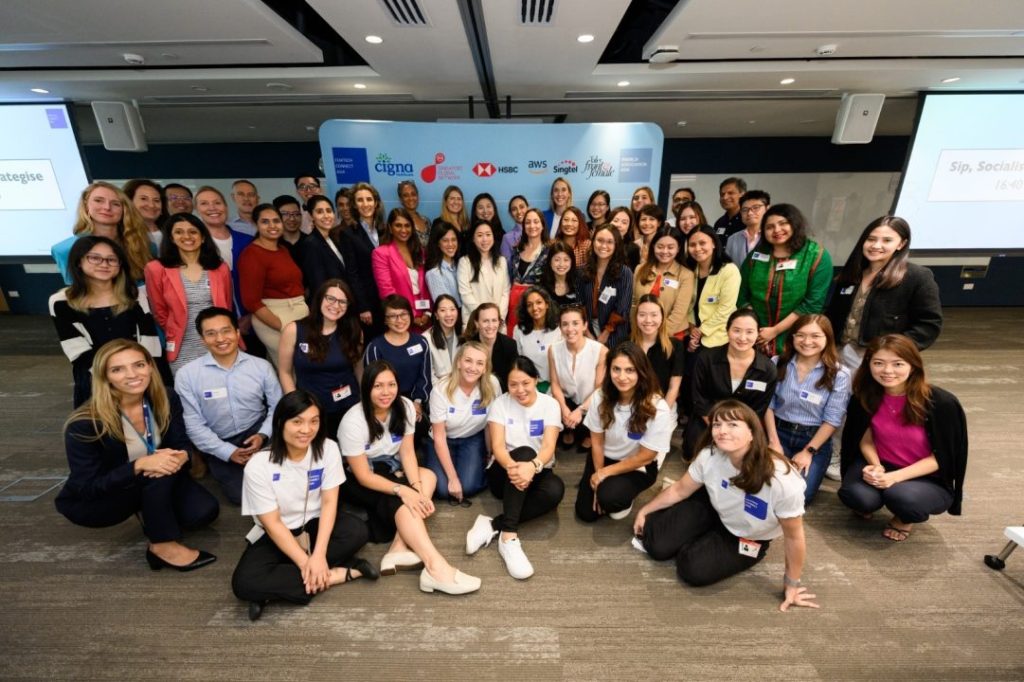
For Lindsay, the future of femtech in Southeast Asia will not be defined by the number of startups alone — but by the strength of the ecosystem around them.
The region already has the entrepreneurial energy and growing market demand. What it needs now is alignment — across capital, research, policy, and partnerships — to turn promising innovation into scalable, system-level impact.
If that alignment happens, Southeast Asia won’t just catch up in women’s health innovation. It will help define what accessible, affordable, and scalable healthcare for women looks like — not just in Asia, but globally.
Highlights
Read the Chinese article here.