




India just surpassed 500 million digital health records in its national system. Pakistan’s Universal Health Card now covers over 100 million citizens. Singapore’s preventive care program enrolled 1.4 million residents in under two years.
These are not just technology stories — they are trust stories. And they’re quietly reshaping markets.
For investors, founders, and healthcare leaders tracking Asia’s fast-evolving health landscape, one insight stands out: The difference between pilot projects and population-scale adoption is not technical — it’s human.
Highlights
- Trust Is the Real Innovation Layer
- Singapore: Turning Prevention into a Scalable Market
- India: Consent Architecture at Scale
- Pakistan: Reimbursement as a Trust Engine
- Trust Beyond Enrollment: What It Actually Looks Like
- Three Rules for Investors in Trust-Based Markets
- Where Capital Is Moving Next
- Final Word: Build the Trust Layer First
Trust Is the Real Innovation Layer
Real health innovation isn’t just about digital infrastructure. It’s about trust infrastructure — the policies, cultural alignment, and system design that give people confidence the system will work for them.
Across Asia, governments are building this trust — and when they do, private capital follows. Markets open. Startups scale. Business models become viable.
Singapore: Turning Prevention into a Scalable Market
Launched in 2023, Healthy SG shifts care upstream — before people get sick. Citizens register with a family doctor who monitors them long-term, supported by a national health record system that connects hospitals and clinics.
Doctors are rewarded for keeping patients healthy — not just for treating illness. By end-2024, over 1.4 million residents had enrolled, and Singapore now spends over SGD 1 billion a year on preventive services.
This is “trust-leveraged policy design”:
- Patients choose their doctors
- Data sharing is opt-in
- Providers face penalties for misuse
Alex Szomora, a healthcare strategy consultant, notes: Singapore’s slow, cautious approach to regulation — even delaying some treatments available elsewhere — helps preserve public trust.
Startups benefit from this groundwork. Chronic disease management and remote care now make up a SGD 400 million market — with dramatically lower user acquisition costs, because trust is already built in.
India: Consent Architecture at Scale
India’s Ayushman Bharat Digital Mission (ABDM) is the largest digital health system in the world. It issues unique health IDs to every citizen and links them to records across hospitals, labs, and pharmacies.
But the breakthrough isn’t just reaching — it’s consent. Patients must approve any data transfer. The system is open source, so startups can integrate without vendor lock-in.
By 2024:
- 500M+ health IDs issued
- 400M+ digital records created
- Hospital integration costs under USD 10,000
The design reflects local culture and workflows. As Jasmin Shaikh, who works at the intersection of health and sustainability, puts it: “Retention without prompting is when you know trust has been built.”
Pakistan: Reimbursement as a Trust Engine
Pakistan’s Sehat Sahulat Program offers hospital care to over 100 million people via a digital health card — with coverage up to 1 million rupees per family per year.
By the end of 2024:
- Over 30M procedures completed
- USD 400M in reimbursements annually
Why it works:
- Care is delivered through familiar community clinics
- Staff speak local languages
- No upfront payment = no financial anxiety
Private hospitals gained access to a USD 150 million annual revenue stream. Health tech firms gained a built-in distribution and payment infrastructure.
Trust Beyond Enrollment: What It Actually Looks Like
Sign-up numbers only scratch the surface. Behavior shows trust.
In elder care, for example, former Singapore health leader Yoke Leng Leong saw that staff adoption hinged not on tech specs — but whether tools preserved human connection. In many Chinese facilities, caregivers are viewed as family. Trust depends on emotional comfort, not just efficiency.
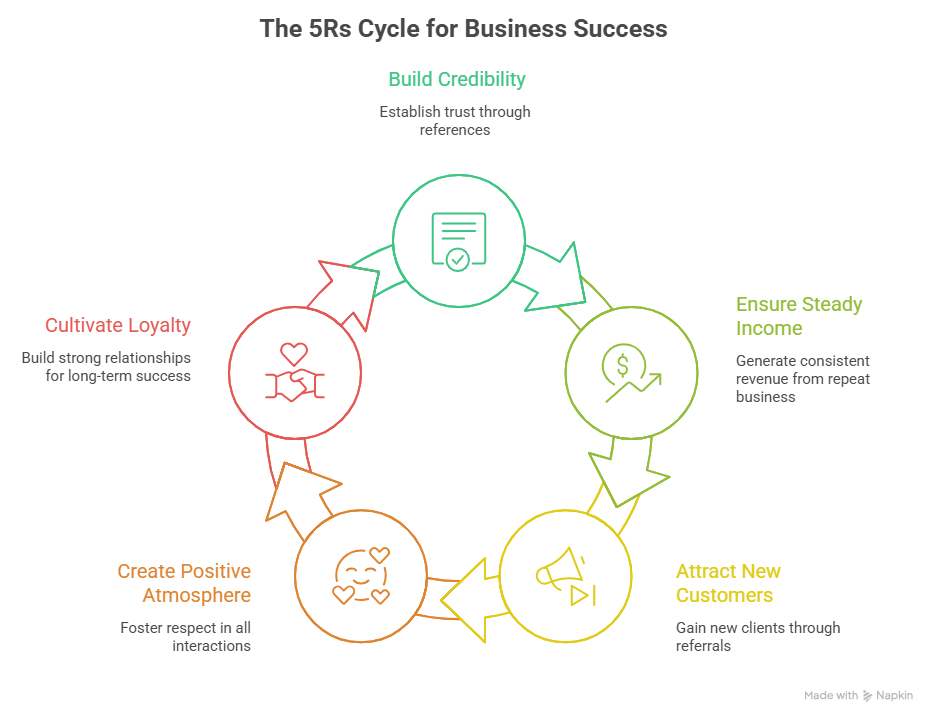
Healthcare strategist Dr. Patrick Liew tracks trust using his 5Rs model:
- References
- Repeat business
- Referrals
- Respect
- Relationships
If patients return voluntarily or clinicians override automated recommendations less over time, those are trust signals. And they matter more than any dashboard.
Three Rules for Investors in Trust-Based Markets
Three patterns consistently define where capital flows next:
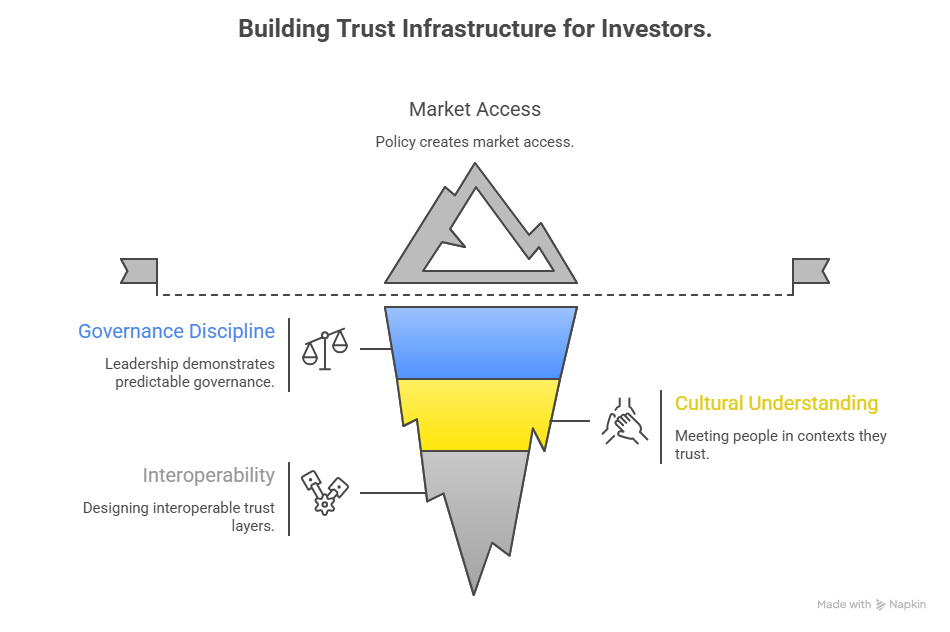
Rule 1: Policy creates market access
Governments that bake in consent, privacy, and accountability reduce startup risk.
- India’s consent-first design bakes in compliance
- Singapore’s opt-in model limits liability
Even in markets with still-developing infrastructure, predictable governance is a signal. As Dr. Liew notes: “Is it legal, ethical, honorable, and moral?”
Rule 2: Culture determines unit economics
Pakistan’s program works because it meets people where they already are.
- Startups that ignore local workflows waste capital
- Those who mentor teams past go-live unlock real scale
Rule 3: Interoperability multiplies market size
National systems in India and Singapore support dozens of healthtech use cases. Governments that design for open integration create platform markets — and that’s where venture returns compound.
Where Capital Is Moving Next
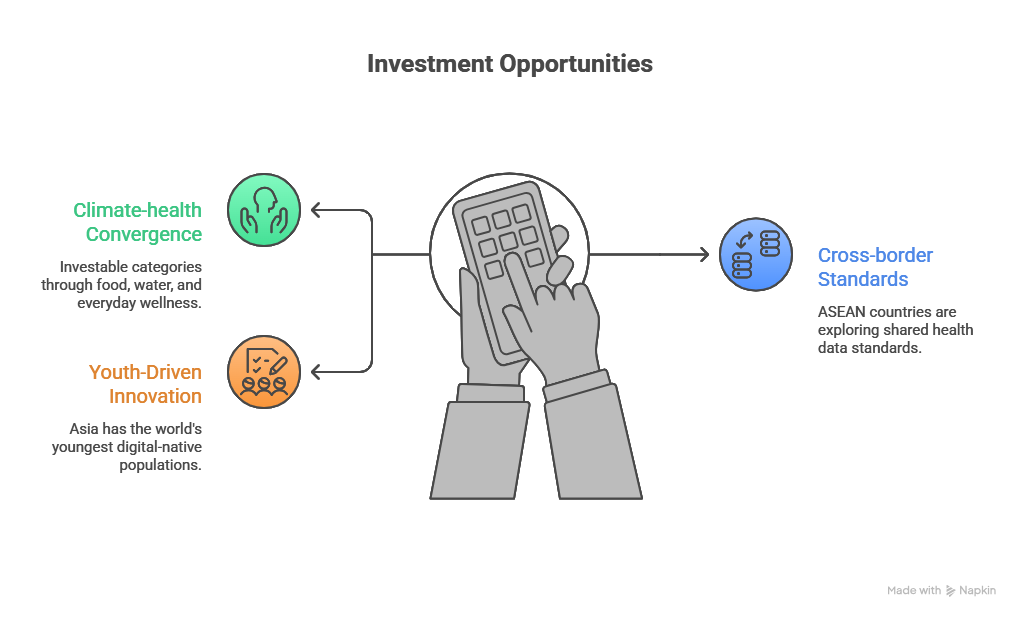
Asia’s innovation curve is pointing toward three clear themes:
1. Climate-health convergence
Investable categories are emerging around food, wellness, and resilience — not just treatment.
- Singapore now links weather alerts to health monitoring
- Digitized systems reduce cognitive burden for frontline staff
2. Cross-border health data standards
ASEAN countries are working toward portable records for migrant workers and medical tourists.
- Medical tourism in Southeast Asia is a USD 8B market
- Trusted data flow could double it
3. Youth-driven innovation
Asia has the world’s youngest, most digital-native populations.
- India’s open-source infrastructure invites entrepreneurship
- Unicorns will emerge where governments build space for them
Final Word: Build the Trust Layer First
For founders and investors, the question is no longer whether to enter Asia’s health markets, but where the trust layer already exists.
The best opportunities are not in the flashiest tech — but in the places where governments have laid down cultural and regulatory infrastructure that people actually believe in.
As Dr. Liew puts it: “Technology scales systems. But trust the scales’ results.”
That’s not a softer lens. It’s the only one that delivers returns — financial, human, and scalable.
Build the trust layer first. Everything else compounds from there.
Editor’s Note:
This article was contributed by NewInAsia editorial fellow Dr. Muhammad Faisal, a clinical writer and Pharm-D graduate specializing in digital health, regulation, and patient engagement. His work explores how innovation, policy, and trust intersect to shape the future of healthcare in Asia.
To pitch your story or share insights on health-tech and medical innovation, reach out to the NewInAsia editorial team.
Highlights
- Trust Is the Real Innovation Layer
- Singapore: Turning Prevention into a Scalable Market
- India: Consent Architecture at Scale
- Pakistan: Reimbursement as a Trust Engine
- Trust Beyond Enrollment: What It Actually Looks Like
- Three Rules for Investors in Trust-Based Markets
- Where Capital Is Moving Next
- Final Word: Build the Trust Layer First
Read the Chinese article here.