For Sharifah Hani Yasmin, career empowerment has never been about polishing CVs for the already confident. It has always been about access — to information, to opportunity, and to dignity through meaningful work.
From supporting international students navigating hiring discrimination abroad to mobilising HR professionals during Malaysia’s pandemic-era employment crisis, Sharifah’s journey reflects a consistent belief: talent is everywhere, but opportunity is not.
Through her work as a career consultant, personal branding strategist, and LinkedIn creator, she has helped thousands of Malaysians better understand how to articulate their value — and how to believe in it.
In this conversation, Sharifah reflects on what first inspired her mission, how she uses her voice to shift who gets seen and hired, and what truly inclusive opportunity-building requires.
Highlights
Where the Commitment to Career Equity Began
Q: You’ve helped thousands of Malaysians take the next step in their careers. What first inspired you to start offering CV reviews and personal branding advice — and what kept you going?
A: My commitment to career empowerment was shaped during my university years in the UK in 2018, where I saw firsthand the systemic barriers international students faced in accessing employment opportunities.
There was hiring discrimination, but just as importantly, there was a deep information asymmetry. Many talented individuals simply didn’t have access to insights about employer expectations, industry competencies, or how to articulate their value proposition effectively.
In my final year, I was elected as a Sabbatical Officer and took the initiative to establish support programs for our 14,000-strong student community. Helping them decode an opaque recruitment landscape made me realise how transformative it is to democratise career knowledge.
When I returned to Malaysia, the pandemic exposed the scale of this issue even more starkly. The White Flag movement was a turning point — it revealed just how vulnerable many Malaysians were to sudden job loss and economic instability. In response, I mobilised a network of HR professionals to provide structured career support to displaced job seekers.
What has sustained this work is witnessing the resilience of the Malaysian community. The solidarity I saw during that period reinforced a core principle for me: access to meaningful employment should never depend on socioeconomic privilege, professional networks, or circumstance. Using my expertise to address these gaps became more than a professional path — it became a long-term commitment to economic equity.
Using Visibility to Change Who Gets Seen and Hired
Q: From founding One Step Closer to becoming one of Malaysia’s top LinkedIn creators, how have you used your voice to shift the narrative around who gets seen, heard, and hired?
A: I’ve been very intentional about using my platform to amplify opportunities — not just job listings, but conversations that challenge who we define as “employable” or “successful.”
A major focus of my advocacy has been women in the sandwich generation — professionals who temporarily exit the workforce to care for children or elderly parents. These individuals develop extraordinary resilience and transferable skills, yet employers often penalise them for career gaps driven by social expectations.
When circumstances change — through divorce, illness, or bereavement — re-entering the workforce becomes incredibly difficult. Through initiatives like the Lean In Career Comeback Program and TalentCorp’s Women Career Convention, I’ve worked to reframe these transitions as strengths rather than liabilities.
We introduce participants to flexible and remote work models, and position lived experience, adaptability, and caregiving-developed skills as competitive advantages in the future of work.
On LinkedIn, I prioritise accessibility and representation. I share evidence-based career strategies in clear, actionable language because awareness is the first step. Many Malaysians don’t lack ability — they simply lack visibility into what opportunities exist and how to pursue them.
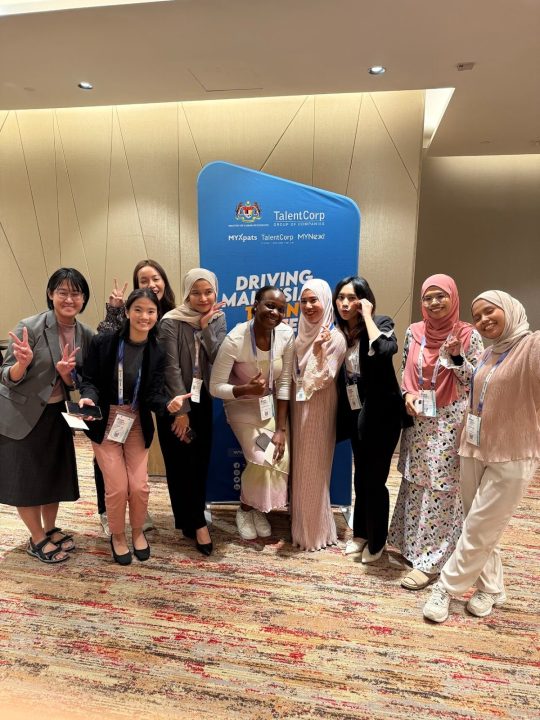
Helping People Rebuild Confidence From the Inside Out
Q: You work at the intersection of strategy, empathy, and clarity. How do you help job seekers — especially those with self-doubt — build the confidence to show up for themselves?
A: Confidence doesn’t come from perfection. It comes from recognising your own growth trajectory — failures included.
In my work, particularly with early-career professionals, I frame personal branding as self-awareness, not self-promotion. Everyone has a professional narrative shaped by resilience, skill development, and problem-solving. The challenge is helping people identify and articulate that story.
I emphasise progress tracking — documenting achievements, skills gained, and challenges overcome. This creates tangible evidence of capability, which helps counter imposter syndrome.
We also work actively to dismantle comparison culture. In Malaysia, peer comparison is often the biggest barrier to action. I encourage clients to define success on their own terms, aligned with their values and life context, rather than external benchmarks.
Finally, I promote what I call “productive failure” — pursuing opportunities despite uncertainty. Failure provides critical data about strengths, preferences, and growth areas. Without the willingness to try and fail, most people never discover what truly differentiates them.
My role is to provide the frameworks and language that help individuals recognise the value they already carry — and present it strategically.
Designing Inclusion That Lasts
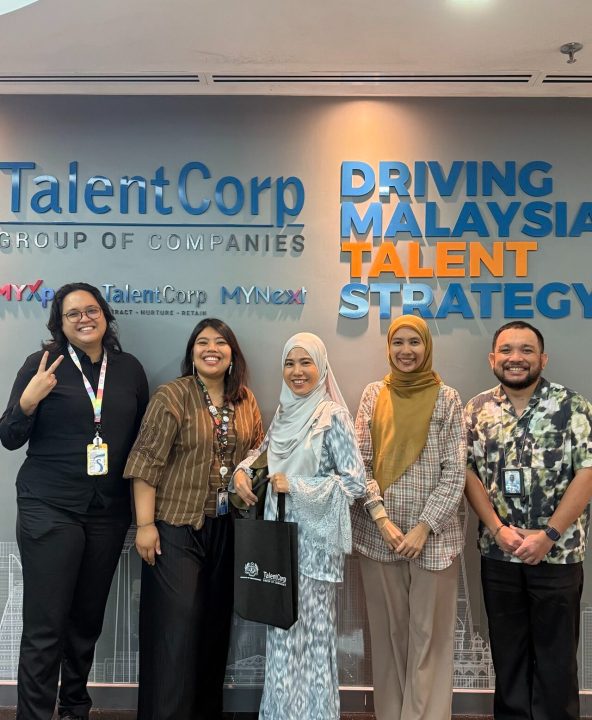
Q: You’ve collaborated with NGOs, universities, and government-linked initiatives. What have you learned about creating truly inclusive opportunities that go beyond one-time events?
A: We must design sustainable inclusion across the entire opportunity pipeline. We can’t retrofit it, and we can’t rely on isolated programs.
Even well-intentioned initiatives often exclude people unintentionally — through rigid eligibility criteria, inflexible schedules, geographic barriers, or lack of accommodations.
Creating inclusive opportunities requires organisations to question their assumptions consistently. Who is being excluded by our requirements? Are there alternative pathways? Do we offer digital and physical access? Are programs flexible for caregivers and people with irregular schedules?
Real inclusion demands long-term investment: fully funded programs, integrated mentorship ecosystems, and adaptable delivery models. One-off events may generate visibility, but sustainable systems create transformation.
The difference between the two determines whether we are performatively addressing inequality — or meaningfully dismantling it.
Translating Global Platforms Into Local Impact
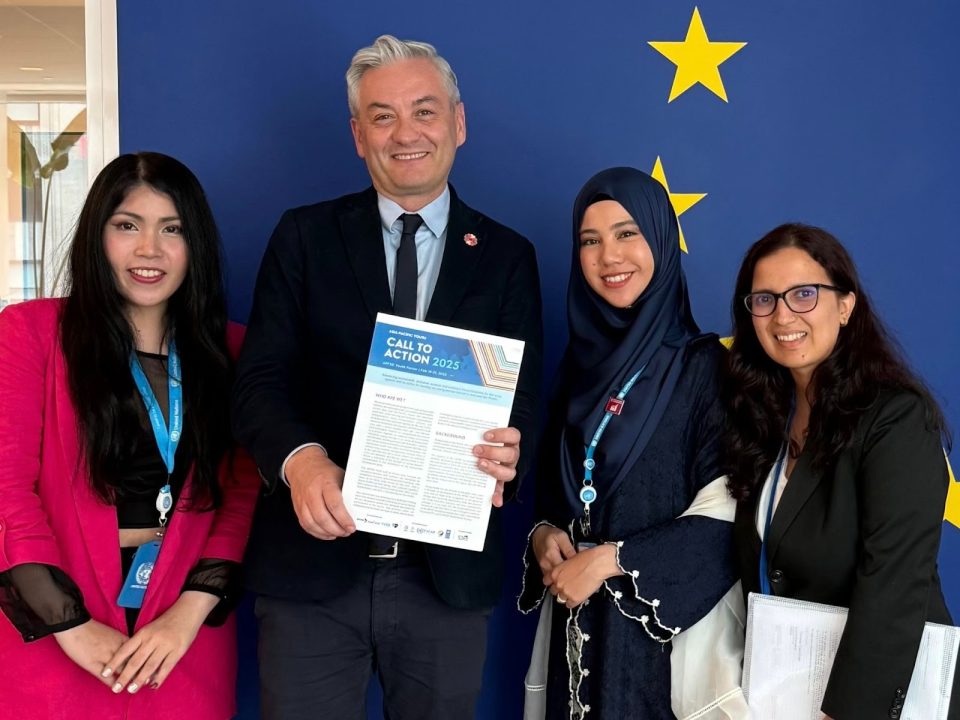
Q: You’ve been recognized as a UNITE2030 Changemaker and a WOSSO Fellow. What role do global platforms play in advancing your mission at the local level?
A: These platforms helped me see workforce challenges as deeply intersectional human rights issues — not isolated demographic problems.
It’s not just about youth unemployment or gender gaps. It’s about dignity: access to living wages, meaningful work, and the ability to support families and communities.
As a WOSSO Fellow, I spoke at the Asia Pacific Forum on Social Development in Bangkok in February 2025 at the invitation of UN ESCAP, and later represented Malaysian civil society at the UN High-Level Political Forum in New York in July 2025.
Those experiences pushed me to think more systemically about equity — how education access, caregiving infrastructure, skills recognition, and labour market design intersect.
My role now is to act as a knowledge translator: adapting global best practices to Malaysia’s socioeconomic and cultural context. That means not importing solutions wholesale, but evaluating what truly resonates locally — and what needs thoughtful adaptation.
Final Thoughts: Making Opportunity a Right, Not a Privilege
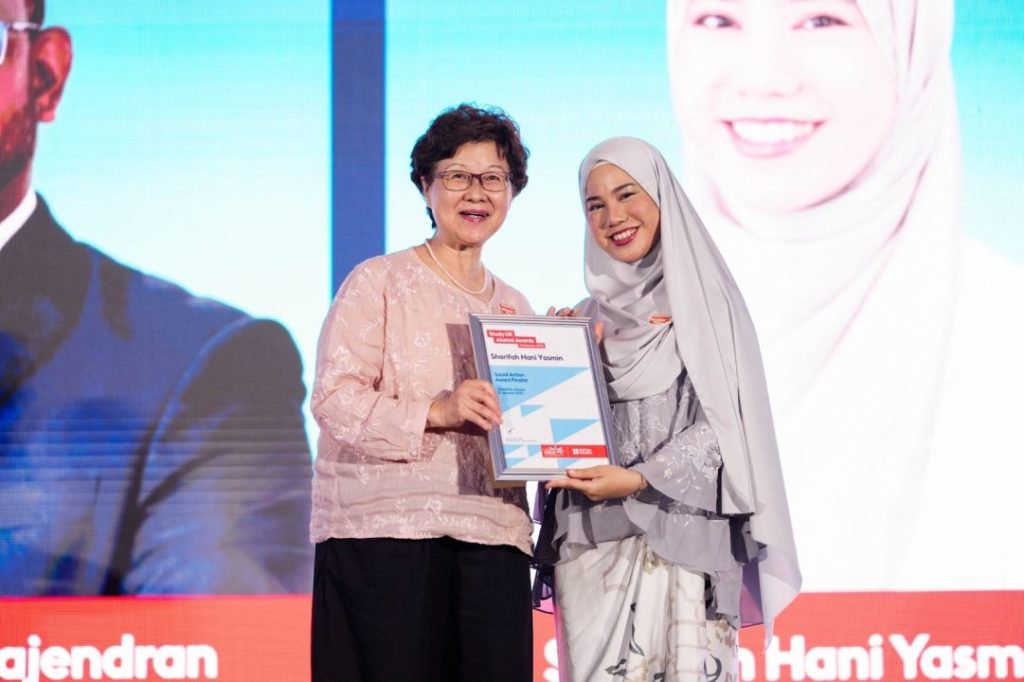
Career confidence doesn’t emerge in a vacuum. Access, language, and belief shape it — often long before someone writes a CV or secures an interview.
For Sharifah Hani Yasmin, career empowerment is about more than individual success. It is about building systems that recognise lived experience, honour resilience, and expand who gets to participate in the economy.
As Malaysia navigates an increasingly complex future of work, she remains committed to ensuring that meaningful opportunity is not reserved for the well-connected or the confident — but accessible to all.
Highlights
Read the Chinese article here.