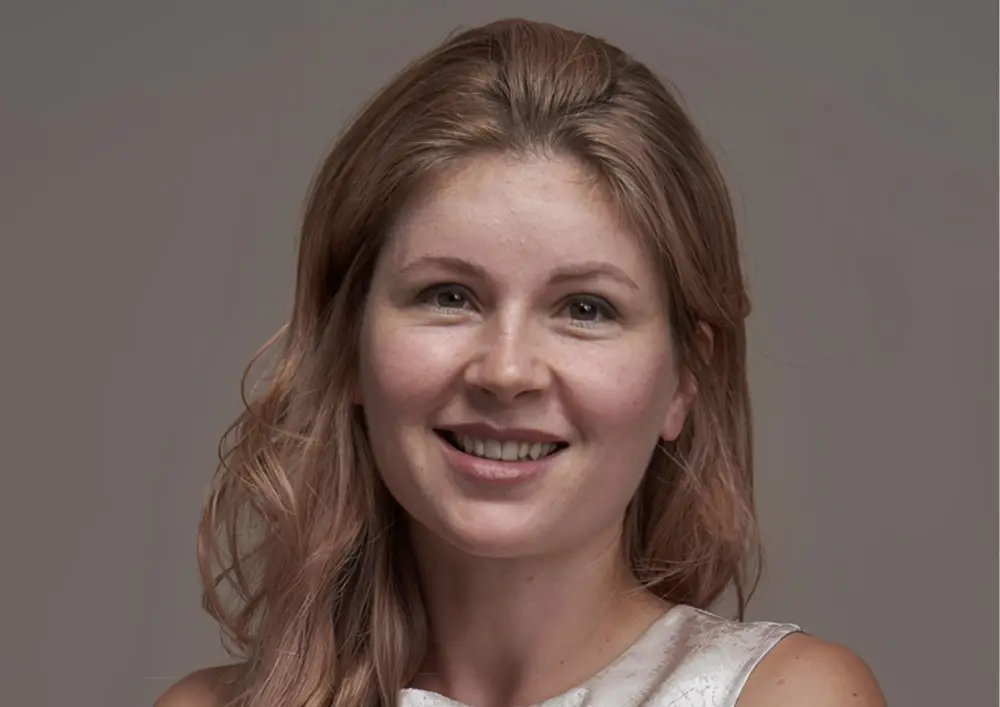
After years inside global technology powerhouses such as Samsung, Nokia, Avast, AVG, and McAfee, Alex Szomora has seen firsthand what real platforms look like — and where they quietly break.
Today, as an angel investor, limited partner, and COO of EON Protocol, she focuses on a part of the startup stack that’s often overlooked: infrastructure that enables others to win.
Operating across APAC and the US, Alex backs founders tackling foundational challenges in fintech, data, Web3, health, and deep tech. Her perspective is shaped not just by investing, but by deep operator experience — understanding what it truly takes to scale systems, build trust, and navigate fragmented, highly regulated markets.
In this conversation, she shares how she evaluates founders, why execution discipline matters more than ever, and what the next phase of fintech and digital infrastructure will really demand.
Highlights
Infrastructure Over Features — Why Foundations Matter More Than Trends
Q: You’ve invested across fintech, AI, health tech, and frontier technologies. What ties your portfolio together?
A: The portfolio looks broad, but the underlying logic is simple: I invest in infrastructure over features.
I focus on teams building foundational systems — financial rails, identity layers, data infrastructure, biological platforms — not short-term features. Features can be copied. Infrastructure becomes the backbone that others build on.
The second thread is founder depth and resilience. I’m drawn to technically strong founders who are visionary, but at the same time commercially grounded — people who understand regulation, capital constraints, and real-world trade-offs.
I also place a strong emphasis on high impact. Financial and health tech inclusion, treasury inefficiencies, compliance bottlenecks, trust gaps — solving these problems unlocks enormous value and defensibility.
Everything is evaluated through an APAC and US lens. Markets across APAC are fragmented. Scaling isn’t just about product — it’s about navigating regulators, partners, and very different buyer behaviors. Execution discipline matters more than ever.
Go-To-Market in APAC — Where Startups Actually Break
Q: As an angel investor and LP, how do you support founders beyond capital, particularly in Southeast Asia?
A: Many startups don’t struggle with product — they struggle with go-to-market strategy, especially across Southeast Asia.
I work closely with founders on where to begin, who really matters — enterprise customers, regulators, ecosystem partners — and how to expand without wasting cycles.
We also get extremely practical: pricing, procurement pathways, sales cycles, localization, and compliance. These “boring” details often decide whether a company gains momentum or stalls.
Capital strategy is another area where founders often need support. I help them think about the right investor base, not just the available one. The wrong capital can slow execution. The right strategic partners can compress years of learning into months.
From Big Tech to EON Protocol — The Operator’s Advantage
Q: You’re also COO of EON Protocol. How has being an operator shaped how you evaluate founders?
A: Running EON Protocol, and previously serving as Managing Director of a cloud services business, means I live in execution reality.
Because of that, I now put even more emphasis on execution velocity, decision-making quality, and financial discipline — not just vision.
I listen closely to how founders talk about runway, burn, revenue quality, prioritization, and how they react under pressure. Storytelling is valuable, but clarity on trade-offs is what actually builds resilience.
Treasury and financial visibility have also become central for me. Startups often fail not because of weak products, but because their financial systems are fragmented or too slow. That’s exactly what EON is designed to address.
And yes — maybe it’s my Eastern European roots — but I value direct, grounded execution. Accountability is non-negotiable.

Trust as Infrastructure — Designing for Regulation and Scale
Q: You sit close to fintech, telco APIs, and Web3 infrastructure. What edge do today’s best founders need?
A: The edge today is systems thinking.
The strongest founders understand how identity, compliance, data, APIs, and AI interact across organizations and across borders. Trust is no longer a layer you add later — it is the infrastructure.
Data privacy, consent management, and auditability aren’t constraints. They’re design inputs. Ideally, all of this is wrapped in the most user-friendly UX possible.
Final Thoughts: Building Systems That Let Others Win
What ultimately excites Alex about investing today isn’t hype or novelty. It’s founders who understand how adoption really happens.
People and companies adopt new technologies when they’re easier, cheaper, and better — or at least two out of those three. Whether it’s fintech, Web3, identity, or impact-driven infrastructure, the rule holds.
Looking ahead, the most valuable companies won’t be the loudest ones. They’ll be the systems quietly reducing friction, enabling trust, and allowing others to build faster and safer. As infrastructure becomes more interoperable and increasingly AI-driven, ecosystem enablers — not ecosystem owners — will define the next wave of scale.
Those are the founders Alex backs. And those are the systems she’s helping build.
Highlights
Read the Chinese article here.