In frontier and emerging markets, capital is only part of the equation. The harder work lies in identifying founders who can build through uncertainty, scale without perfect infrastructure, and lead teams with resilience and humility.
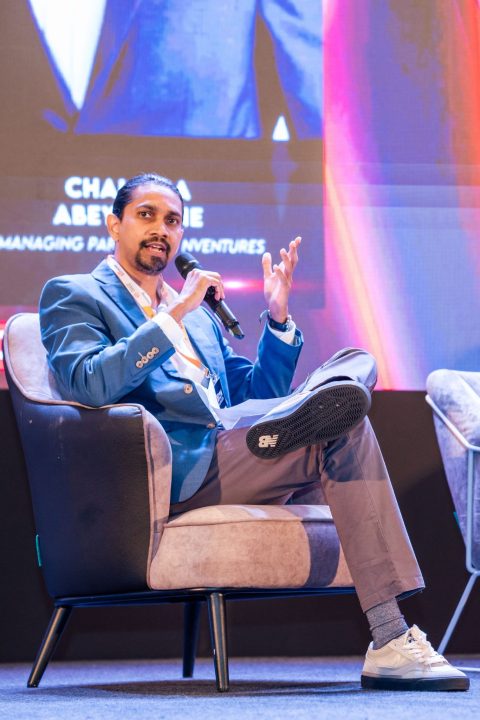
Chalinda Abeykoon, Managing Partner at nVentures, has spent more than 15 years building, backing, and scaling startups across South and Southeast Asia. From launching Sri Lanka’s first startup incubator to leading a MAS-licensed early-stage VC fund with a 1.8x TVPI and 30% IRR in under three years, his career has been shaped by operating in environments where conviction matters more than comfort.
In this conversation, Chalinda shares what truly sets founders apart in underestimated markets, how geography shapes — but doesn’t limit — ambition, and why empowerment goes far beyond writing a check.
Highlights
What Separates Standout Founders in Underestimated Markets
Q: You’ve backed 50+ startups across South and Southeast Asia. What makes a founder stand out to you — especially in markets where infrastructure or access is still developing?
A: In emerging markets, talent is rarely the constraint. Conviction is.
The founders who stand out tend to have a chip on their shoulder. They’re often solving a problem that has personally hurt them, or they’re driven by a deep need to prove something to the world. In underestimated markets, that edge matters far more than polish.
We look for founders with non-obvious insights, the willingness to stay in the trenches longer than most, and the resilience to operate without validation. These are people who can build while being misunderstood, judged, or ignored.
Culture also matters deeply to us. We avoid founders who treat people poorly. Building in tough environments already comes with enough friction — ego only adds unnecessary drag.
The best founders we’ve backed combine hunger with humility. They learn fast, adapt faster, and don’t wait for perfect infrastructure to get started.
Investing Where Others Feel Uncomfortable
Q: nVentures has achieved a rare 1.8x TVPI and 30% IRR in just three years. What’s your investment philosophy when backing early-stage fintech, and what role does geography play in your conviction?
A: Frontier markets make many investors uncomfortable because they look volatile from the outside. To us, they look familiar.
Every GP at nVentures is an operator turned investor. We’ve built companies in these markets, navigated capital controls, regulatory uncertainty, and infrastructure gaps. That lived experience shapes how we invest.
Our philosophy is simple: back founders building critical financial infrastructure early, support them deeply, and stay close through the hardest phases. Fintech in emerging markets isn’t about incremental optimisation — it’s about leapfrogging broken systems.
Geography matters, but not in the way people assume. You can solve global problems from these markets. Our ethos is Globally Relevant, Locally Inspirational.
Outcomes matter too. In under three years, the portfolio has delivered two exits — including WealthOS being acquired by JPMorgan and Kaiju by KAST Finance. These outcomes reinforce our belief that globally relevant companies can be built from underestimated markets when local insight meets global ambition.
Empowerment Beyond the Capital Check
Q: You often say entrepreneurship is a path to empowerment. How does that belief guide how you engage with founders — beyond just the check?
A: Capital alone doesn’t build enduring companies. People do.
We believe entrepreneurship is one of the most powerful paths to empowerment, especially in emerging markets. But empowerment only works when ownership is shared.
At nVentures, we actively encourage founders to implement broad-based ESOPs. We want early employees to feel like owners, not passengers. When teams have skin in the game, decision-making improves and retention follows.
We also spend time on fundamentals that don’t show up in pitch decks — governance, incentive alignment, and long-term thinking. These things compound quietly.
True empowerment leads to financial independence. When startups succeed, the impact should ripple beyond the founders to the teams and communities that helped build them.
Adapting Investment Models to Local Reality
Q: From Sri Lanka’s first incubator to a MAS-licensed VC fund, you’ve built across vastly different systems. What have you learned about adapting investment models to fit local realities?
A: One of the most important lessons I’ve learned is that models don’t travel well. Principles do.
You have to reinvent yourself every few years. As an investor, that means being willing to unlearn frameworks that worked elsewhere but don’t fit local realities.
From an ecosystem standpoint, founders in emerging markets need to be globally relevant from day one and locally inspirational. The market may be small, but ambition shouldn’t be.
Being early comes with a cost. First movers are often misunderstood and misjudged. You face headwinds that don’t exist in more mature ecosystems. Learning to pick your battles and focus relentlessly on moving the needle becomes a survival skill.
Our role as investors is to adapt structures, pacing, and expectations — without lowering the bar on outcomes.
Why Storytelling Moves Capital and Confidence
Q: You write Seed Alert to spotlight Sri Lankan startups globally. How important is storytelling in creating investor and founder momentum across borders?
A: Seed Alert started as a passion project, but it quickly became something more meaningful.
As a fund, we have a clear thesis. That said, promising companies exist outside any single investment lens. I meet hundreds of founders every year, and many of them deserve global visibility even if we don’t invest.
Storytelling creates momentum. Investors discover talent. Founders find partners. Ecosystems gain confidence.
Several angels who subscribed to Seed Alert have gone on to invest in or collaborate with the startups featured. A rising tide lifts all boats.
Final Thoughts: Building Futures, Not Just Portfolios
Investing in emerging markets requires a different lens — one shaped by lived experience, long-term commitment, and respect for the realities founders face on the ground.
For Chalinda Abeykoon, backing founders isn’t about chasing comfort or consensus. It’s about recognising conviction early, empowering teams through shared ownership, and helping globally relevant companies emerge from places the world often underestimates.
In markets where infrastructure is imperfect and validation is scarce, the role of a funder extends beyond capital. It becomes about building belief — in founders, in teams, and in ecosystems still writing their global story.
Highlights
Read the Chinese article here.