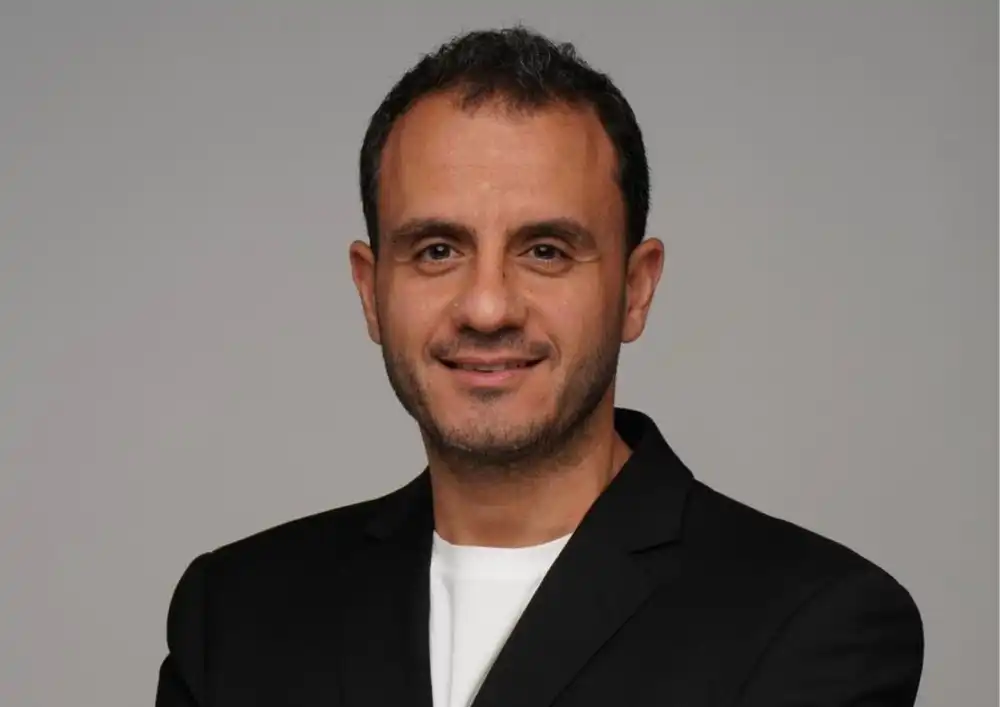
By the time you finish a conversation with Georges Fouad Salem, you realize he’s not just talking about startups — he’s talking about rewiring the very foundations of an emerging innovation economy.
Named Qatar’s Finfluencer of the Year (2024), Georges has played a leading role in the country’s transformation into a serious player in the MENA startup ecosystem. As a founding member of the Qatar FinTech Hub, a former advisor to the CEO of Qatar Development Bank (QDB), and the senior manager overseeing incubation and acceleration programs at QDB, he has occupied a rare intersection of policy, capital, and innovation — three forces that often struggle to align.
In this interview, Georges breaks down the structural challenges facing MENA startups, and what it takes to scale — not just products, but entire ecosystems.
Highlights
From MVPs to Market Leaders
Q: As a founding member of Qatar FinTech Hub and advisor to QDB’s startup programs, what do you see as the most important ingredients for FinTech startups to scale beyond MVP in emerging markets?
A: When you’re building in an emerging market, the challenge isn’t just the product — it’s the runway. The startups that break out aren’t just building features — they’re building foundations.
That means three things: regulatory enablement from day one, smart capital that understands the regulatory journey, and regional market connectivity.
When we launched the Qatar FinTech Hub, we made sure startups spoke with the Central Bank during incubation — not after. That compressed licensing timelines and gave investors confidence. And we plugged them into regional partnerships early, so they could skip years of local-only growth and launch multi-market pilots much faster.
Fixing the Early-Stage Funding Gap
Q: Your work has connected capital, policy, and innovation. What ecosystem-level changes are most urgently needed in MENA to reduce the early-stage funding gap for high-potential startups?
A: It’s not that capital doesn’t exist — it’s that it’s fragmented and reactive. That’s a structural issue.
Here’s what I’d focus on:
- Institutionalize angel syndicates to pool resources and standardize due diligence
- Tie public funding to traction-based milestones to ensure accountability and performance
- Create cross-border regulatory sandboxes, so FinTechs don’t have to restart from zero every time they enter a new market
These are not nice-to-haves. They’re the difference between founders scaling — or stalling.
What Capital Follows
Q: With over USD 46 million in follow-on investments facilitated under your guidance, what differentiates the startups that attract continued capital versus those that plateau after incubation?
A: During my time at QDB from 2019 to 2024, we helped facilitate over USD 46 million in follow-on funding. The startups that attracted that capital all had a specific kind of DNA.
They had investor-grade governance from the start. They adapted quickly when market or regulatory conditions shifted. And they built strategic visibility — appearing in the right conversations, in front of the right people, at the right events.
Capital doesn’t just follow traction. It follows readiness, adaptability, and visibility.
Where Innovation Capital Should Go Next
Q: You’ve helped shape strategies across sectors — from manufacturing to healthcare to blockchain. How do you prioritize where innovation capital should go next in Qatar’s evolving economy?
A: For me, it comes down to three filters: alignment with Qatar’s Vision 2030, export potential, and catalytic job creation.
Right now, I’m focused on three high-impact areas:
- AI-powered industrial solutions
- RegTech and InsurTech
- Digital platforms with regional scalability
These are sectors where Qatar can move from being a consumer of innovation to becoming an exporter of intellectual property. That’s the level of ambition we should be aiming for.
Visibility is Currency
Q: As Finfluencer of the Year and a seasoned advisor, how do you view the role of content and visibility in strengthening trust between founders, investors, and regulators in the FinTech space?
A: Visibility isn’t vanity — it’s a trust accelerator.
Through LinkedIn and speaking engagements, I’ve seen how consistent, authentic storytelling shortens due diligence cycles, reassures regulators, and helps attract the right investors.
- For founders, content communicates vision
- For investors, it reduces perceived risk
- For regulators, it signals transparency and collaboration
Done right, it turns you from just a pitch deck into a credible, trusted player.
Final Thoughts: Scaling Ecosystems, Not Just Startups
For Georges, startup success isn’t just about brilliant founders or big checks — it’s about whether the ecosystem itself is scaling alongside them.
“In emerging markets, your product won’t scale if the system around you isn’t,” he says. “That’s why I focus on building bridges — not just buildings.”
It’s a philosophy that’s already shaped Qatar’s innovation landscape. And if his track record is any guide, it’s a model that more startup ecosystems across MENA will be building on in the years to come.
Highlights
Read the Chinese article here.