In the midst of global uncertainty, rising climate costs, and increasing stakeholder pressure, many companies still treat sustainability as a burden — a checkbox exercise, rather than a catalyst for innovation.
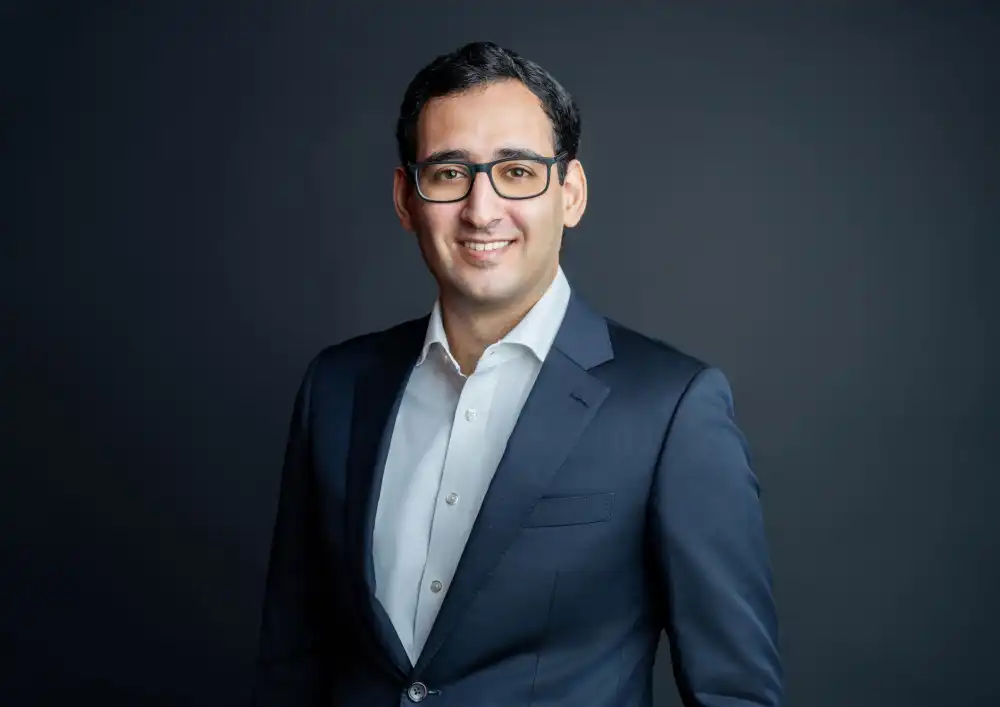
Sorouch Kheradmand wants to change that.
As the Global Head of Sustainability at Schneider Electric, he has spent years helping executives reframe ESG from a reporting task into a full-scale business transformation lever. His belief? Sustainability done right isn’t just responsible — it’s profitable, future-proof, and often, overdue.
In this Q&A, Sorouch breaks down how business leaders can act decisively without getting overwhelmed, where circularity and eco-design fit in, and why AI might just be the accelerator sustainability leaders have been waiting for.
Highlights
Don’t Fear the Net-Zero World — Compete in It
Q: You often say that sustainability isn’t a burden but a business advantage. What’s the biggest mindset shift companies need to make to see ESG as a growth lever rather than a cost center?
A: If you take a step back, it starts by acknowledging the accelerating reality of climate change — and how we’re now operating beyond key planetary boundaries. This isn’t just an environmental issue. It’s a business risk.
I call this the Net-Zero world — a world where climate change is acknowledged and tackled, and where success comes from building resilience, optimizing resources, and innovating under new constraints.
Look at critical minerals like aluminum, copper, or lithium. McKinsey reports that while supply may grow by around 50% in the next five years, demand could increase by five to ten times. And that’s just one example — rising energy costs, rice yield drops in Vietnam… the risks are systemic.
If you rely on exposed resources — and most businesses do — this affects your operations, delivery, profitability, and long-term viability. Add to that your customers’ own climate risks, and it becomes clear: sustainability isn’t siloed. It’s a core business concern.
Companies that start adapting their forecasting, operations, and innovation models can turn this into a competitive advantage. Circular business models, for example, become not just relevant — they become financially attractive.
There’s already a mature toolbox of solutions out there. The winners will be those who act early and build momentum now.
Speak the Language of Business — Not Just Carbon
Q: At Schneider Electric, you’re leading sustainability across a massive global ecosystem. How do you turn carbon reduction targets into tangible business actions, especially across thousands of partners?
A: The key is speaking the language of business. Most leaders aren’t waking up worried about emissions — they’re focused on growth, delivery, customer satisfaction, and motivating teams.
If sustainability feels like an additional problem, it won’t stick. But when you frame it as a way to solve existing business challenges, that’s when transformation begins.
Not every sustainability initiative deserves the same priority. Based on your industry, customer base, and business model, some actions will yield high ROI — others won’t. This is where companies get it wrong: they treat sustainability like compliance, rather than strategy.
But when done right, it’s a value creation engine. It boosts supply security, pricing power, innovation, and even brand strength. We’ve seen the financial benefits firsthand at Schneider — not just long term, but on the P&L today.
Circularity and Eco-Design Are Tools, Not Buzzwords
Q: Circularity, eco-design, and carbon footprinting are big concepts. How do you demystify them for business leaders who are overwhelmed or skeptical?
A: They’re actually very intuitive — once you have the right data.
Think about how you run a business: you analyze costs, understand your market, and measure customer willingness to pay. Do the same with your environmental profile.
Identify where in your manufacturing or transportation processes the biggest environmental loads are — that’s where your risk lies, and also your opportunity. With carbon pricing climbing (already close to $100 and rising), you don’t want to be caught unprepared.
Eco-design helps you rethink how products are created, used, and delivered — often lowering cost and increasing value. Circularity, meanwhile, isn’t just about reuse. It’s a portfolio diversification and risk mitigation strategy.
I often refer leaders to INSEAD professor Atalay Atasu’s HBR work — it’s a great primer on how circularity can unlock new revenue streams. But to truly benefit, companies need to invest in capability-building — not just tech, but teams who can apply these principles beyond pilot projects.
The SME Advantage — If They’re Equipped
Q: You recently helped launch Schneider’s free Sustainability School for SMEs. Why is it critical to empower smaller companies, and what impact have you seen so far?
A: When I first started in sustainability, many SME leaders told me two things: one, they didn’t really understand what sustainability meant for them, and two, even when they believed in it, they didn’t know where to start.
The third thing I heard was how motivated their teams were to get involved — from young grads to seasoned professionals. Sustainability drives purpose. So if you link it to business needs, you unlock energy across the organization.
That’s why we created the Sustainability School — free and open to anyone, with three chapters:
- Understanding climate change and its risks
- Understanding the opportunity for your business
- Learning how Schneider Electric can support your journey
Nearly 20,000 people have already enrolled, and we’re launching more advanced modules next. Our goal is to democratize the tools, so smaller players aren’t left behind.
The Traits That Set Sustainability Leaders Apart
Q: As a performance coach and transformation leader, what traits or behaviors do you see in companies that succeed at embedding sustainability into their core strategy?
A: The most successful companies — like Patagonia, Microsoft, Unilever, or Schneider Electric — had one thing in common: purpose-driven leadership from the top. CEOs who embedded sustainability into the business DNA.
They were curious, experimental, and willing to learn. And now, the playbooks are available. You don’t need to start from scratch.
What you do need is a combination of:
- Realism: understand your long-term business risks
- Curiosity: find opportunity in those risks
- Discipline: test, learn, and scale with consistency
You don’t need a sustainability PhD to get started. You just need the will to begin — and a team that’s ready to contribute. That’s not just true for sustainability. That’s true for any business transformation.
From Reporting to Real Impact — With AI
What’s next for Sorouch? He’s turning his attention to a critical enabler for sustainability teams: Artificial Intelligence. While some fear AI may complicate the journey to climate neutrality, he sees it as a strategic unlock — a way for Chief Sustainability Officers to go beyond reporting and compliance, and instead focus on transformation, prioritization, and business value.
To bring this vision to life, Sorouch is launching a hands-on executive course in partnership with Singapore Management University, alongside experts Arnaud Blandin and Justine Tan.
“We want CSOs and business leaders to walk out not with slides — but with actual tools they’ve built and can use,” he says.
The course, taking place on October 30 in Singapore, will guide participants through building a strong AI strategy for sustainability, reviewing real-world case studies, and developing a working AI prototype in one day.
For Sorouch, it’s a natural evolution of his mission: helping companies stop treating sustainability as a burden — and start leading with it.
Highlights
Read the Chinese article here.