




In a world obsessed with digital transformation and AI, Ratna Juita poses a vital question: what happens when the system stays resilient but the human behind the screen burns out?
Founder of The MindGem and a TEDx speaker, Ratna Juita is one of LinkedIn’s top voices in mindfulness and well-being. With certifications ranging from NLP and Emotional Intelligence to psychological safety and LEGO® Serious Play, she has become a go-to speaker and strategist for companies prioritizing holistic employee development. From a former public speaking phobic to a celebrated wellness educator, her story is as much about personal transformation as it is about practical strategy.
Ratna took the virtual stage at the Digital Leadership Webinar Summit 2025, organized by NewInAsia to equip leaders with future-ready mindsets across AI, cybersecurity, and human capital. While the event spotlighted technologies and platforms, Ratna’s talk, “Thriving in the Digital Age: Mindful Strategies for Resilience and Well-Being,” reminded participants of the need to prioritize their inner operating system: the mind.
Highlights
The Turning Point: When Ambition Meets Burnout
“In 2021, my life turned upside down. I hit burnout — physically, mentally, emotionally.”
Long before she was speaking on international stages, Ratna struggled with fear and insecurity. Growing up in Indonesia, she failed her English oral exam due to public speaking anxiety. Years later, her first job in Singapore involved selling to a stage of 200+ people. Instead of backing down, she joined Toastmasters, slowly rebuilt her confidence, and went on to win competitions. Yet, even success has its limits.
By 2021, her hustle caught up with her. Despite media appearances, TEDx talks, and a thriving training business, she found herself depleted. It was mindfulness that pulled her back. “It became the key to my breakthrough,” she shared.
Mindfulness: Science-Backed Strategy, Not Buzzword
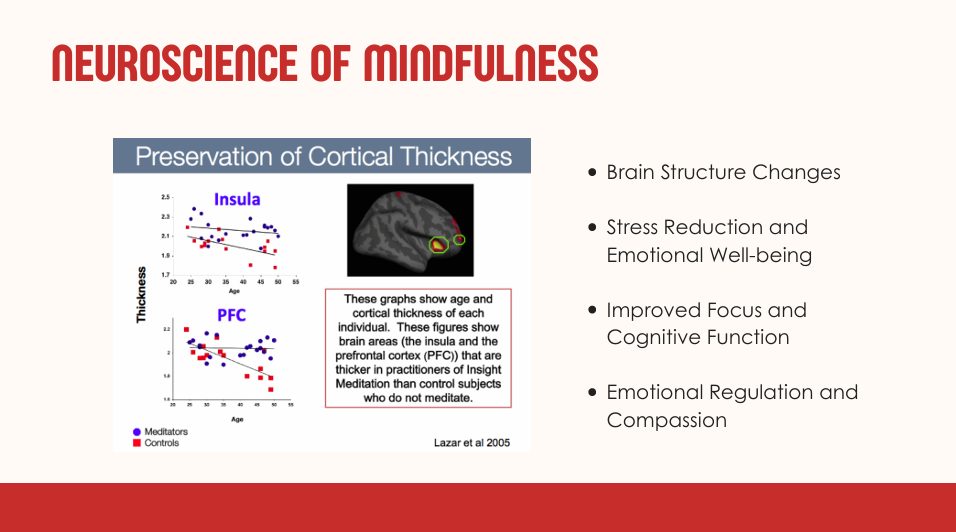
To Ratna, mindfulness isn’t fluff — it’s neuroscience. She referenced the work of Harvard researcher Dr. Sara Lazar, whose brain scans showed significant thickening in the prefrontal cortex after just 8 weeks of mindfulness training. This area governs decision-making and emotional regulation.
She also introduced a powerful quote by Viktor Frankl: “Between stimulus and response, there is a space. In that space is our power to choose our response.” Mindfulness, she said, is what expands that space.
Stress is Not the Enemy — Your Mindset is
Instead of fighting stress, Ratna urged leaders to reframe it. Citing Stanford research by Alia Crum, she differentiated between a “stress-is-debilitating” and a “stress-is-enhancing” mindset. Those who believe stress can sharpen performance tend to experience better health and productivity outcomes.
This insight is especially critical in today’s digital workplace, where overload is the norm. Leaders must shift from survival mode to sustainable performance — and it starts with mindset.
Building Resilience with the PERMA-V Framework
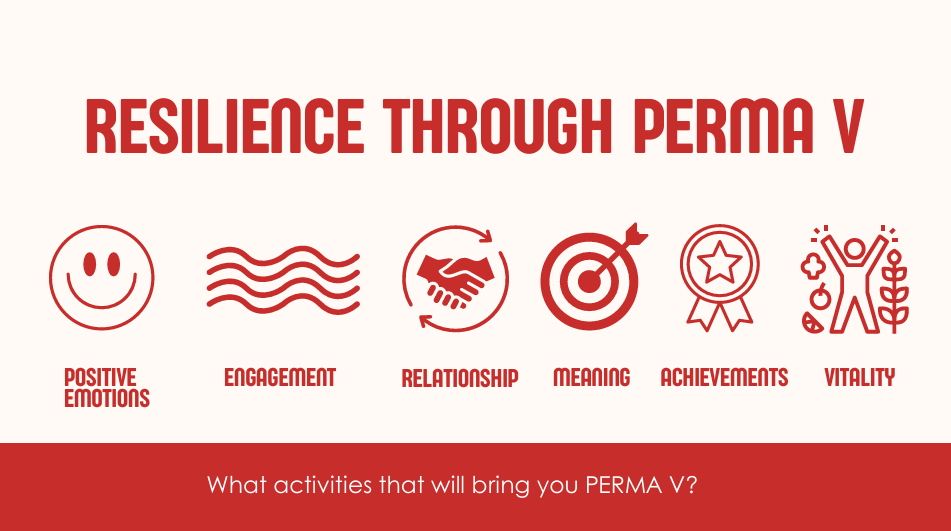
Borrowing from Dr. Martin Seligman’s work in positive psychology, Ratna introduced PERMA-V, a six-pillar model for building lasting resilience:
- Positive Emotions: Joy, gratitude, inspiration.
- Engagement: Finding flow in what you do.
- Relationships: Nurturing authentic social bonds.
- Meaning: Having a sense of purpose.
- Achievement: Progress and goals.
- Vitality: Physical energy from sleep, nutrition, and movement.
She asked the audience to reflect: “What activities give you PERMA-V?”
Digital Habits: Design Your Inputs or Be Defined By Them
Ratna concluded with actionable advice on digital resilience. “In the digital world, we don’t have off buttons. But we can design our inputs.”
She laid out four strategies:
- Build Healthy Digital Habits: Set screen time limits, avoid doomscrolling.
- Cultivate Digital Well-Being: Choose mindful content over addictive media.
- Leverage Technology for Resilience: Use tools that enhance focus and relationships.
- Foster Collaborative Digital Culture: Psychological safety isn’t a luxury — it’s a performance driver.
“You don’t need constant updates like AI. You need consistent mindfulness to thrive in a world that never stops.”
With that, Ratna closed her session with a call to action for every leader: if you’re scaling systems, make sure you’re also strengthening yourself.
The Takeaway: Resilience is the New Digital Edge
Ratna Juita’s talk was a timely reminder that digital transformation isn’t just about speed and scale — it’s about sustainability. Her personal journey from burnout to global wellness advocate shows that performance without well-being is a short game.
Whether you’re leading a tech startup, managing a remote team, or navigating high-stakes decision-making, your resilience is your most powerful asset. And it’s not built overnight. It’s cultivated daily — through mindful choices, reframed stress, deep relationships, and a values-driven life.
In a world that’s always online, Ratna challenges us to log in to what truly matters: our ability to pause, reset, and rise stronger.
📌 Editor’s note:
This feature highlights Ratna Juita, Founder of The MindGem and a TEDx speaker, who delivered the keynote “Thriving in The Digital Age: Mindful Strategies For Resilience and Well-Being” at the Digital Leadership Webinar Summit 2025.
Highlights
Read the Chinese article here.