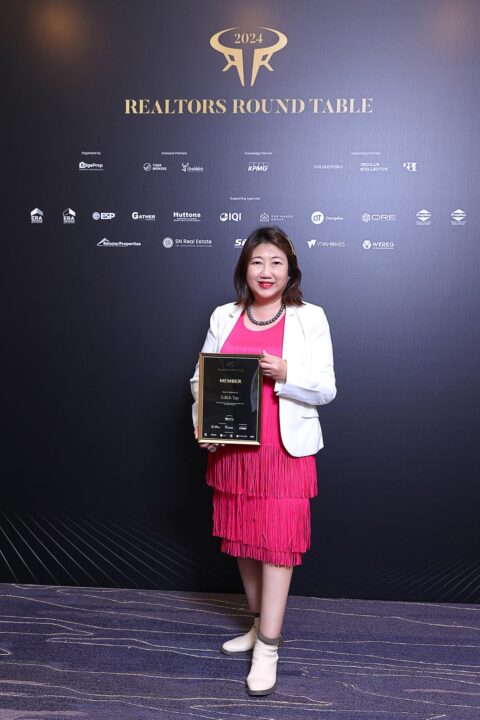
Tech companies aren’t just looking for office space anymore — they’re looking for growth engines. Edith Tay, Executive Director at PropertyBank Pte Ltd, has witnessed this shift firsthand. With her expertise in sourcing strategic locations, she’s helping companies secure more than just a lease — she’s helping them unlock scale, flexibility, and long-term growth.
From data centres and cleanrooms to food factories and fulfilment hubs, Edith’s work goes beyond traditional real estate. She partners with tech and e-commerce players to find spaces that not only fit their needs today but can evolve with their business tomorrow.
Real Estate That Powers Innovation
Q: How have the real estate needs of tech and e-commerce companies evolved in Asia over the past decade?
A: Over the past 10 years, I have seen a clear shift – tech companies are no longer looking for just an office, and e-commerce companies are looking beyond a warehouse space. They are looking for growth engines – flexible leases, hybrid setups and properties that support automation, fulfillment and even data infrastructure.
Depending on which stage they are at, the choice of building/space varies. Agility is key. Companies want space that grows with them, works across hybrid teams, and supports high-speed data and automation. E-commerce players, in particular, are pushing for urban logistics hubs that can support last-mile delivery.
We’ve also seen data centres become mission-critical, especially with AI workloads growing fast. At PropertyBank, we’ve supported clients in securing land for data centres and converting old industrial buildings into smart, hybrid-use facilities. The shift is real—and ongoing.
Q: How do factors like accessibility, digital infrastructure, and sustainability influence decision-making?
A: These aren’t secondary considerations anymore, they’re deal-breakers. If a building lacks the power supply, fibre connectivity, or green credentials, it’s off the list. Accessibility is crucial for attracting and retaining talent, as well as for efficient logistics operations. Robust digital infrastructure is essential in today’s environment, where data is increasingly managed and stored in the cloud. Furthermore, a commitment to sustainability is vital for future-proofing the organization and appealing to the values of the new generation of workers.
A prospective tenant we assisted in their office search had air quality as a priority on their checklist. We were glad to help them locate a building that could monitor and report on air quality.
Q: What are some emerging hotspots in Singapore and Asia for tech and e- commerce offices?
A: Depending on the stage of their business, tech and e-commerce companies may prefer downtown financial locations to fringe city locations.
Some emerging hotspots in Singapore are Tai Seng and Punggol Digital District, in addition to the established business parks at Alexandra, Science Park and Changi. Across Asia, Ho Chi Minh City and Jakarta are becoming magnets for cost-sensitive startups eyeing access to large markets. Bangalore and Hyderabad maintain their leadership as engineering and product hubs, while Seoul and Shenzhen offer advanced innovation infrastructure.
When evaluating office locations, cost is not the only factor. Access to ecosystems and talent access as well as scalability are also crucial considerations.
Q: How is technology transforming commercial real estate—are we seeing more smart offices, flexible workspaces, or AI-driven leasing?
A: Tech is changing everything, from how spaces are used and to how they are managed. Smart offices with sensors, energy monitoring and modular setups are now the norm.
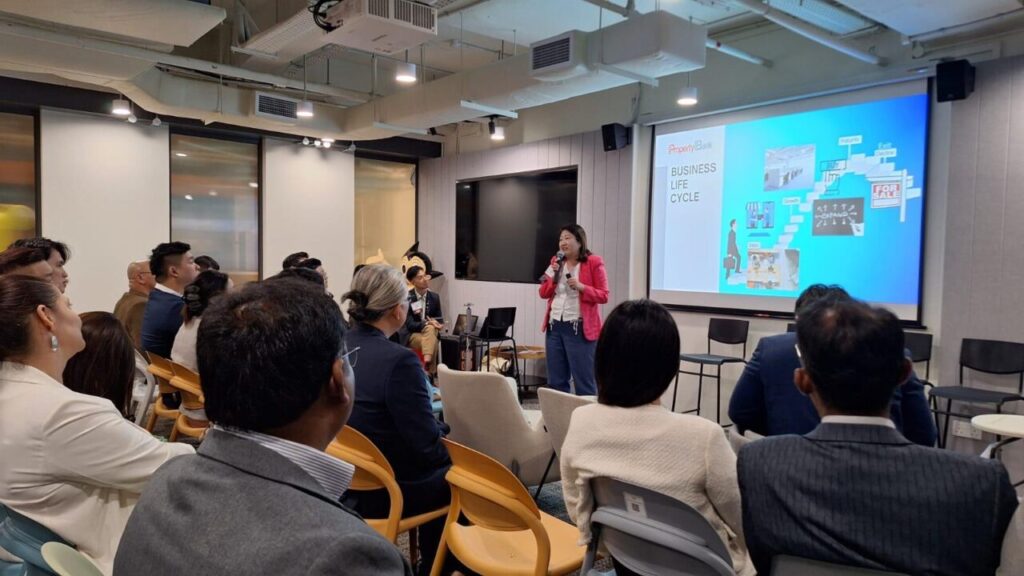
We are also observing the increasing integration of AI into the leasing process. At PropertyBank, we have begun incorporating AI into our advisory services. This allows us to use data to recommend office spaces based on a wider range of factors beyond just location and size, including aspects like the view and layout efficiency. This demonstrates how technology can elevate the real estate sector.
Q: What innovative real estate solutions has PropertyBank introduced to help clients optimize their spaces?
A: We believe real estate should be a business enabler, not just a cost. Our approach involves working with clients to craft creative solutions. These include negotiating a first right of refusal for rapidly growing firms, securing the right to sublet for adaptability in changing markets, and structuring sale and leaseback transactions to improve cash flow.
We’ve helped clients secure off-market assets, convert factory spaces into fulfilment hubs, and even advised on compliance for niche facilities like data centres and commercial schools.
One of my favourite projects involved helping a childcare centre secure a heritage building in the central business district. This strategic move enhanced their brand image and positioned them as a top franchisor. Real estate isn’t just about square footage – it impacts the company’s brand and visibility, and can make a statement for employees and clients. What sets us apart is that we don’t just close deals. We think like business owners and solve for growth, not square feet.
Q: What are the biggest risks and opportunities in commercial real estate for tech and e-commerce players in Asia over the next 5-10 years?
A: The risk is in locking into long leases without flexibility or choosing spaces that can’t evolve with the pace tech companies are growing. There’s also low awareness of real estate as being part of the business strategy.
The upside? Huge. As AI, automation, and e-commerce continue scaling, there will be strong demand for smart logistics spaces, hybrid HQs, and even purpose-built facilities for Industry 4.0. Founders who see space as part of their operational strategy will win.
We’re building PropertyBank around that vision — leveraging data, tech, and deep industry insights to help founders make smarter property decisions.
A Vision Beyond the Blueprint
Edith Tay doesn’t just help tech founders find four walls and a roof — she helps them future-proof their business. As the Executive Director of PropertyBank Pte Ltd, she’s on a mission to transform real estate from a static necessity into a dynamic asset. “We think like business owners,” Edith reflects, “and we solve for growth, not square feet.”
In the future of commercial real estate, it’s not just about where you are — it’s about how your space moves with you. And with Edith Tay leading the charge, that future looks exceptionally well-structured.
Read the article in Chinese here.