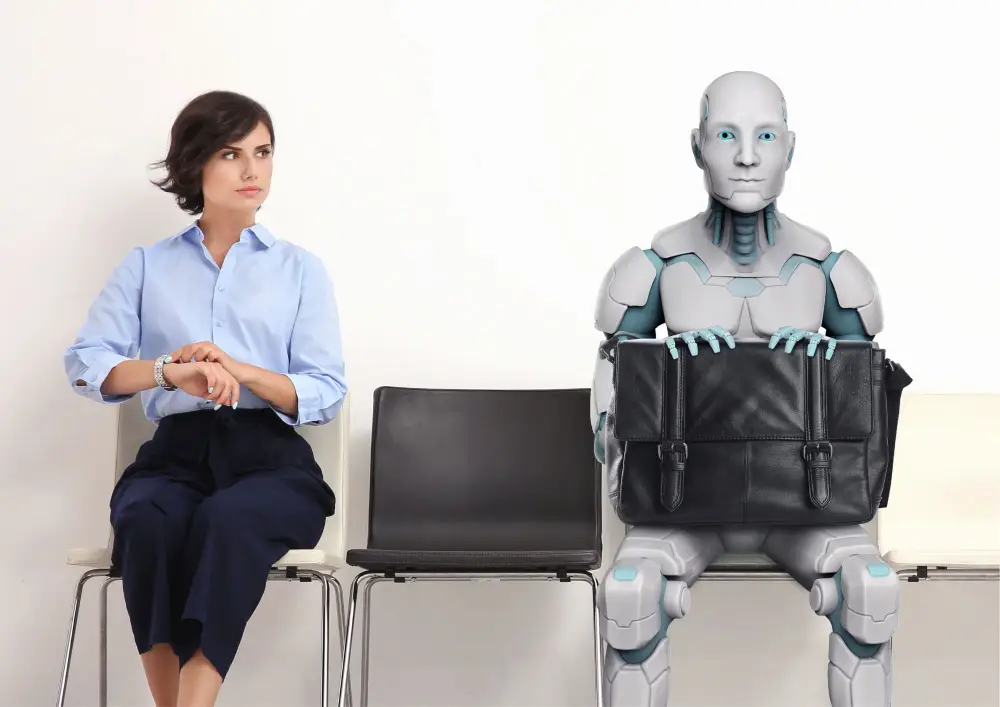
One in six recruitment postings in Singapore now reference the use of machine learning, generative AI, or agentic AI, according to Indeed’s latest hiring data. The country also leads globally in the proportion of job postings that mention AI — underscoring just how integral the technology has become to local workplaces.
As this trend accelerates, AI isn’t just creating new career opportunities — it’s also raising the bar. Job seekers may soon be expected to demonstrate hands-on experience with AI tools during interviews, while employees will need to keep upskilling to stay competitive in a market that increasingly rewards digital fluency.
Still, the question remains: just how much do workers need to adjust?
Highlights
AI’s Expanding Role in Singapore’s Economy
The rise in AI-related job postings reflects more than a tech shift. It signals a broader economic transformation — one where AI is becoming embedded in the everyday operations of businesses across industries.
According to the Singapore Economic Development Board, AI-related skills in the country have grown by 565% since 2016 — the fastest rate in Southeast Asia. Adoption rates have tripled across traditionally low-tech sectors such as manufacturing, logistics, retail, and FMCG.
Singapore’s digital economy now contributes S$128.1 billion, or 18.6% of national GDP, up from 18% in 2023, according to the Singapore Digital Economy Report 2025 by the Infocomm Media Development Authority.
From finance and logistics to marketing and media, understanding and applying AI tools is quickly becoming a baseline requirement.
But that shift comes with growing pains — especially for workers whose roles are vulnerable to automation.
This transformation is not without impact. While automation is streamlining repetitive, data-heavy roles, it’s also creating demand for new positions in AI training, prompt engineering, and ethical oversight. Digital literacy alone may no longer be enough — what sets professionals apart today is AI fluency.
But technical skills aren’t the only differentiator, as hiring leaders point out.
Why Human Qualities Still Matter More
It’s now common to hear how AI literacy is becoming essential. A recent report by HR Asia found that 54% of recruiters prefer candidates with AI familiarity during hiring.
Yet, this doesn’t mean deep technical proficiency is expected of all candidates — especially in non-tech roles.
Joshua Woo, Managing Partner and Director at Recruit Fast, explains: “We’re not yet seeing widespread use of technical AI proficiency tests in the recruitment process, particularly outside of tech roles. Instead, we focus on evaluating candidates’ practical understanding and their attitude — often through situational or behavioural questions, rather than technical assessments.”
Susan P. Chen, Fractional CHRO, Coach, and Founder of co:grow, agrees. Rather than testing theoretical knowledge, she prefers to hear how candidates have applied AI tools in their workflows. “It’s far more compelling to hear a finance candidate explain how they used AI to build a better formula generator than to listen to a long technical explanation,” she says. “That mindset tells me more than a theory-based AI question ever could.”
In essence, AI is a tool — not a test. And the most compelling candidates are those who use it with purpose.
While AI is increasingly vital for handling tasks, recruiters still prioritise one thing: hiring people who can do the job well and contribute to the team. In this context, AI becomes a supporting tool — not a decisive metric — used to assess adaptability, curiosity, and resourcefulness.
“How candidates put AI to use in their daily work is what matters — not whether they can define it,” Susan adds. “For example, a marketing lead once showed me how she used ChatGPT to test messaging variations before running ads, cutting her turnaround time in half. That illustrates impact, not just tools.”
Adapting — Not Competing — With AI
As the job market evolves, candidates who can interpret, adapt, and co-create with AI tools stand out. They are seen as future-ready — not just skilled, but agile.
Some professionals are already proactively experimenting with AI platforms in their day-to-day tasks. By layering on new digital capabilities, they aim to stay relevant as AI tools become more sophisticated and embedded into work processes.
This proactive attitude is what employers are watching closely — even more than technical fluency itself.
Contrary to popular belief, the gap between tech-savvy and less digitally fluent workers is not permanent, says Kenny Ang, Consulting Manager at Recruit Fast, whom Joshua recommended for this piece.
“It’s a complementary — and temporary — phase in the transition toward a more automated economy. The disruptions will stabilise as the workforce adapts, new roles emerge, and productivity gains balance the shift.”
He acknowledges that being comfortable with AI is increasingly seen as a plus — but stresses that openness to new ways of working is just as critical.
Susan echoes this point, noting that the real divide isn’t about who can keep pace with AI. “It’s about who is willing to reskill and adapt. The gap widens where workers resist change — not where AI progresses.”
Singapore’s long-standing push for continuous learning and reskilling offers a strong foundation to cushion workforce disruptions. It’s this mindset that will keep opportunities open — for both tech and non-tech professionals alike.
Learning to work with AI shouldn’t just be about staying employable. It’s about contributing meaningfully to a future where human insight and machine intelligence can coexist.
Staying Relevant in an AI World
To stay ahead, Kenny advises job seekers to focus not only on technical capabilities, but also on mindset. Here are five steps that matter just as much as what’s on your résumé:
- Stay curious — explore how AI can simplify or elevate your work
- Take courses to understand the basic features of common tools
- Experiment with AI platforms in your daily tasks
- Demonstrate adaptability and openness to evolving technologies
- Be proactive and creative in applying AI to improve outcomes
AI is already transforming how we work — but it hasn’t yet replaced the need for thoughtful, adaptive, and human professionals.
Final Thoughts: Why Human Adaptability Is the True Competitive Edge
As Singapore embraces AI across industries, the hiring landscape is shifting fast. Digital tools may be reshaping job descriptions, but they aren’t rewriting the rules of human value. Recruiters are looking beyond technical checklists — toward candidates who can think critically, adapt quickly, and work purposefully alongside technology.
Ultimately, the future belongs not to those who know about AI, but to those who can use it well — and still bring their human strengths to the table.
Editor’s Note:
This article was contributed by NewInAsia editorial fellow Le Ha Phuong (Nora), a freelance podcaster and former radio producer who creates current affairs content blending expert insights with engaging storytelling.
In this piece, she explores how AI is reshaping hiring expectations in Singapore — and why adaptability, not just technical skill, is emerging as the real game changer.
To pitch your story or share reflections on talent, technology, or the future of business in Asia, contact the NewInAsia editorial team.
Highlights
Read the Chinese article here.