Across Asia’s fastest-growing markets, ambition is not the constraint. Capital is flowing, talent pools are deepening, and AI is accelerating what organisations believe they can achieve.
But as growth scales, a harder question is emerging beneath the surface: why do so many organisations still struggle to translate momentum into outcomes?
For Pradeep Saini, a global technology and operations leader who has managed $500M+ portfolios and led high-stakes turnaround environments, the answer is direct. After three decades in the trenches, he has seen the same pattern repeat itself across markets and industries.
The issue isn’t strategy. It isn’t even technology. Its execution.
And in today’s environment, AI is not solving that problem — it’s exposing it.
Highlights
What AI Is Really Exposing in Leadership
Q: You’ve said that AI isn’t replacing leaders — it’s exposing them. What exactly is being exposed today?
A: Let me share a recent experience from a large multinational, where I led a significant technology services portfolio.
When I analysed the numbers, I found something uncomfortable — we were leaving a massive margin on the table. We drove margin expansion from 22% to 33% through AI automation, renegotiating long-standing loss-making contracts, and tightening governance to catch variance early.
What got exposed in that process wasn’t capability — it was behaviour.
Some leaders had accepted 22% as “good enough.” Others avoided renegotiating contracts because it was uncomfortable.
Many talked about AI but hadn’t actually deployed it.
And leaders who chose to exit low-margin contracts rather than confront the underlying issues.
From my experience, what AI exposes today is not what leaders don’t know — it’s what they choose not to see.
It strips away the buffers that scale once provided. You can’t hide inefficiencies behind headcount anymore. You can’t rely on old formulas to solve new problems.
What’s being exposed is a lack of courage, ownership, and decision velocity.
Inside a Real Execution Engine
Q: Many startups fail not because of bad ideas, but because they lack an execution engine. What does a real execution engine look like in practice?
A: I’ll answer this based on what I’ve actually done.
In that same organisation, I focused on the top 20% of accounts generating 80% of revenue. I placed my best people there and built direct, honest relationships with CIOs — not just formal reviews, but real conversations about what was working and what wasn’t.
That allowed us not just to protect revenue, but expand it.
A real execution engine has three core elements:
- Know your Pareto: Identify and prioritise the accounts that truly drive value
- Build top-level relationships: Not transactional — problem-solving partnerships
- Expand through success: When you make your clients successful, growth follows
Most companies operate very differently.
They chase new logos while underserving their best customers. Activity is mistaken for progress, and long meetings often produce little action. Ownership is unclear. Reviews rarely generate insight.
In reality, many organisations operate on hope.
Meetings are expected to drive action.
Emails are assumed to be read.
Deadlines are treated as if they will naturally be met.
A real execution engine replaces hope with discipline.
Short, focused check-ins. Clear ownership. Data-driven reviews that uncover problems — not just celebrate wins. That’s the difference.
Building for Scale: Why Growth Alone Isn’t Enough
Q: Markets like India and Indonesia have massive growth potential. What does it actually take to build an organisation that can execute at that scale?
A: I learned this as part of a global crisis SWAT team, where I was brought into situations where things had already gone wrong — broken delivery, lost trust, unhappy clients.
What works at scale is surprisingly simple.
First, break large problems into smaller, manageable pieces. You cannot fix a system-level issue in one move.
Second, assign clear ownership, timelines, and definitions of “done” for each piece.
Third, structure communication deliberately. In a crisis, communication breaks first — and when it does, speculation fills the gap.
By aligning on who communicates what, when, and how, you remove ambiguity.
The result isn’t just delivery — it’s restored confidence.
Asia’s growth markets don’t lack opportunity. India’s real estate sector alone is projected to cross $1 trillion. Indonesia and Vietnam are following similar trajectories.
But the winners won’t be the fastest movers.
They’ll be the ones with absorption capacity — the ability to scale without breaking.
Growth is easy. Controlled growth is leadership.
Scaling Technology Without Breaking Trust
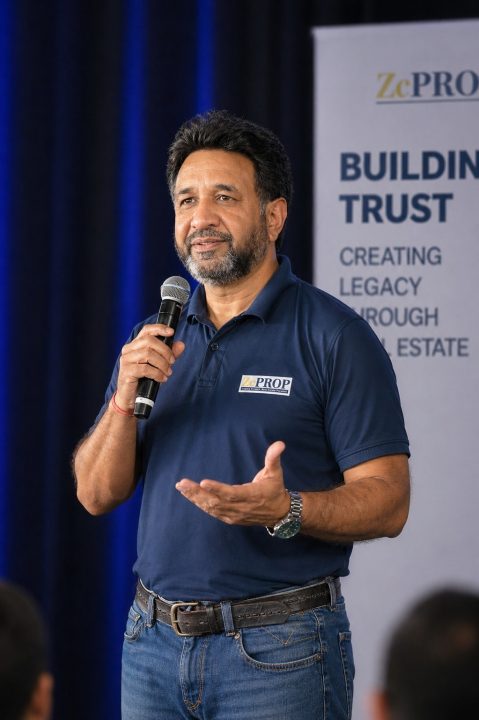
Q: In an AI-driven environment, how can leaders scale technology without losing trust, empathy, and alignment?
A: My SWAT team experience taught me that trust is rebuilt through structure, not charisma.
In one crisis situation, instead of trying to win trust back through promises, I implemented a simple system:
- Weekly steering committee meetings
- Daily 15-minute operational check-ins
- A shared red-yellow-green dashboard
- Clear escalation paths
Within 30 days, trust was restored — not because we were likable, but because the system was reliable.
To scale technology without losing trust:
First, be transparent about AI — what it does, what it doesn’t, and how decisions are made.
Second, use AI to enhance empathy, not replace it. AI can surface signals like burnout or disengagement, but leaders must act on those insights.
Third, deliberately design human moments. Efficiency will naturally dominate in AI environments — leaders must protect connections intentionally.
Trust at scale is not emotional.
It is operational — built through clarity, predictability, and consistency.
Why Experienced Leaders Are Falling Behind
Q: What mistakes are experienced leaders making today — and how can they stay relevant?
A: The biggest mistake I see is this: protecting what you have instead of expanding it.
Many leaders:
- Delegate AI understanding instead of owning it
- Confuse experience with expertise
- Protect territory instead of creating value
Twenty years of doing something the same way is not expertise. It’s inertia.
To stay relevant:
- Spend time hands-on with AI tools.
- Hire people smarter than you in areas you don’t understand.
- Admit what you don’t know.
- Apply AI to your own work before expecting your team to adopt it.
Leaders who become irrelevant focus on defence — protecting accounts, maintaining the status quo.
Leaders who stay relevant focus on offence — creating value, expanding impact, and enabling others to succeed.
Age is not the issue.
Curiosity is. Courage is. Execution discipline is.
Final Thoughts: Execution Is No Longer Optional — It’s the Differentiator
Asia doesn’t have an idea problem.
It has an execution gap.
The region is entering a phase where capital, talent, and technology are no longer scarce — but discipline still is. And that gap is widening.
Because as AI removes inefficiencies and accelerates visibility, it also eliminates excuses. What used to be hidden inside complexity is now transparent. What used to take months to surface now shows up in real time.
In that environment, organisations won’t fail because they lack ambition.
They will fail because they couldn’t execute consistently at scale.
The next generation of winners in Asia will not be defined by who adopted AI fastest — but by who built the systems, culture, and leadership discipline to actually use it well.
Because in the end, ideas create momentum, but execution is what determines who captures it — and who gets left behind.
About Pradeep Saini
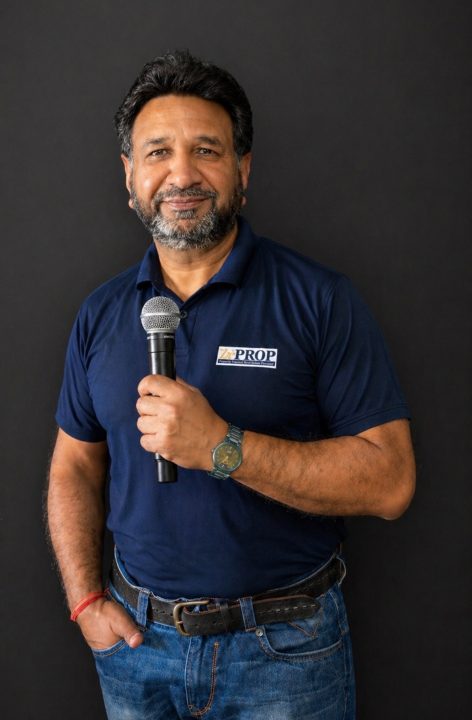
Pradeep Saini is a global technology and operations leader with over three decades of experience driving large-scale delivery and transformation across India, APAC, Europe, the Middle East, and the Americas. He has led portfolios exceeding $500M and managed teams of more than 12,000 professionals across industries, including BFSI, telecom, and enterprise technology.
Over his career, he has held leadership roles at organizations such as IBM, Wipro, HP, Siemens, LG Electronics Inc., and HCL, where he focused on execution excellence, governance, and large-scale turnaround initiatives.
He is currently Co-Founder & Chief Technology and Innovation Officer at ZeProp, a B2B PropTech (www.zeprop.com) launched on both Android and iOS platform bringing transparency and efficiency to the Indian real estate ecosystem (Developers, Builders and Real Estate Agents), which is projected to exceed $1 trillion in India by 2030.
Highlights
Read the Chinese article here.
Related posts:
 A 25-Year HR Veteran Explains Why Companies Chasing Growth Burn Out Their Best People
 She Turned ‘Human Behavior’ Into a Measurable Business Risk — And It’s Changing How Companies Operate
 Jasmine Liew Chia Wei on Leading with Psychological Safety
 They Work in a Hotel That Never Sleeps — So Why Aren’t They Burning Out?