Across Malaysia, AI adoption in HR is accelerating fast. Teams are experimenting with ChatGPT, automating documentation, and testing new workflows in recruitment and learning.
But beneath that momentum lies a more uncomfortable reality: most organisations are still operating at a very shallow level of AI capability.
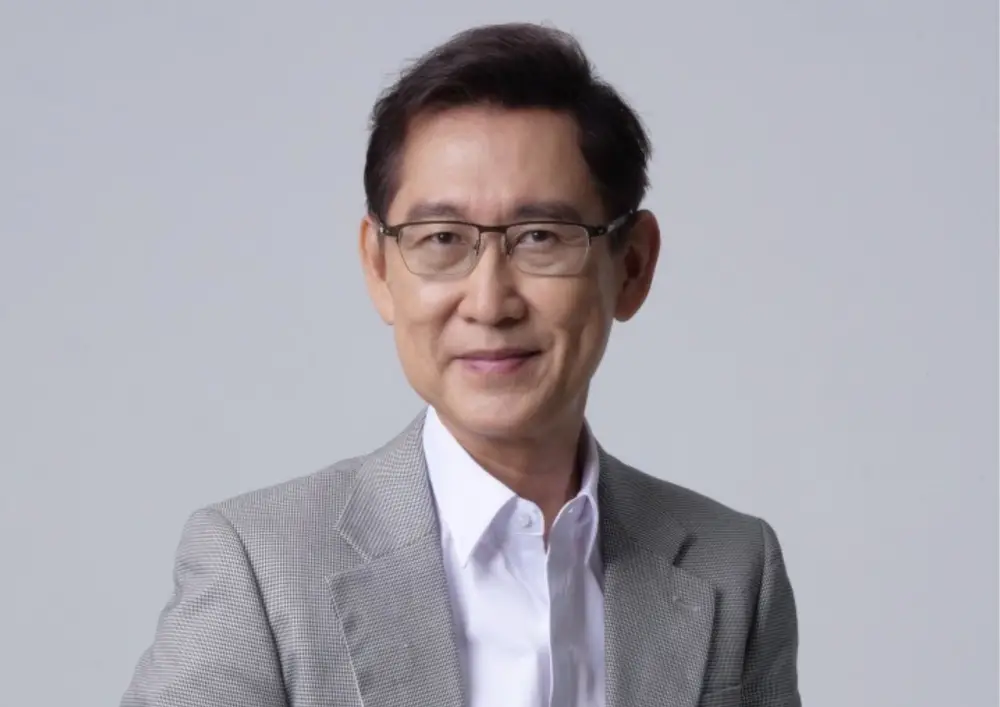
For Laurence Yap — an HR practitioner with more than two decades of experience across biopharmaceuticals, fintech, renewable energy, manufacturing, and retail — the issue is not access to technology. It’s the lack of practical understanding of how AI should actually reshape the way HR operates.
Today, as Dean of the School of AI at UOA Academy and a long-time contributor to Malaysia’s HR ecosystem through initiatives like HRLC, Transform, and Hacking HR Malaysia, Laurence focuses on helping HR teams move beyond experimentation into operational capability.
His work sits at the intersection of HR, organisational development, leadership, and practical AI adoption — helping professionals rethink not just the tools they use, but the way work itself is designed.
His message is simple: AI will not replace HR professionals. But it will fundamentally reshape what valuable HR work looks like.
Highlights
- Why Most HR Teams Are Still Only Scratching the Surface
- AI Doesn’t Fix Broken Systems — It Amplifies Them
- What Meaningful AI Adoption Actually Looks Like
- Why Some Organisations Move — And Others Stay Stuck
- The Capabilities HR Leaders Need Next
- Final Thoughts: The Future of HR Will Belong to the Most Human Leaders
Why Most HR Teams Are Still Only Scratching the Surface
Q: Where do you see the biggest gap between AI ambition and actual implementation in HR?
A: Let me be honest.
When I ask HR leaders to show me how they use AI, most open a ChatGPT tab. A few prompts. A drafted warning letter. Maybe a training outline.
That’s Layer One — AI as a basic chatbot. According to the SHRM 2026 report, 82% of HR professionals already use AI at work. Yet the Hays Asia Salary Guide 2025 found that only 26% have received formal AI training.
Useful, yes. But it’s like hiring a brilliant specialist and only asking them to file documents.
The real issue isn’t budget or access to technology. It’s the lack of practical, grounded, Malaysia-specific training. The EY 2025 Work Reimagined Survey found 93% of Malaysian employees already use generative AI — higher than the global average — but the depth of capability remains limited.
Most HR teams don’t realise there are two more powerful layers beyond simple prompting.
Layer Two is AI as a persistent virtual assistant — one that remembers organisational context, understands HRD Corp requirements, applies the Employment Act 1955 consistently, and works like a dedicated specialist that never needs re-briefing.
Layer Three is where real competitive advantage emerges: multiple AI agents working together in sequence.
A manager requests supervisory training. One AI agent handles the training needs analysis. Another designs the programme. Another writes facilitator scripts. Another prepares HRD Corp claim documentation.
What used to take weeks can now happen in hours.
Laurence says some Malaysian organisations are already experimenting with these multi-agent workflows — though adoption remains far from widespread.
AI Doesn’t Fix Broken Systems — It Amplifies Them
Q: What are the first systems or processes that actually need to change when integrating AI into HR?
A: Here’s what I tell every HR leader:
AI does not fix broken systems. It amplifies them.
Before introducing AI, organisations need to get four things right.
First, data. Employee information, learning records, skills profiles, and performance history need to be centralised properly — with PDPA-compliant consent mechanisms already in place.
Second, governance. I’ve seen AI recruitment tools quietly replicate hiring bias without organisations realising it. In Malaysia’s multicultural workforce, that’s not theoretical — it’s real.
Every organisation deploying AI should have a simple governance framework answering three questions:
- Who is accountable when AI gets it wrong?
- Which decisions always require human oversight?
- How are we checking for bias regularly?
Third, process redesign. Most HR processes were built for a slower world — annual appraisals, fixed learning calendars, static workflows.
If you bolt AI onto outdated systems, you don’t create transformation. You simply automate inefficiency.
And finally, capability building. Real AI adoption doesn’t happen through one-hour webinars. Teams need structured, hands-on learning where they actually build working assistants and workflows they can apply immediately.
What Meaningful AI Adoption Actually Looks Like
Q: Can you walk us through a real example where AI meaningfully improved a people-related outcome?
A: There’s a kind of exhaustion in HR that people rarely talk about openly.
Not the emotional fatigue of difficult conversations — but the relentless repetition of administrative work. Rebuilding frameworks. Preparing claims. Assembling training documentation week after week.
The breakthrough came from building persistent AI agents and chaining them into a connected workflow.
One agent handles training needs analysis. Another designs competency frameworks. Another builds learning programmes. Another prepares facilitator scripts. Another handles HRD Corp claims.
What previously took four to six weeks now takes under five hours.
The entire framework — including the GEMs for HR playbook and Multi-Agent HR System — was released freely on LinkedIn with no paywalls.
Hundreds of Malaysian HR professionals adopted it, with many reporting immediate reductions in administrative workload.
What made it successful wasn’t novelty.
It was intentional design:
- AI agents that retained organisational context
- Structured workflows instead of random prompting
- Malaysian-specific compliance is built directly into the system
This is what meaningful AI adoption looks like — not flashy demos, but practical systems that genuinely give people their time back.
Why Some Organisations Move — And Others Stay Stuck
Q: What separates organisations that successfully operationalise AI from those stuck in experimentation?
A: The biggest difference is mindset.
Organisations that fail to treat AI like a shiny new tool. They run pilots, attend demos, and then return to old ways of working once operational pressure kicks in.
The organisations that succeed treat AI as a new operating system.
Five things consistently separate them.
First, they invest in real learning — not surface-level awareness sessions, but practical capability building.
Second, they design systems, not prompts. A prompt gives you one good answer. A properly designed AI assistant gives you consistent, compliant outputs repeatedly.
Third, they start small but move fast. The successful organisations pick one high-impact workflow and fully implement it within weeks, not months.
Fourth, they keep people at the centre. AI handles volume. Humans handle judgment, empathy, and the conversations that actually matter.
And finally, they learn collaboratively — sharing knowledge internally and through communities of practice.
Through his work with HR leaders across Malaysia — from MNCs to fast-growing local organisations — Laurence has seen that the organisations moving fastest are often the ones willing to redesign how work happens — not just experiment with new tools.
One HR Director told him after implementing AI into her recruitment workflow: “What used to take two weeks now takes four hours.”
But what affected her most wasn’t the time saved.
It finally had the capacity to do the work she originally entered HR to do.
The Capabilities HR Leaders Need Next
Q: What capabilities do HR leaders need to build now to remain relevant over the next 3–5 years?
A: I recently ran a session with senior HR professionals and asked them how they currently use AI.
The room went quiet.
One person eventually said, “I’m scared. Not of the technology — but that everything I’ve built over twenty years is becoming irrelevant.”
My answer was simple:
Your experience is not becoming irrelevant. But refusing to evolve might be.
Five capabilities matter most now.
First, AI fluency — not awareness, but practical capability.
Second, human judgment. As AI handles repeatable work, HR becomes increasingly judgment-driven: ethics, wellbeing, culture, and leadership decisions.
Third, data literacy. HR leaders don’t need to become data scientists, but they do need to ask better questions about AI-generated insights and recommendations.
Fourth, strategic business partnership. AI finally creates space for HR to move beyond administration and contribute at a strategic level.
And fifth, ethical leadership.
One company implemented an AI-driven performance system without explaining how it worked. Employees felt surveilled, managers felt undermined, and trust deteriorated quickly.
The HR leaders who will matter most over the next five years are the ones who can balance technology with wisdom.
Because ultimately, the promise of AI in HR isn’t just efficiency.
It’s creating the space for HR professionals to become more human, more strategic, and more impactful than before.
Final Thoughts: The Future of HR Will Belong to the Most Human Leaders
For years, HR teams have been buried under operational work — documentation, approvals, compliance workflows, repetitive administration.
AI is beginning to remove that weight.
But what replaces it matters far more.
The future of HR will not belong to leaders who simply automate faster. It will belong to those who can combine technology with judgment, ethics, empathy, and organisational influence.
Because as AI takes over repeatable work, the real value of HR becomes clearer:
helping organisations navigate trust, culture, leadership, and human complexity at scale.
And perhaps that is the real shift Laurence Yap is pushing organisations to recognise.
AI is not reducing the importance of people.
It is forcing organisations to finally decide what human work is truly worth protecting.
Highlights
- Why Most HR Teams Are Still Only Scratching the Surface
- AI Doesn’t Fix Broken Systems — It Amplifies Them
- What Meaningful AI Adoption Actually Looks Like
- Why Some Organisations Move — And Others Stay Stuck
- The Capabilities HR Leaders Need Next
- Final Thoughts: The Future of HR Will Belong to the Most Human Leaders
Read the Chinese article here.