For decades, Singaporeans were sold a simple formula: study hard, earn a degree, secure a corporate job, and build a stable future.
Recent labour market data challenge that assumption.
Degree holders now face the highest retrenchment incidence among resident workers in Singapore, surpassing diploma holders and those with secondary school qualifications. The finding sparked widespread discussion online, including a viral LinkedIn post by Adrian Tan, one of Singapore’s most prominent voices on the future of work.
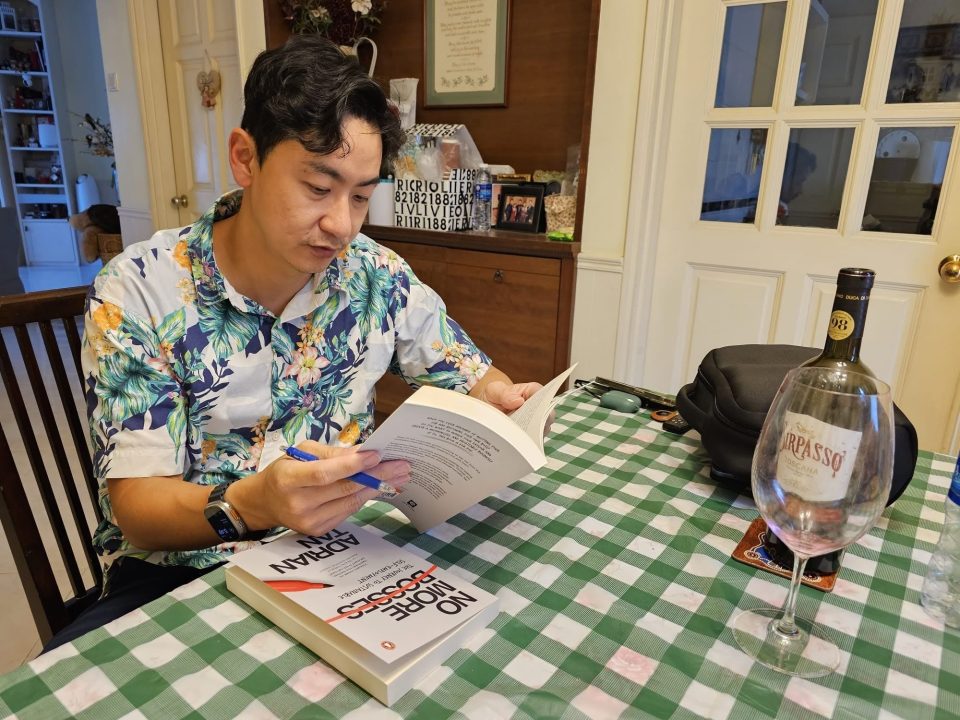
Adrian is the author of No More Bosses (Penguin Random House), a former HR entrepreneur who helped scale recruitment businesses, and the founder of LayoffSG, a crowdsourced platform tracking retrenchments across Singapore. Ranked the country’s top HR influencer by Favikon, he has spent more than a decade analysing workforce trends, interviewing HR leaders, and advising HR technology companies on the changing world of work.
To Adrian, the numbers are not an anomaly. They are a reflection of deeper structural shifts that have been building for years.
Highlights
The Degree Premium No Longer Guarantees Protection
“A combination of factors,” says Adrian.
One of the biggest is globalisation.
“Talent is no longer restricted to local soil. Companies can hire from almost anywhere today.”
At the same time, Singapore has become a more expensive place to operate.
“There was a time when Singapore looked incredibly attractive because wages were relatively low and foreign currencies were much stronger. It was a no-brainer for many international companies to set up operations here to tap into a growing talent pool.”
That advantage, he argues, has narrowed significantly.
For years, offshoring was largely confined to support functions. Back-office operations moved to India, call centres shifted to the Philippines, while management and regional headquarters remained in Singapore.
“Now we’re seeing companies reconsider even more functions because the cost savings can be substantial.”
Inflation has only intensified the pressure.
“Salary costs are closely linked to the cost of living. As living costs rise, labour costs rise as well.”
According to Adrian, the pandemic accelerated this shift.
“COVID was effectively a large-scale experiment that showed that remote hiring could work. Once organisations realised they could access talent globally and save money at the same time, it changed how many of them thought about workforce planning.”
AI Didn’t Start the Fire. It Exposed It.
Artificial intelligence is often blamed for growing workforce anxiety, but Adrian believes the story is more complex.
“AI is definitely part of the picture, but organisations were already under pressure before AI became mainstream.”
He points to rising labour costs, rental expenses, inventory costs, and increasingly thin margins, particularly for businesses focused on Singapore’s domestic market.
“Organisations today are being squeezed from all ends — labour, slim margins, rental, and the cost of inventory.”
Still, AI is changing how employers think about productivity.
“AI has already proven it can do the work of multiple junior employees combined.”
What makes this particularly disruptive, Adrian argues, is that many organisations still measure performance using outdated assumptions.
“For a long time, management associated bigger teams with better performance. More people meant the company was growing.”
The emergence of AI has forced companies to re-evaluate those assumptions.
“By the time AI became a serious consideration, some organisations realised they had hired more people than they actually needed.”
Tracking What the Official Numbers Can’t Show in Real Time

The idea behind LayoffSG came from a simple observation.
Layoff announcements appeared to be happening more frequently, yet information remained fragmented across news reports, social media posts, and word-of-mouth conversations.
“My intention was simply to collate the information.”
The platform allows workers to submit reports of retrenchments and workforce reductions, creating a central repository of layoff-related information in Singapore.
Adrian is careful not to overstate what the platform can currently reveal.
“As the website is less than a month old, I haven’t seen enough data to confidently identify patterns.”
He also acknowledges the limitations of crowdsourced reporting.
“The data will always be incomplete.”
Yet some observations have already stood out.
“I’ve been surprised by how small some reported layoffs are. In one example involving UBS, there was a report of only one Singapore-based employee being affected.”
Cases like these raise interesting questions.
“Sometimes you wonder whether certain cases are broader restructuring exercises or simply terminations that are being described differently.”
More importantly, Adrian believes public reporting may not always capture the full picture.
“I’ve received quite a few tip-offs that suggest what we see in mainstream media may only be the tip of the iceberg.”
His goal is not to create fear, but to provide information that helps workers make more informed decisions about their careers.
The Promise of Career Stability Is Breaking Down
One line from Adrian’s viral LinkedIn post resonated strongly with many professionals: “Your skills aren’t obsolete. The contract was broken.”
The statement reflects his belief that the traditional promise linking education to long-term career stability is weakening.
For decades, higher education was seen as a pathway to security. Today, degree holders, PMETs, and experienced professionals are increasingly finding themselves exposed to the same retrenchment risks affecting the wider workforce.
“The system told people that a degree was the minimum guarantee of a stable life,” says Adrian. “The latest data suggests that’s no longer something we can take for granted.”
That does not mean education has lost its value.
What has changed, he argues, is the expectation that any single qualification or employer can provide lasting security.
Why Betting Your Future on One Employer Is Increasingly Risky
If the old social contract is weakening, what replaces it?
For Adrian, the answer is not another institution.
It’s a different mindset.
“What replaces it isn’t one new contract. It’s a portfolio mindset.”
He compares career resilience to investment diversification.
“The same way you wouldn’t put your retirement savings into a single stock, you can’t put your security into a single employer, a single skill, or a single income stream anymore.”
This idea is central to the argument he makes in his book, No More Bosses, which explores how professionals can build more resilient careers in a rapidly changing economy.
“The risk-management job is moving from institutions to individuals.”
The Skills AI Can’t Easily Replace
Looking ahead, Adrian believes technical skills alone will not be enough.
Reflecting on recent commencement speeches by author Daniel Pink and comedian Ronnie Chieng, he highlights two capabilities he believes will become increasingly valuable: discernment and deep thinking.
Quoting Pink’s argument that “the scarce skill is no longer execution; it’s discernment,” Adrian believes human judgment will become more important as AI systems become better at generating answers.
At the same time, he agrees with warnings about “cognitive debt” — the idea that overreliance on AI can weaken critical thinking and mastery.
For professionals hoping to stay relevant, he believes there are no shortcuts.
“Taste and deep work require reps.”
He compares it to preparing for a HYROX competition.
“You don’t become ready by watching videos. You become ready through consistent training.”
The same principle applies to careers.
Skills need to be developed continuously. Judgment needs to be exercised regularly. Resilience is built over time.
In an economy increasingly shaped by restructuring, AI, and global competition, Adrian believes adaptability may become the closest thing professionals have to long-term security.
And that, perhaps, is the biggest lesson behind both the retrenchment data and the growing interest in platforms like LayoffSG: career stability can no longer be assumed. It has to be actively built.
Highlights
Read the Chinese article here.