Busy schedules, tight targets, and constant context-switching—these define the daily grind for many founders and leaders. But in the rush to keep moving, emotional well-being often takes a backseat. We plan for growth and strategy, yet rarely prepare for the emotional toll.
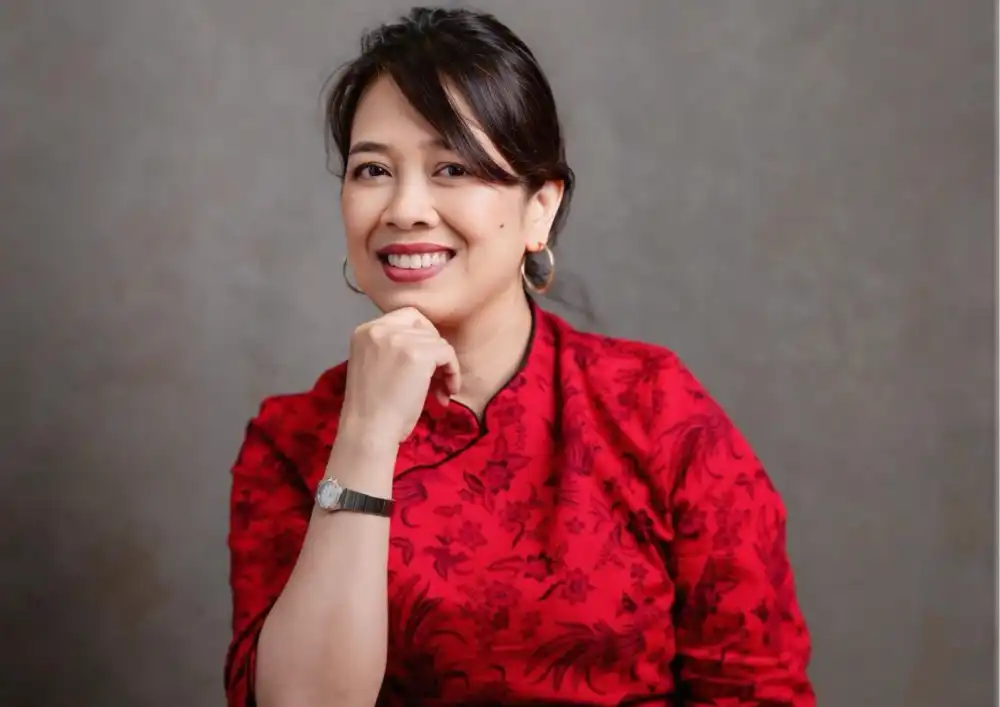
Mona M Amid, behavioural analyst and founder of Emotional Intelligence Mastery, believes that resilience begins with preparation, not reaction. Drawing from years of experience across corporate, humanitarian, and high-risk environments, she helps people strengthen their emotional core before stress turns into burnout. In this interview, Mona shares how emotional intelligence can be a valuable asset in leadership, not just a personal advantage.
Highlights
Mona’s Journey: From Personal Growth to Purpose-Driven Business
Q: What inspired you to start Emotional Intelligence Mastery?
A: During the pandemic, I saw people crumbling mentally and emotionally, all around. I realised many actually do not possess the skills to cope when life happens.
Understandably. When you are “in the fire”, it’s hard to manipulate the fire extinguisher, precisely because you are burning, scalding, flailing in pain. Your mind can’t think straight and your fingers won’t cooperate.
Similarly, when you are experiencing difficult emotions, like extreme anxiety, anger, depression.. it’s hard to just ‘snap out’ of it.
And once you develop mental and/or emotional conditions, it can be a long, hard journey.
I always believe prevention is better than cure. Which means that the best time to learn coping skills is when you are okay. Right now.
Make it a habit. Let it be a part of you. Wired in your system. So when things happen (and yes, life throw curveballs!), you know the strategies to cope. Even if the challenge is extreme and it knocks you hard, you will be more resilient, you will bounce back. You will not slide to the deep, dark, scary end.
Emotional Intelligence Mastery was founded as a channel to educate, and to equip people with the skills and tools to stay on top of their wellbeing. Not just to survive, but to also help you thrive, both in your personal and professional lives.
Q: How do you adapt your EI approach for both executives and at-risk communities?
A: The principles of EI are universal. However, the language and the delivery must be human-first.
For executives, I focus on leadership, decision-making, psychological safety, persuasion and influence.. how EI powers productivity and performance, and drives impact and results.
For at-risk individuals, it’s about resilience, self-awareness, and identity.. how EI helps them to rewrite their narratives, repair their relationships, and reclaim their mental peace.
In both cases, it’s about empowering them. To gain mastery over self. Like Dr. Cliff Lansley PhD (one of my esteemed lecturers during my MSc. in Communication and Behaviour Analysis at Manchester Met Uni, and who is still my mentor till today) once said, “Emotional Intelligence isn’t a soft skill. On the contrary, it is a hard intelligence”.
Q: How can emotional fitness help tackle burnout in the workplace?
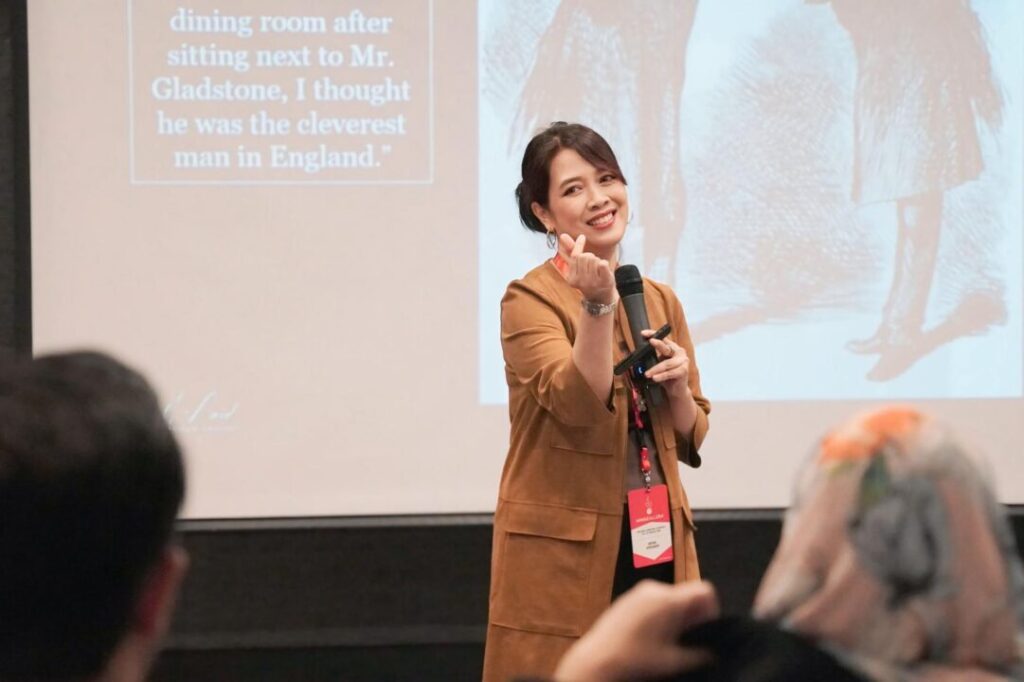
A: I was involved in the recent HR & WorkTech Asia Summit 2025 in March, where I moderated a panel session on “Future of Work: Driving Productivity While Maintaining Well-being”. So I also gathered some insights from the panelists there who are HR giants in their respective industries.
In a nutshell, there’s 3 common patterns: emotional suppression, chronic over-responsibility, and performance perfectionism. Burnout is not just about having too much to do. It’s also about too little recovery, lack of recognition and/or real connection.
Emotional fitness builds the mental muscles to pause, process, and pivot. EI strategies and techniques help leaders, and also employees, stop internalizing everything and start communicating better. It creates teams that don’t just survive stress, but grow stronger through it.
In my training programs on EI for Leaders, I guide them to first recognize their emotional states, then regulate through boundaries, mindfulness, and reframing. Also thought patterns and language patterns. We turn burnout into a signal – not of weakness – but of misaligned priorities and unprocessed stress. And we address those.
Q: What trends are shaping the future of EI for leaders in Asia?
A: Asia is stepping into a new era of leadership, where emotional intelligence is no longer a “nice to have.” It’s a competitive edge.
The pandemic accelerated this shift, exposing the cost of emotionally disconnected leadership (such as high turnover rate, MCs, absenteeism, conflict at the workplace, low morale, productivity issues, etc.).
I see a shift towards human-centric leadership, psychological safety, and inclusive communication. There is also a rise in cross-cultural intelligence, where leaders are expected to navigate nuance, and not just authority. The best leaders today are those who don’t just manage people, they connect with them.
Q: What have been the biggest lessons of building a purpose-driven brand in the personal development space?
A: The biggest lesson? Impact comes from staying true to your purpose.
Building a brand around EI means you have to walk your talk, especially when no one’s watching. People don’t buy programmes, they buy trust.
Tame the ego, stay human, stay grounded, and don’t sell transformation you haven’t lived yourself.
Q: How have your outdoor and humanitarian adventures shaped your work?
A: I have caved 60 metres deep, got trapped underneath when my raft slid up a rock and flipped, the entire soles of my shoes gave way just before summiting a very steep mountain, caught in a treacherous snowstorm whilst trekking up the Himalayas.
In these conditions, emotional intelligence mastery isn’t theory, it’s application. Because you need to manage the fear, the frustrations (with team members, and also with self!), the challenges at hand, whilst simultaneously doing whatever it takes to stay calm, think on your feet, make quick decisions.. because your life depends on it.
On the humanitarian front, I have adopted an orphanage in Kathmandu, Nepal. It’s called the Our Children Protection Foundation Nepal (OCPFN). I have a local team who help manage and carry out activities when I can’t be there myself.
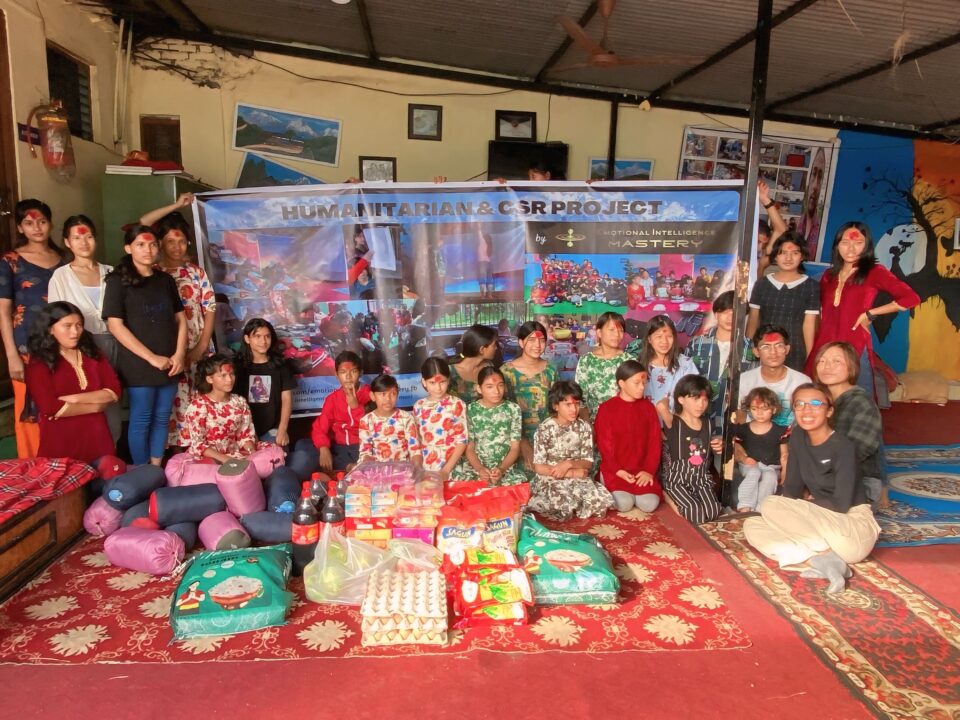
The children and guardians in the orphanage..they are happy folks. And they exude an air of calmness. In spite of barely having anything much (hardly a proper place to sleep, study, play, or even warm water for shower and decent warm jackets during the thickest winter).
I love and live life in its many dimensions. These experiences and immersions also shape my work. It helps add substance, depth and colour to my speeches, trainings and coaching.
Q: What’s a recent moment that reminded you why this work matters?
A: There was this participant of my 2-day Emotional Intelligence in Leadership training programme. He leads a team of over 100 people and used to feel lost and confused about what his team was really feeling or needing.
After learning to read micro-expressions (which is a key component of EI), he now understands how to spot and better interpret subtle emotional cues. That skill alone allowed him to lead with far more clarity, compassion, and confidence. And on the personal front, he said the skills he learned enhanced further how to improve his EI in his upcoming relationship (being a single father who has made some mistakes in the past).
Also.. and I can’t say this without feeling a lump in my throat.. little messages that I receive which says “thank you, Mona” because I’ve saved their marriage, their career.. and for at least 2, their life.. It made me feel all the tears, sweat, time, energy, passion and commitment I’ve put into my work has been worth it.
I feel blessed I get to touch lives and make a difference.
Leading from the Inside Out
Mona’s story is a gentle reminder—growth isn’t just about scaling fast, but about staying grounded while you do. She shows that emotional intelligence isn’t a luxury. It’s a toolkit we need before things fall apart.
From reading subtle cues to making thoughtful decisions, EI helps us show up better for our teams and ourselves. For founders and leaders building in Asia, the real edge isn’t hustle. It’s emotional clarity, calm, and the courage to pause.
Highlights
Read the article in Chinese here.