



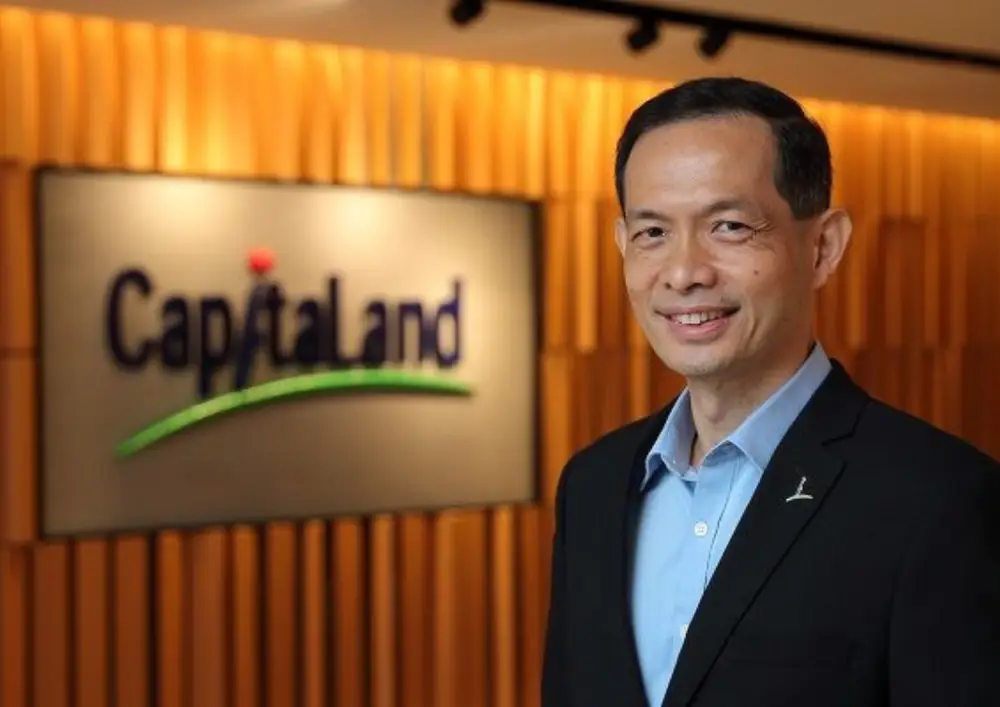
As food businesses across Southeast Asia scale operations and rethink supply chains, infrastructure is emerging as a strategic differentiator — not just a cost layer. Increasingly, operators are looking beyond fragmented facilities toward integrated environments that support efficiency, automation, and long-term growth.
In this conversation, Chew Peet Mun, Managing Director of Investment & Development at CapitaLand Development Singapore, shares how evolving industry needs are reshaping industrial real estate — and what it will take for infrastructure to support the next phase of regional expansion.
Highlights
Designing Infrastructure Around Real Industry Needs
Q: What gaps in Singapore’s current industrial food infrastructure did Gourmet Xchange aim to address, and how do you assess its scalability and long-term value?
A: Many existing facilities are smaller, fragmented, and located further from key consumption and workforce nodes.
At the same time, food businesses are evolving. What we consistently hear from operators is the need to consolidate production, storage, distribution, and even customer engagement within a single, scalable environment.
Projects like Gourmet Xchange were developed in response to these needs. They offer larger contiguous units — typically ranging from 3,000 to 7,000 square feet — alongside infrastructure such as container truck access, ramp-up logistics, and higher ceiling heights that support modern production requirements.
Location also plays a critical role. Being within close proximity to the CBD and major F&B clusters enables faster distribution and more responsive operations.
Ultimately, scalability is not just about size. It’s about how efficiently businesses can consolidate multiple functions under one roof. Integrated environments allow companies to expand production, automate workflows, and streamline logistics within a single ecosystem.
From an asset perspective, developments that are centrally located, operationally efficient, and aligned with long-term industry demand tend to maintain stronger relevance over time.
When Ownership Becomes a Strategic Lever
Q: Strata ownership can be capital-intensive. Under what conditions does this model make sense for food businesses planning regional expansion?
A: Strata ownership becomes strategic when production infrastructure is core to long-term growth rather than a short-term operational need.
Food production requires significant upfront investment in cold chain systems, commercial kitchens, automation equipment, and regulatory compliance. When operating from leased space, businesses face uncertainty around tenancy renewal and rental volatility.
Ownership provides greater cost stability and long-term planning confidence, which becomes increasingly important when scaling production capacity.
For companies with regional operations, having a stable production base in Singapore also enhances credibility, supply chain reliability, and regulatory assurance.
In that context, strata ownership is not just about property — it becomes part of the broader operating strategy for scaling sustainably.
From Back-End Facilities to Integrated Ecosystems
Q: What differentiates Gourmet Xchange’s industrial-integration approach from previous development models in Singapore?
A: Traditionally, industrial food developments in Singapore were designed primarily as back-end environments focused on production and logistics.
What we are seeing now is a broader evolution. Industrial spaces are increasingly being integrated with community-facing elements, creating environments that connect businesses with their surrounding ecosystems rather than isolating them.
In developments like Gourmet Xchange, this includes dining areas, communal spaces, and lifestyle elements alongside production facilities. This allows brands to engage directly with customers while maintaining operational efficiency.
Another aspect of this shift is adaptive reuse. The integration of existing industrial structures — such as older factory blocks — introduces new layers of functionality while preserving industrial heritage.
This combination of industrial use, heritage conservation, and public engagement reflects a more holistic approach to development, where production, experience, and community coexist.
Infrastructure as a Competitive Advantage
Q: How will purpose-built food infrastructure shape Singapore’s competitiveness as a regional base over the next decade?
A: Singapore has long positioned itself as a trusted hub for food innovation, quality assurance, and regional supply chain coordination.
Infrastructure plays a critical role in supporting that position.
Food companies operating across Southeast Asia increasingly value high-spec, sustainable, and centrally located environments that allow them to coordinate production and distribution efficiently.
Developments such as Gourmet Xchange illustrate how infrastructure can support multiple functions — from production and storage to regional coordination — within a single hub.
Looking ahead, the differentiating factor will not just be space, but capability. Infrastructure must enable productivity, automation, and supply chain resilience.
Facilities that support these capabilities will strengthen Singapore’s role as a regional command centre for food production, innovation, and distribution.
Final Thoughts: From Space to System-Level Advantage
The next phase of industrial development is not about building more space — it’s about building smarter systems.
As food businesses become more complex and regionally integrated, infrastructure must evolve from a passive asset into an active enabler of growth. Efficiency, connectivity, and adaptability will matter more than square footage alone.
What’s emerging is a shift from fragmented facilities to integrated ecosystems — where production, logistics, and even customer engagement operate in sync.
In that context, the real question is no longer where businesses operate, but whether their infrastructure is designed to support how they scale.
Highlights
Read the Chinese article here.
Related posts:
 How Rural Destinations Became Hospitality’s New High-Value Asset Class
 Singapore’s Science + China’s Scale: Why APAC Biotech Winners Must Think Cross-border Early
 More Room Categories, Less Revenue? The Hidden Cost of Hotel Complexity
 In a 5-Year Hospitality Cycle, This Bali Brand Engineered 15 Years of Relevance