
Cybersecurity has entered a dangerous phase of false confidence.
Many organisations today appear secure on paper. They pass audits, maintain compliance certifications, and deploy the latest security frameworks. Yet beneath that surface, operational resilience often remains fragile — especially as AI accelerates the speed, scale, and sophistication of cyber threats.
According to Faisal Yahya, Country Manager Indonesia at Vantage Point Security, organisations are increasingly fighting machine-speed attacks with manual processes and static defences — a mismatch that is rapidly becoming unsustainable in today’s threat landscape.
With more than 25 years of experience across IT and cybersecurity leadership roles, including positions as CIO and CISO, Faisal has witnessed cybersecurity evolve from a technical IT concern into a boardroom-level business priority. However, while awareness has improved significantly, he believes many organisations are still operating on outdated assumptions about what security actually means.
The core problem, Faisal argues, is that compliance is too often mistaken for resilience.
Industry benchmarks now place the average global cost of a data breach near US$5 million, while detection and containment timelines continue to lag significantly behind attacker speed. The gap between how organisations defend themselves and how attackers operate continues to widen.
Highlights
From Defensive Function to Business Enabler
Cybersecurity cannot enable business growth if its only strategy is building walls.
At Vantage Point Security Indonesia, the company’s operational focus centres on offensive security — ethically identifying and exploiting vulnerabilities before threat actors do. Faisal’s parallel work as an instructor with EC-Council and the Cloud Security Alliance has also reinforced the importance of understanding cybersecurity from both the attacker’s and defender’s perspectives.
That dual mindset, he says, is increasingly critical.
A mature security posture no longer asks, “Are we secure?” Instead, the more important question is: “How quickly can an organisation innovate without compromising resilience?”
This is where offensive and defensive security practices must work together. Offensive testing should not exist as a disconnected annual exercise. Instead, it should continuously inform defensive strategy, incident response planning, and operational decision-making.
Organisations that tightly integrate offensive security into their broader cybersecurity programmes often reduce remediation and response timelines significantly — an increasingly important advantage in a threat landscape that evolves by the hour.
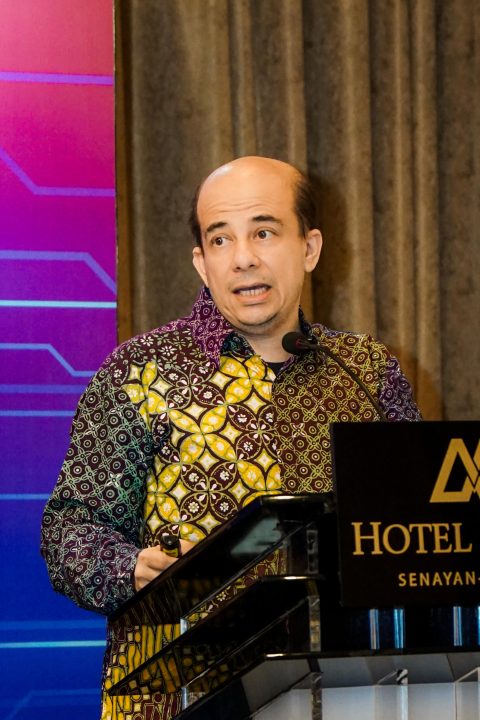
The Dangerous Illusion of “Paper-Tiger” Security
Frameworks such as Zero Trust and cloud security architectures are often positioned as comprehensive solutions. In reality, Faisal believes many implementations fail because organisations confuse compliance with actual operational security.
“Compliance is a snapshot,” he says. “It proves you met a baseline on a specific Tuesday. Threat actors, however, operate dynamically.”
Analysts have projected that over the next several years, the overwhelming majority of cloud security failures will stem not from sophisticated attacks, but from customer-side misconfigurations hidden behind superficially compliant environments.
In an AI-driven threat landscape, a compliant perimeter means little if the underlying architecture itself lacks resilience.
Faisal argues that Zero Trust is not simply a software purchase or deployment checklist. It is an operational philosophy that requires continuous adaptation, aggressive patch management, identity discipline, and constant validation across systems and users.
Without that operational maturity, organisations risk building what appears secure externally but collapses under real pressure — what he describes as a cybersecurity “paper tiger.”
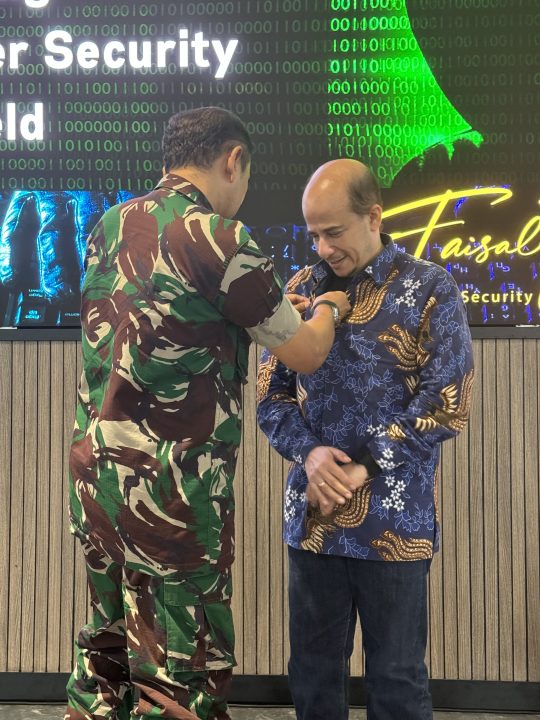
Cyber Resilience Is the Metric That Matters
For decades, the cybersecurity industry sold the idea of absolute prevention. Faisal believes that the promise was never realistic.
Breaches today are no longer viewed as a question of if, but when.
The real differentiator now is resilience: how effectively an organisation can detect, contain, recover, and continue operating under attack.
“If your security architecture cannot absorb a massive ransomware hit and keep the business breathing, your tools are irrelevant,” Faisal says.
The average operational downtime following a successful ransomware attack frequently extends beyond three weeks. For many businesses, the financial and reputational consequences caused by prolonged disruption can exceed the direct cost of the breach itself.
This is why resilience requires a different operational mindset. Systems must be designed not only to resist attacks, but also to fail safely, recover quickly, and preserve continuity during crisis conditions.
Cyber resilience, therefore, is no longer simply a technical priority. It has become an operational and leadership issue.
Offensive Security in the Age of AI
The rise of AI is reshaping both cyber defence and cyber offence at unprecedented speed.
Threat actors are increasingly using AI to automate vulnerability discovery, accelerate reconnaissance, and shorten exploitation cycles. Vulnerabilities that once took weeks or months to weaponise can now be operationalised in days — and in some cases, hours.
Faisal points to developments such as Anthropic’s “Project Mythos,” which reportedly uncovered a longstanding FreeBSD vulnerability missed by human researchers for decades, as an example of how dramatically AI is changing the cybersecurity landscape.
This evolution fundamentally changes the role of offensive security.
Traditional annual penetration testing cycles are no longer sufficient in an environment where attack surfaces evolve continuously, and AI-driven discovery accelerates threat timelines. Offensive findings must instead function as ongoing, real-time threat intelligence capable of continuously strengthening defensive readiness.
According to Faisal, organisations that adapt fastest to this reality will be significantly better positioned to withstand the next generation of machine-driven attacks.
Bridging Southeast Asia’s Cyber Talent and Communication Gap
Southeast Asia’s digital economy continues to expand rapidly, but cybersecurity maturity across the region remains uneven.
The shortage of cybersecurity professionals remains a major concern, with the Asia-Pacific region alone facing a gap of more than 2.5 million workers.
But Faisal believes the deeper challenge extends beyond talent shortages alone.
“The deadliest gap isn’t just headcount — it’s communication,” he says.
Technical teams often communicate in vulnerabilities, exploit chains, and system alerts, while executive leadership tends to focus on operational continuity, financial exposure, and enterprise risk.
Cyber resilience weakens when those conversations fail to connect.
According to Faisal, the industry urgently needs more leaders who can bridge both worlds — professionals capable of translating technical findings into business impact, governance priorities, and strategic decision-making for the boardroom.
Until organisations can consistently connect cybersecurity outcomes to business resilience and financial performance, many security programmes will continue to appear far stronger on paper than they are in practice.
In the AI era, how many security tools an organisation deploys or how many compliance boxes it checks does not determine real cyber resilience. Instead, an organization’s true resilience rests on how effectively it can adapt, recover, and continue operating when disruption inevitably arrives.
Highlights
Read the Chinese article here.