Singapore, April 15, 2026 — For two days this week, Marina Bay Sands became the epicentre of Asia’s technology ambitions. GITEX AI Asia 2026 — billed as the continent’s largest and most global tech, AI, and startup event — drew participants from more than 110 countries on 9–10 April, bringing together over 550 enterprises and startups alongside 250 global investors managing roughly US$350 billion in combined assets.
The message from the exhibition floor was unmistakable: the AI industry is entering a new phase. The conversation has moved beyond who can build the biggest model and toward who can deploy AI profitably, efficiently, and at scale.
The next phase of AI will be defined by execution, not experimentation.
Highlights
From Model Building to Real-World Deployment
Across the exhibition floor, the shift was unmistakable.
The industry is moving away from the race to build ever-larger models — toward the challenge of making AI work in real-world environments.

A recurring theme emerged: inference and edge deployment are now the battleground.
Companies are no longer optimising for scale alone. Instead, they are prioritising:
- Latency and speed
- Energy efficiency
- Cost control
- Deployment flexibility across edge devices and data centres
A joint demonstration by Nokia and Blaize, developed in Singapore, highlighted this shift — showcasing AI inference solutions designed for operational efficiency rather than experimental scale.
This transition is being driven as much by constraint as by opportunity. Compute limitations, energy consumption, and hardware bottlenecks are forcing companies to rethink how AI is commercialised.
The implication is clear:
The winners in AI will not be those who build the biggest models — but those who can deploy them profitably at scale.
Singapore as the Launchpad for Asia’s AI Economy
Singapore’s role as a regional technology hub was on full display.
Ranked fourth globally in the 2025 Global Startup Ecosystem Index, the city-state is increasingly positioning itself as a bridge between Asia’s innovation ecosystems and global capital markets.
On the ground, that positioning was visible.
Chinese and international firms exhibited side by side, reflecting a broader industry reality — where infrastructure resilience and deployment capability now matter as much as model performance.
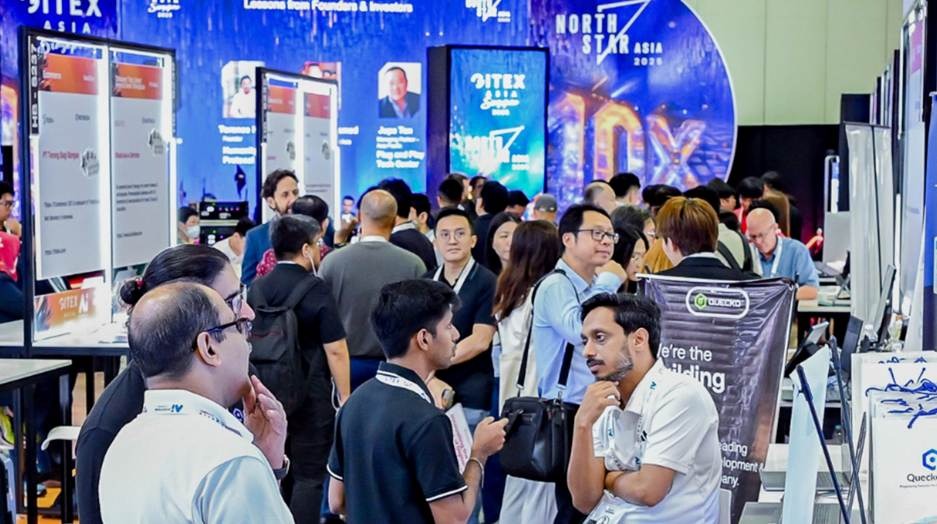
Southeast Asia is becoming a critical node in the global AI supply chain. Singapore, Malaysia, and Indonesia are collectively expected to account for 40% of global data centre capacity by 2030.
This is not just infrastructure growth. It is the foundation for AI at scale.
Innovation on the Floor — and What It Signals
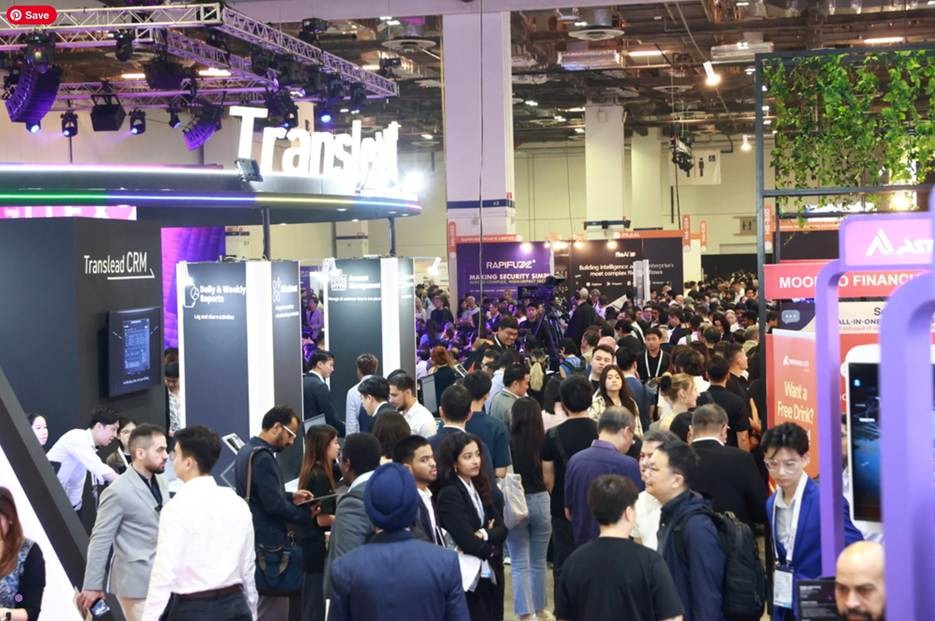
Beyond the macro narrative, the exhibition floor offered a glimpse into where AI is heading next.
Humanoid robots drew crowds — not just for their novelty, but for what they represent: a future where human-machine interaction becomes increasingly seamless.
Other highlights included:
- iFLYTEK’s AINOTE 2, positioned as the world’s thinnest AI-powered e-ink tablet
- AI-powered translation glasses capable of real-time subtitles across 60 languages
- Cybersecurity platforms like RAPIFUZZ’s INTRACIS™, designed for faster threat detection and response
- Healthcare solutions such as SenzMate’s SenzCare, aimed at reducing documentation burdens and improving care quality
These innovations point to a broader trend: AI is moving out of labs — and into workflows.
Collaboration Is the Real Engine of Progress
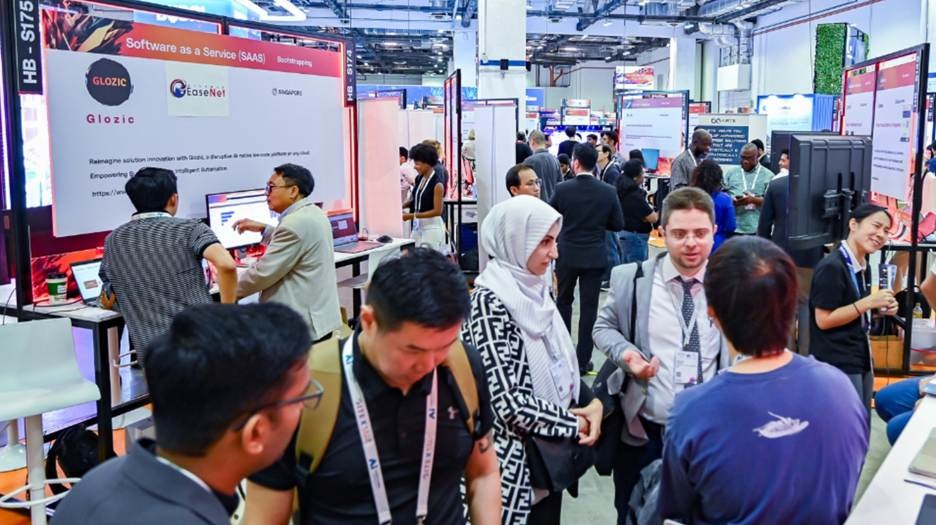
If one theme defined GITEX AI Asia 2026, it was not technology.
It was a collaboration.
Across industries and geographies, partnerships emerged as the key driver of progress:
- Southeast Asian startups engaging global investors
- Indian trade networks are expanding into African markets
- Enterprise buyers are working closely with AI providers to solve deployment challenges
Even beyond Asia, companies like MJC GlobalTech used the platform to deepen partnerships for expansion into Kenya — a reminder that AI ecosystems are increasingly global, not regional.
In this context, innovation is no longer a solo effort.
It is a network effect.
What Comes Next: Execution Becomes the Differentiator
As GITEX AI Asia 2026 concluded, one thing became clear:
The industry has moved past the experimentation phase.
The next chapter of AI will not be defined by:
- Model size
- Training breakthroughs
- Infrastructure hype
It will be defined by:
- Deployment capability
- Monetisation models
- Real-world impact
For companies, investors, and policymakers, the question is no longer: Can AI work?
It is: Can AI deliver measurable results at scale?
And increasingly, the answer will depend on execution. Because in this next phase of the AI race, ambition is no longer enough.
The advantage will belong to those who can turn capability into commercial reality — and do it faster than everyone else.
Highlights
Read the Chinese article here.