




NewInAsia received the Company of Good 1-Heart Recognition. Here’s what led us here — and why it isn’t really about us.
When NewInAsia received this recognition, I felt what most people probably would: excitement, gratitude, and pride. But more than that, I found myself thinking about the quiet journey that brought us here.
As an editor, my days are filled with deadlines, interviews, headlines, and endless revisions. Beneath all of that, though, is a question I return to almost every day: what deserves to be seen?
Whose voice gets the platform? Whose work gets three pages instead of a footnote? I don’t think I realized how much that question had shaped what we do at NewInAsia — long before anyone called it “good.”
Highlights
The People Who Made Everyone Else Look Good
People often assume the media is about covering the biggest names or the latest trends. At NewInAsia, we’ve always believed the quieter stories carry just as much weight — sometimes more.
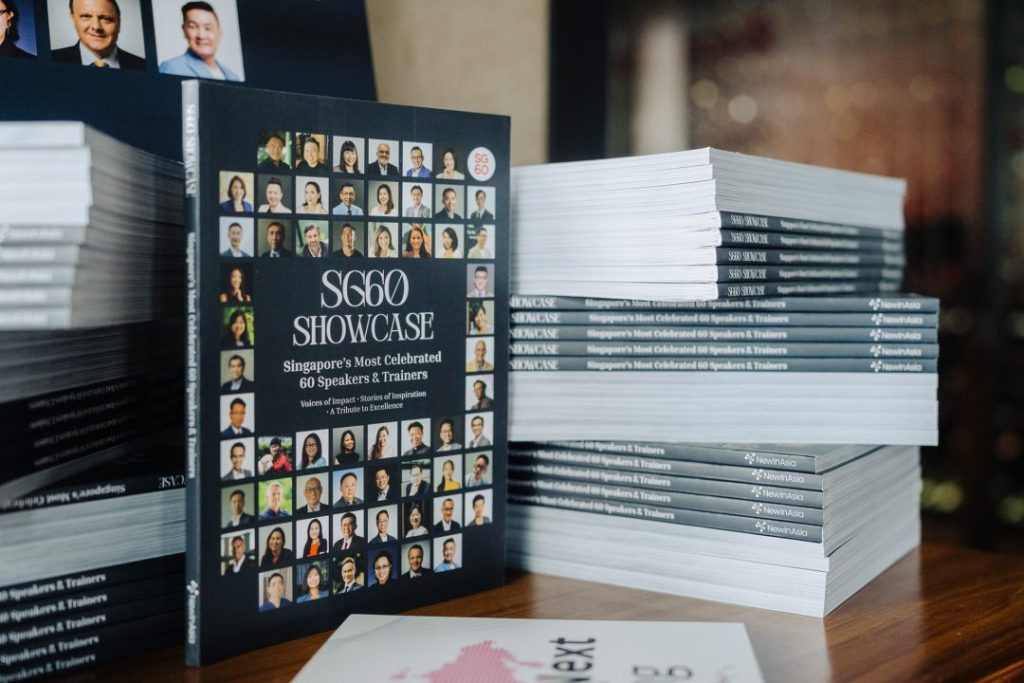
Our SG60 Independence Showcase is where that belief took its biggest shape yet: sixty speakers, sixty years of a nation, a commemorative book created to celebrate Singapore’s 60th year of independence.
Most of the sixty weren’t unknown. But they’d built their careers differently — training leaders, mentoring entrepreneurs, inspiring students, shaping organisations by investing in people rather than building a name for themselves.
That’s the kind of impact we’ve always tried to make visible. Some of the most consequential people in a room are rarely the loudest ones in it — and SG60 gave sixty of them the platform they’d earned but rarely received.
Representation is a Decision, Not a Season
Visibility isn’t only an individual story — it has a gender pattern to it, and I’m not going to soften that observation.
Across Asia, I’ve had the privilege of writing about extraordinary women leading businesses, shaping industries, and driving change. But write enough of these features and a pattern becomes hard to unsee: many of these women have had to prove their capability twice over, in rooms where it’s assumed by default for everyone else. That’s not a statistic I’m quoting — it’s what shows up, feature after feature, in how these women describe their own careers to us.
That gap doesn’t close on its own, and it doesn’t close once a year. It’s why our International Women’s Month coverage was never a single feature — it’s dedicated Top Voices editions across Asia, rather than one Asia-wide list that flattens all of it into a single story. In this year, we’ve covered:
- 10 Top Women’s Voices in Singapore (2026)
- 10 Top Women’s Voices in Qatar (2026)
- 10 Top Women’s Voices in Malaysia (2026)
- 10 Top Women’s Voices in Indonesia (2026)
- 10 Top Women’s Voices in India (2026)
- 10 Top Women’s Voices in Vietnam (2026)
- 10 Top Women’s Voices in Pakistan (2026)
- 10 Top Women’s Voices in Saudi Arabia (2026)
- 10 Top Women’s Voices in Oman (2026)
Those lists were never meant to be rankings. They were invitations — for readers to discover voices they’d otherwise never encounter.
The clearest proof also came when we opened the first edition of Who’s Next in Asia to female founders. The nominations from our own community outpaced anything we expected — one recommendation leading to another, then another. It confirmed something uncomfortable: the more women we highlighted, the more we found who’d never been highlighted at all. The talent was never scarce. Our attention span was.
Representation, I’ve learned, doesn’t happen by accident. It happens by asking, every single time, whose voice is still missing — not once a year, but as a standing question behind every list we build.
Sometimes the Story Changes the Writer
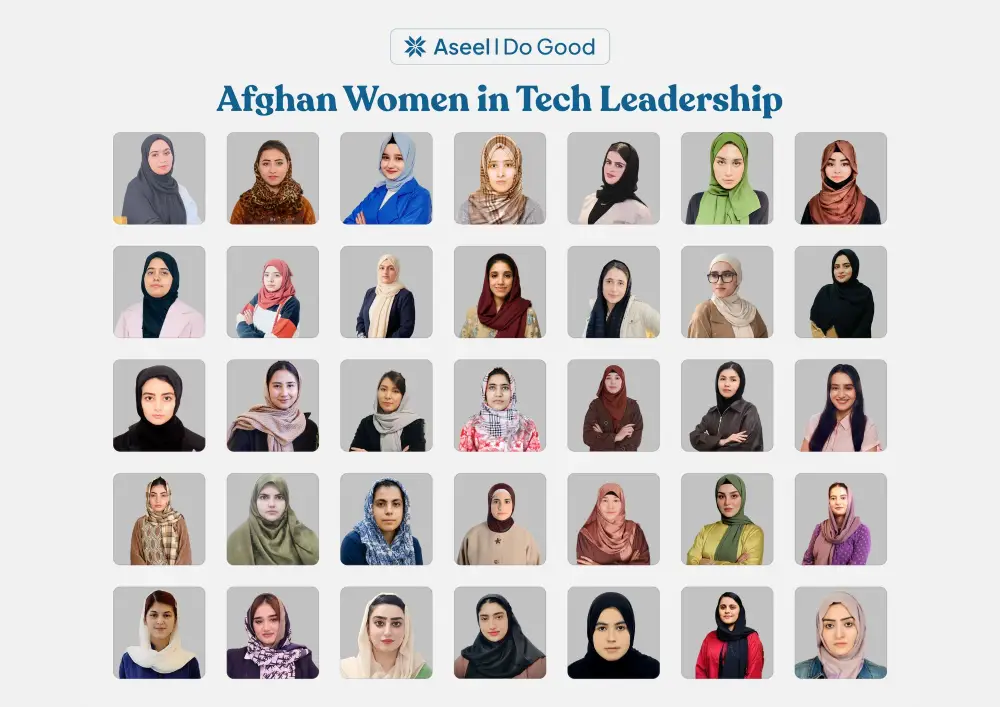
One of the articles that has stayed with me the longest wasn’t about a fast-growing startup or a successful entrepreneur. It was about Afghan women, through the Afghan Women in Tech Leadership (AWTL) initiative, launched by Aseel.
When the Afghan regime changed, Afghan women lost access to universities and formal work almost overnight. AWTL responded by training them in code — 35 fellows across three cohorts so far, with a near-term goal of 50.
I went in expecting to write about a training program. I came out writing about agency.
The framing that stuck with me, from one of the fellows herself, was blunt: these women weren’t “beneficiaries” waiting to be rescued. They were builders, working under conditions most of us will never have to imagine, refusing to let opportunity disappear just because it had been taken from them by decree.
Our job wasn’t to feel sorry for them in print. It was to get out of the way of a story that already had its own force.
Every New Format Was the Same Bet
As NewInAsia has grown, we’ve also found ourselves asking different editorial questions.
How can we help professionals discover conversations that actually matter to them? What would it take to create more opportunities for people to learn from one another? And could the stories we tell make Asia feel more connected, not just better informed?
Those questions pushed us to experiment with new editorial formats — from “Trending on NewInAsia,” which surfaces the conversations shaping our region, to “Meet the Voice,” “Who’s Next in Asia,” “Doing Business in Asia,” and more.
Each initiative looks different on the surface. All of them are built on the same belief: visibility creates opportunity.
Opportunity can start with being featured in an article. Other times, it begins the moment someone discovers a perspective they hadn’t considered. And sometimes, one story is simply what gives someone else the confidence to tell their own.
As editors, we rarely get to see where those opportunities eventually lead. We just know they have to begin somewhere.
Five Pillars, Told Through Our Back Catalogue
Company of Good scores organisations against five things: people, society, governance, environment, and economy.
Read literally, a media company doesn’t obviously touch most of those. But look again at what we actually publish — trainers who build human capital, women whose leadership becomes a visible precedent for the next one, an initiative restoring economic agency to women who’d been stripped of it by force — and the pillars stop being abstract. They’re just our back catalogue, described differently.
That’s what this recognition tells me, more than any badge: the choices were never small. Sixty pages of trainers. Nine editions of women’s voices. Thirty-five fellows learning to code under a regime that would rather they didn’t, and more.
It doesn’t tell us we’ve arrived. It reminds us of the responsibility that comes with having a platform at all.
Long after announcements fade and recognition badges are archived, stories keep travelling. Stories spark conversations. They inspire ideas. Sometimes, they connect people who’d never otherwise have crossed paths.
And perhaps that’s what “doing good” means for a media platform: not simply telling stories, but choosing which ones deserve to travel.
—
Hilmi Hanifah
Editor, NEWINASIA
Highlights
Read the Chinese article here.



